You may first notice it while reading a restaurant menu, checking a text message, or looking at small print on a package label. The words are there, but they look blurry until you hold them farther away or turn on brighter light. If this starts happening in your 40s, it may be presbyopia, a common vision after 40 change that affects how clearly you see up close.
Presbyopia is not just “tired eyes,” and it does not mean your eyes suddenly failed overnight. It usually develops gradually as the natural lens inside your eye becomes less flexible with age. Learn what presbyopia is, why it happens, how to recognize presbyopia symptoms, and which contact lenses for presbyopia may help you see more comfortably at near, intermediate, and far distances.
What Is Presbyopia After 40?
Presbyopia after 40 is the natural age-related loss of clear close-up vision. It happens when the lens inside your eye becomes less flexible, making it harder to focus on nearby objects like books, phones, menus, labels, and computer screens.
Presbyopia is an age-related near vision change that makes close-up tasks harder than they used to be. When you are younger, the lens inside your eye is soft and flexible, so it can change shape quickly when you shift your focus from far away to up close. As you get older, that lens gradually stiffens, which can lead to blurry near vision and the need to hold reading material farther away.
A simple way to think about it is this: your eyes still work, but their “close-up focusing” system is not as quick or flexible as before. That is why you may still see road signs or people across the room clearly, but struggle with small print right in front of you. This is one reason many people start searching for presbyopia correction options in their 40s.
Why It Usually Starts Around Age 40
Presbyopia often becomes noticeable in your early to mid-40s because the eye’s natural lens has been slowly losing flexibility for years. Once that loss reaches a certain point, close-up focusing starts to feel harder during everyday tasks. You may notice it most when reading in dim light, checking your phone at night, working on a laptop, or reading small text on product labels.
This does not mean you caused the problem by using screens too much. Screens can make near vision problems after 40 more noticeable because you blink less, focus longer, and move between near and intermediate distances often. The main cause is still natural eye aging, not one bad habit.
Can Presbyopia Be Corrected?
Yes, presbyopia can be managed with the right vision correction. Common options include reading glasses, prescription glasses, progressive lenses, presbyopia contacts, multifocal contacts, bifocal contacts, prescription eye drops for presbyopia, and some surgical procedures. The right choice depends on your prescription, eye health, daily routine, comfort needs, and whether you prefer glasses, contacts, or another treatment approach.
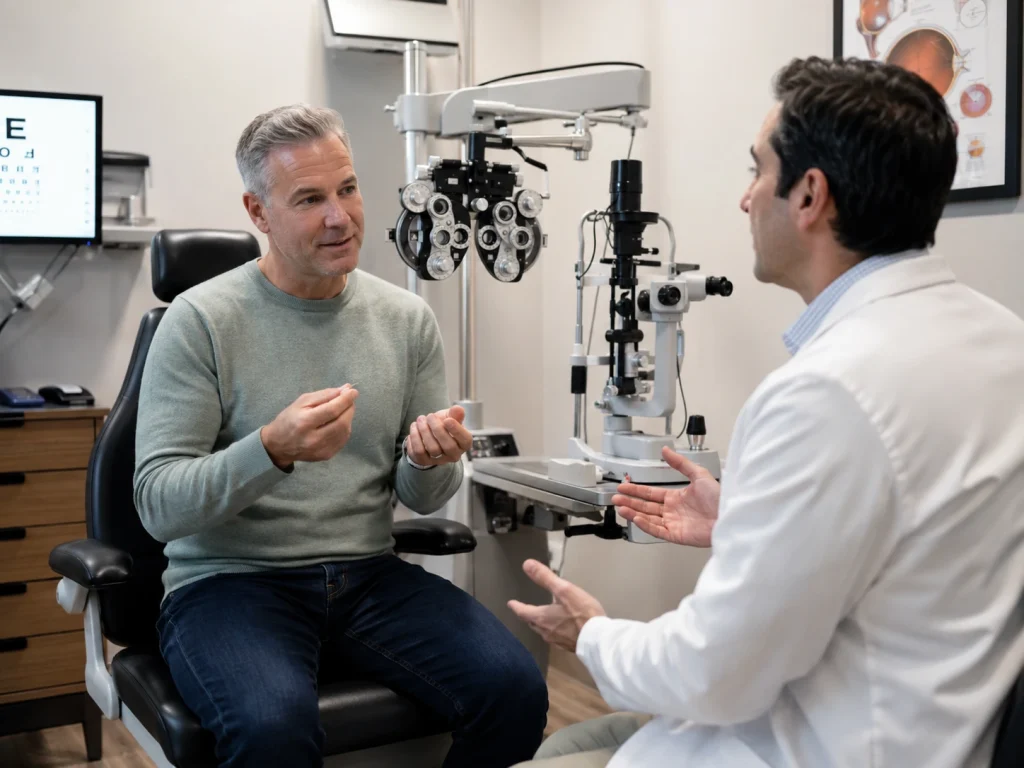
If you already wear contact lenses, you may not have to switch straight to reading glasses only. Options like multifocal contacts for presbyopia, bifocal contacts for presbyopia, monovision contacts, or modified monovision may help you see across more than one distance. Your eye doctor can test which type fits your eyes, supports your lifestyle, and feels comfortable enough for regular wear.
If multifocal lenses are new to you, this guide explains what multifocal contact lenses are and how they work in simple terms.
What Causes Presbyopia?
Presbyopia causes are mostly tied to natural changes inside the eye as you age. It usually starts gradually, which is why many people first notice small changes in their reading vision before they realize their near focus has changed.
Less Flexible Natural Lens
Inside your eye is a clear natural lens that helps focus light so you can see clearly at different distances. When you are younger, this lens is soft and flexible, so it can quickly change shape when you shift your focus from far away to close up. As you get older, the lens becomes thicker and less flexible, making it harder to focus on nearby objects like books, phones, menus, and labels.
Weaker Close-Up Focusing Ability
Your eye has a built-in focusing system that helps you move from distance vision to near vision. This process is called accommodation, but in simple terms, it means your eye has to “refocus” when you read, use your phone, or do close-up work. After 40, that refocusing process becomes less efficient because the lens can no longer change shape as easily.
More Effort From The Focusing Muscle
The focusing muscle may still try to do its job, but it has less lens flexibility to work with. That extra effort can make your eyes feel tired, strained, or sore after reading, screen use, sewing, or other close-up tasks. For many people, this is when near vision problems after 40 start to affect daily comfort.
Natural Eye Aging
Presbyopia is not caused by screens, reading too much, or using your phone too often. The root cause is natural eye aging, especially the gradual stiffening of the eye’s lens. Screens can make presbyopia symptoms more noticeable because you blink less, focus for long periods, and switch between phone, computer, and distance vision throughout the day.
Earlier Focusing Problems
Presbyopia-like symptoms can happen before 40, but this is less common. This is sometimes called premature presbyopia, and it may be linked to farsightedness, certain medical conditions, or some medications. If close-up blur starts earlier than expected, it is worth getting an eye exam instead of assuming it is just normal tiredness.
Presbyopia is a normal part of aging, but that does not mean you have to ignore blurry close-up vision. Better lighting, regular breaks, updated prescriptions, and the right presbyopia correction options can help make reading, screen use, and close-up tasks feel easier.
Common Presbyopia Symptoms After 40
Presbyopia symptoms usually build slowly, so the first signs can be easy to ignore. You may only notice them at night, in dim lighting, during long screen sessions, or when reading small print for more than a few minutes.
Holding Text Farther Away
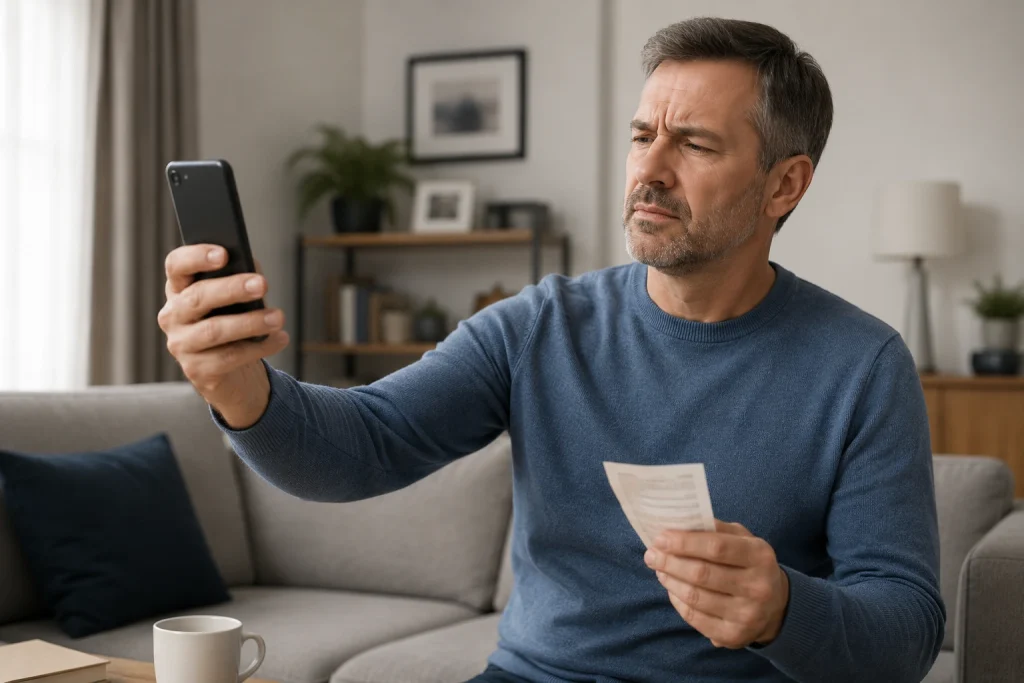
One of the most recognizable signs of presbyopia after 40 is holding your phone, book, menu, or receipt farther away to make the words clearer. At first, you may blame the lighting or think the print is just too small. Over time, you may notice that your normal reading distance no longer works as well as it used to.
Blurry Near Vision

Blurry near vision is the main symptom of presbyopia. You may struggle with fine print, product labels, recipes, text messages, price tags, medication instructions, or small buttons on a screen. Close-up hobbies like sewing, crafting, drawing, or repairing small items may also feel harder than before.
More Light For Reading
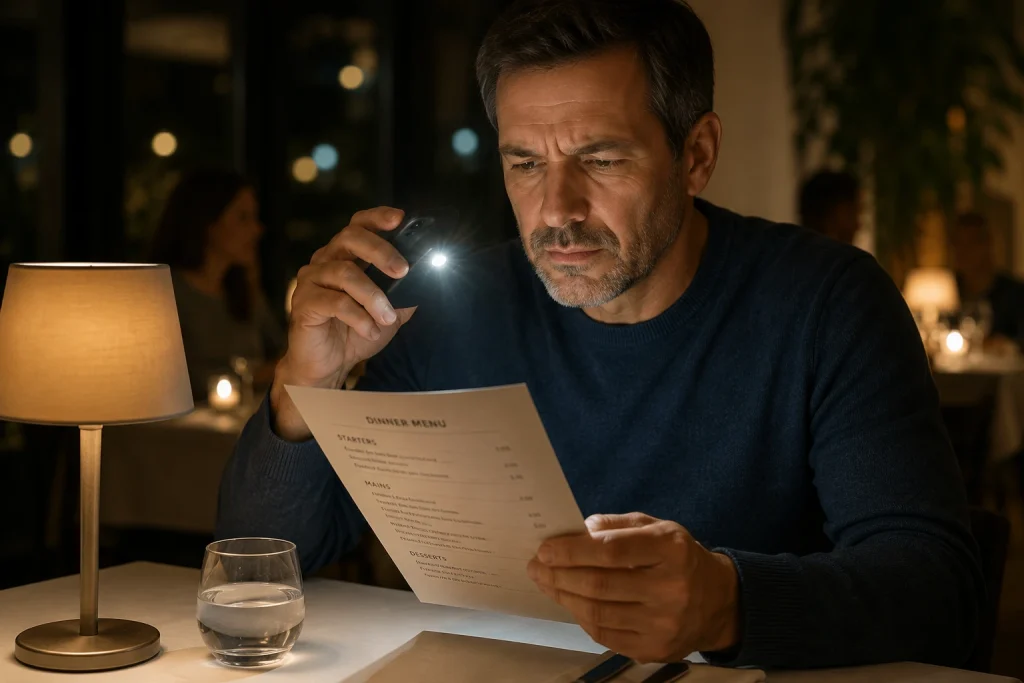
Dim restaurants, evening reading, and low-light rooms can make presbyopia more obvious. You may find yourself turning on your phone flashlight to read a menu or moving closer to a lamp to see small print. Brighter light can help with contrast, but it does not fix the underlying change in your eye’s focusing ability.
Eye Strain After Close Work

Presbyopia can make your eyes work harder during reading, computer tasks, sewing, cooking, writing, or other close-up activities. That extra effort may lead to eye strain, tired eyes, or headaches after focusing up close for a long time. If this keeps happening, an eye exam can confirm whether presbyopia, dryness, an outdated prescription, or another issue is causing the discomfort.
Tired Eyes During Screen-Heavy Days

Presbyopia can overlap with digital eye strain, especially if your day involves switching between a phone, laptop, printed notes, and distance vision. Your eyes may feel tired because they keep trying to refocus at different working distances. This can be especially noticeable during long workdays, video calls, online reading, or screen-heavy routines.
If long phone or laptop sessions make your eyes feel extra tired, these digital detox eye health tips can help you build easier screen habits.
Less Helpful Current Contacts
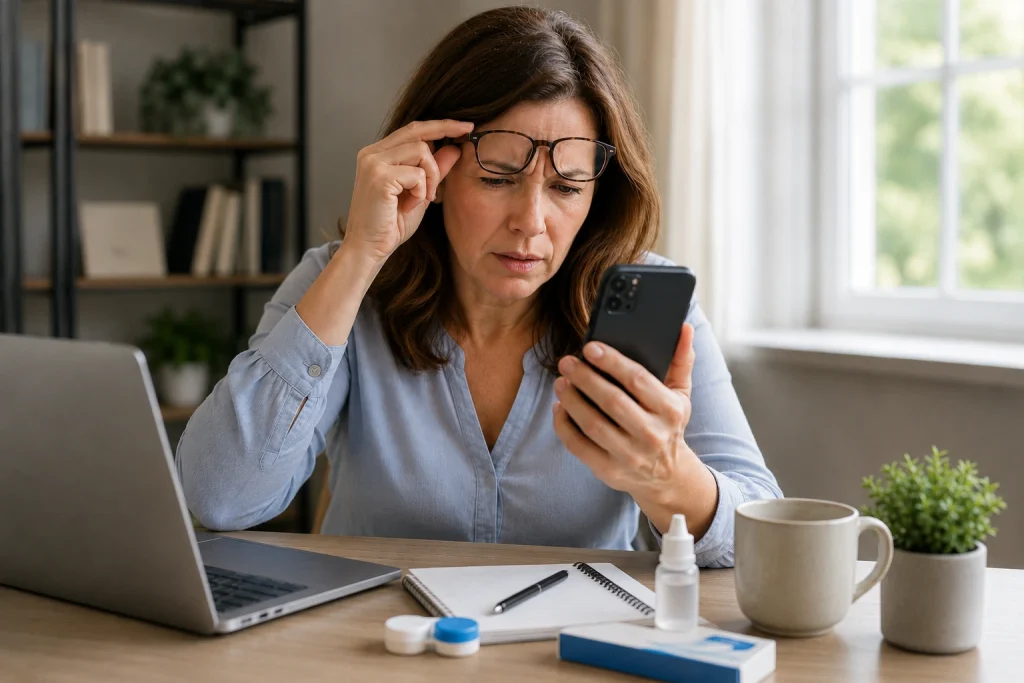
If you already wear contacts, your current lenses may no longer support your close-up needs as well as they once did. You may still see distance clearly, but reading your phone, menu, or laptop may feel harder while your lenses are in. Your eye doctor may discuss presbyopia contact lenses, multifocal contacts for presbyopia, bifocal contacts for presbyopia, or reading glasses over contacts.
These symptoms do not always mean something serious is happening, but they are signs that your near vision may need support. The right presbyopia correction options can make reading, screen use, and close-up tasks feel clearer and more comfortable again.
Is Presbyopia Normal After 40?
Yes, presbyopia after 40 is normal and happens to most people as they get older. It is one of the most common vision changes after 40, especially when close-up tasks start feeling harder than before. You may have had clear vision for years, then suddenly notice that small print looks softer or your phone is easier to read when held farther away. This change can feel frustrating, but it is usually part of natural eye aging.
Presbyopia happens because the eye’s natural lens gradually loses flexibility over time. As the lens becomes less flexible, your eyes have a harder time shifting focus from far away to close up. Presbyopia usually progresses through your 40s and 50s, so you may first notice blurry near vision in dim lighting or when your eyes are tired. Later, you may need updated correction for reading, computer work, phone use, or other close-up tasks.
Presbyopia is not usually considered a disease, even if the word sounds medical. It is a natural age-related focusing change, but new, sudden, or unusual vision changes should still be checked by an eye doctor. If one eye suddenly becomes blurry, your vision changes quickly, you see flashes or floaters, or you have eye pain, do not assume it is just presbyopia.
Presbyopia vs. Farsightedness, Myopia, and Astigmatism
Presbyopia can feel similar to other vision problems because it affects how clearly you see up close. The difference is that presbyopia is mainly caused by the eye’s aging lens and reduced near focusing ability. Other refractive errors, such as farsightedness, myopia, and astigmatism, are usually related to eye shape, corneal shape, or how light focuses inside the eye.
If you have both astigmatism and near-vision changes, it helps to understand the difference between toric and multifocal lenses before comparing options.
Presbyopia vs. Farsightedness
Presbyopia vs hyperopia can be confusing because both may cause blurry near vision. Presbyopia happens when the natural lens inside the eye becomes less flexible with age, making close-up focusing harder after 40. Hyperopia, also called farsightedness, is usually related to the shape or focusing power of the eye. If you are comparing farsighted vs presbyopia, an eye exam is the best way to know which one is affecting your vision.
Presbyopia vs. Myopia
Myopia, or nearsightedness, causes blurry distance vision. If you have myopia, faraway objects like road signs, classroom boards, or TV subtitles across the room may look blurry without correction. Presbyopia is different because it affects near focusing, especially for reading, phone use, labels, menus, and other close-up tasks after 40. You can have myopia and presbyopia at the same time, which is why distance glasses or contacts may feel clear far away but less helpful for reading.
Presbyopia vs. Astigmatism
Astigmatism can blur or distort vision at near, intermediate, or far distances because of the shape of the cornea or lens. Presbyopia mainly affects close-up focusing because the eye’s natural lens becomes less flexible with age. You can have astigmatism and presbyopia at the same time, which can make reading, screen work, night driving, or switching distances feel more frustrating. Some contact lens options, such as toric multifocal lenses or specialty presbyopia contact lenses, may help address both depending on your prescription and lens availability.
Presbyopia is age-related, but it can overlap with other vision conditions you already have. That is why guessing your correction can lead to blur, eye strain, or lenses that do not feel right. Your eye doctor can check whether you need glasses, contacts for presbyopia, astigmatism correction, or a customized option that supports near, intermediate, and distance vision.
How Do You Know If You Have Presbyopia?
You may suspect presbyopia when close-up tasks start feeling harder than they used to. The signs can be subtle at first, especially if they only happen at night, during long screen sessions, or when your eyes are tired. If these changes started around your 40s, presbyopia after 40 may be part of the reason your near vision feels different.
You may have presbyopia if you notice these common signs:
- You hold your phone, book, menu, or product label farther away so the words look clearer.
- Small print looks blurry up close, especially on receipts, labels, messages, or instructions.
- You need brighter light to read in dim rooms, restaurants, or at night.
- You increase your phone font size, zoom in on text, or move your screen around to find a clearer spot.
- You remove your distance glasses to read because close-up text looks easier without them.
- Your eyes feel tired, strained, or sore after reading, screen time, sewing, writing, or other close-up tasks.
- You get headaches after close work, especially when reading or using a computer for long periods.
- Your eyes take longer to refocus when you look from your laptop to your phone, then across the room.
- Your current contact lenses still help with distance vision but no longer feel as helpful for reading, menus, labels, or laptop screens.
- You start relying on readers, brighter lighting, or screen zoom more often than before.
A self-check can help you notice the pattern, but it cannot confirm the exact cause of your blur. An eye exam can tell whether your symptoms come from presbyopia, myopia, hyperopia, astigmatism, dry eye, an outdated prescription, or another concern.
Not sure when to schedule your next visit? This guide on how often you should get an eye exam can help you decide when to go in.
Contact Lens Options for Presbyopia
If you prefer contacts, presbyopia does not automatically mean you have to rely only on reading glasses. Several contact lenses for presbyopia are designed to help with near vision while still supporting distance or intermediate vision.
| Lens Type | How It Works | Best For | Considerations |
|---|---|---|---|
| Multifocal contact lenses | These lenses use different focus zones to help you see at near, intermediate, and distance ranges. | People who want one contact lens design that supports reading, computer work, conversations, and driving. | Your brain may need time to adjust, and your eye doctor may fine-tune the power, brand, or design for better balance. |
| Bifocal contact lenses | These lenses are designed for two main viewing distances, usually near and far. | Wearers who mainly need help with close-up reading and clear distance vision. | The lens must sit correctly on your eye so the near and distance areas work as intended. |
| Monovision contact lenses | One eye is corrected more for distance, while the other is corrected more for near vision. | People who adapt well to each eye having a different focusing role. | It may take time to adjust, and some wearers may notice changes in depth perception or night driving comfort. |
| Modified monovision | This combines monovision with a multifocal lens approach for a more customized setup. | Wearers who need near help but still want better intermediate or distance support. | Follow-up visits are important because the setup often needs fine-tuning based on your daily routine. |
| Daily disposable multifocal contacts | You wear a fresh multifocal lens each day and throw it away after use. | Busy wearers, travelers, occasional contact lens users, or people who prefer less cleaning. | They may be convenient and comfortable, but your eye doctor must confirm that a suitable daily option is available for your prescription. |
| Monthly multifocal contacts | These lenses are reused for a monthly replacement schedule with proper cleaning and storage. | Regular contact lens wearers who are comfortable following a lens care routine. | You need a fresh solution, a clean case, and consistent replacement habits to keep lenses clear and comfortable. |
| Contacts for presbyopia and astigmatism | Toric multifocal or specialty lens designs may help correct both astigmatism and presbyopia. | Wearers who have both close-up focusing problems and astigmatism-related blur or distortion. | Not every prescription is available in every lens design, so a proper fitting is especially important. |
The right presbyopia contacts depend on your prescription, eye shape, tear film, comfort needs, and daily vision demands. If contacts are not the best full-time option, your eye doctor may recommend a mixed approach.
If you want to compare real multifocal lens options, start with Proclear Multifocal vs. Biofinity Multifocal lenses for presbyopia.
Multifocal Contacts vs. Monovision: Which Is Better?
There is no single best choice for every person with presbyopia. The better option depends on your prescription, eye shape, comfort, daily tasks, night driving needs, and how easily your eyes adapt to a new way of focusing.
| Option | How It Works | Best For | What to Consider |
|---|---|---|---|
| Multifocal Contacts | These lenses use multiple focus zones to help with near, intermediate, and distance vision. | Wearers who want both eyes working together across different distances. | They may take time to adjust, and your eye doctor may need to fine-tune the lens design or power. |
| Monovision Contacts | One eye is corrected more for distance vision, while the other is corrected more for near vision. | Wearers who adapt well to using different powers in each eye. | It may affect depth perception, night driving comfort, or sharpness for some people. |
| Modified Monovision | One eye may use a single-vision or near/far setup, while the other uses multifocal support. | Wearers who need a more customized balance between reading, screen work, and distance vision. | It requires careful fitting, trial wear, and follow-up visits to find the best balance. |
For many wearers, multifocal contacts for presbyopia feel more natural because both eyes continue working together for different distances. Monovision can also work well, especially if your brain adapts comfortably to one eye doing more near work and the other doing more distance work.
The best way to compare them is through contact lens fitting, trial lenses, and real-life testing during reading, computer use, driving, and daily activities.
Other Presbyopia Treatment Options
Contact lenses are only one way to manage presbyopia. Depending on your eyes, lifestyle, and comfort needs, your eye doctor may also discuss glasses, prescription drops, or surgery as part of your presbyopia treatment plan.
Reading Glasses
Reading glasses can be a simple option if your main problem is close-up blur and you do not need correction for distance vision. Over-the-counter readers may help with books, menus, phones, labels, and other near tasks. However, an eye exam is still useful because the wrong strength can cause eye strain, and near blur may not always be caused by presbyopia alone.
Prescription reading glasses may be better if your eyes need different powers or if you also have astigmatism, myopia, or hyperopia. Your eye doctor can measure the right strength instead of leaving you to guess at the store. This is especially helpful if you get headaches or feel uncomfortable with basic readers.
Bifocals, Trifocals, and Progressive Glasses
Bifocals, trifocals, and progressive glasses can help if you need correction for more than one distance. Bifocals usually support distance and near vision, while trifocals add an intermediate zone for tasks like computer use. Progressive lenses provide a smoother shift between distance, intermediate, and near vision without a visible line.
These options can be useful if you want one pair of glasses for different parts of your day. They may work well for driving, reading, computer work, shopping, and general wear. Some people use progressives as their main correction and keep presbyopia contacts for specific activities or social situations.
Prescription Eye Drops For Presbyopia
Prescription eye drops for presbyopia may improve near vision for some adults by making the pupil smaller, which can increase depth of focus. These drops are not the same as artificial tears, allergy drops, or redness relievers. They should only be used under the guidance of an eye doctor because they are not right for every eye or every lifestyle.
If you are interested in drops for presbyopia, ask your eye doctor about benefits, side effects, timing, and whether your eye health makes you a good candidate. Some people may still need glasses or contacts even if drops help in certain situations. Drops may be an option, but they are not a universal replacement for presbyopia corrective lenses.
Surgery For Presbyopia
Some people ask about surgery when they want a longer-term option for presbyopia. Possible approaches may include monovision LASIK, refractive lens exchange, or lens implant-based procedures, depending on your eye health and prescription. These options require a careful exam and a detailed conversation about benefits, limits, risks, cost, and expectations.
Surgery is not the right choice for everyone. Some people do better with glasses, presbyopia contact lenses, prescription drops, or a combination of options. If you are considering surgery, your eye doctor can explain whether you are a candidate and whether trying monovision contacts first would help you understand how that type of correction feels.
How to Choose the Best Contacts for Presbyopia After 40
Choosing the best contacts for presbyopia is not just about finding a lens that says “multifocal” on the box. The right contact lenses should match your prescription, fit your eyes properly, feel comfortable throughout your day, and support the way you actually use your vision.
1. Start with your prescription and eye shape.
Presbyopia contact lenses need to match more than your reading needs. Your eye doctor also checks your distance prescription, near add power, corneal shape, pupil size, lens movement, and overall fit. If the lens does not sit correctly on your eye, even a high-quality multifocal design may feel blurry, unstable, or uncomfortable.
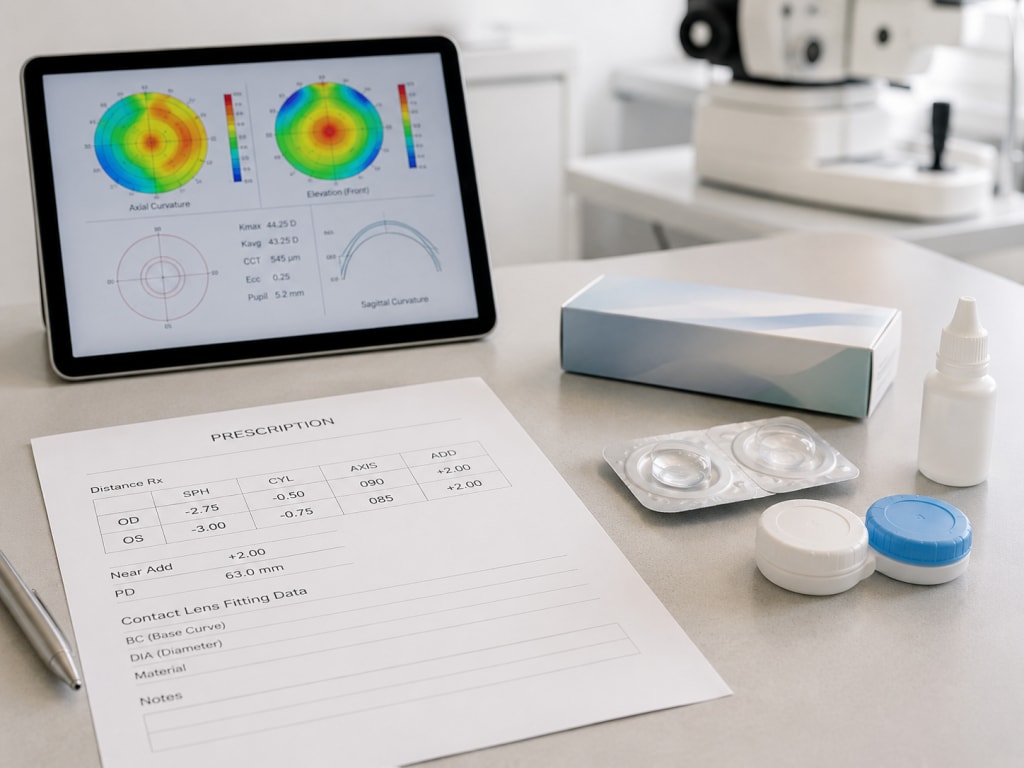
This is why contact lens fittings matter, especially after 40. Your prescription for glasses and your prescription for contacts are not always the same. A proper fitting helps make sure your lenses support clear vision while still allowing healthy movement, comfort, and oxygen flow.
2. Think about your daily vision demands.
Your best lens choice depends on what your eyes need to do every day. If your routine includes reading, computer work, phone use, driving, outdoor activities, sports, or switching between screens and people across the room, your contacts need to support more than one viewing distance. This is where multifocal contacts for presbyopia or monovision may be helpful.
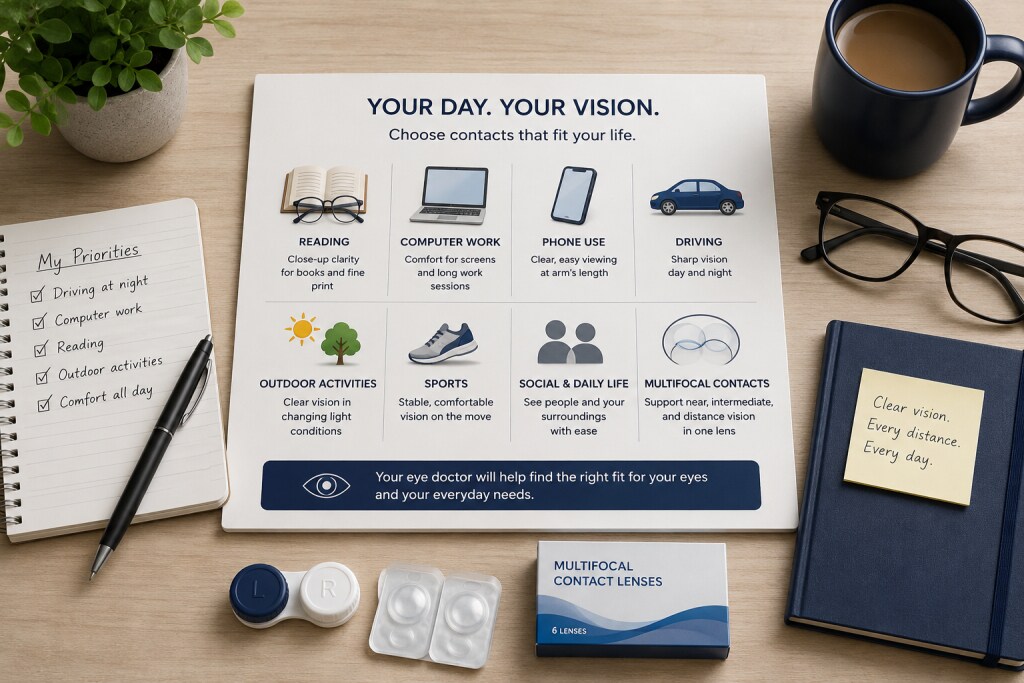
Tell your eye doctor what matters most in your daily routine. For example, someone who drives often at night may need a different balance than someone who spends most of the day reading documents or using a laptop. The goal is not just to pass an eye chart, but to help your vision feel useful in real life.
3. Consider dryness and comfort.
Dryness can become more noticeable after 40, especially if you spend long hours on screens, work in air conditioning, take certain medications, or already have dry eye symptoms. A lens that gives clear vision but feels gritty by afternoon may not be the best long-term choice. Lens material, replacement schedule, tear film quality, and your cleaning routine all affect comfort.
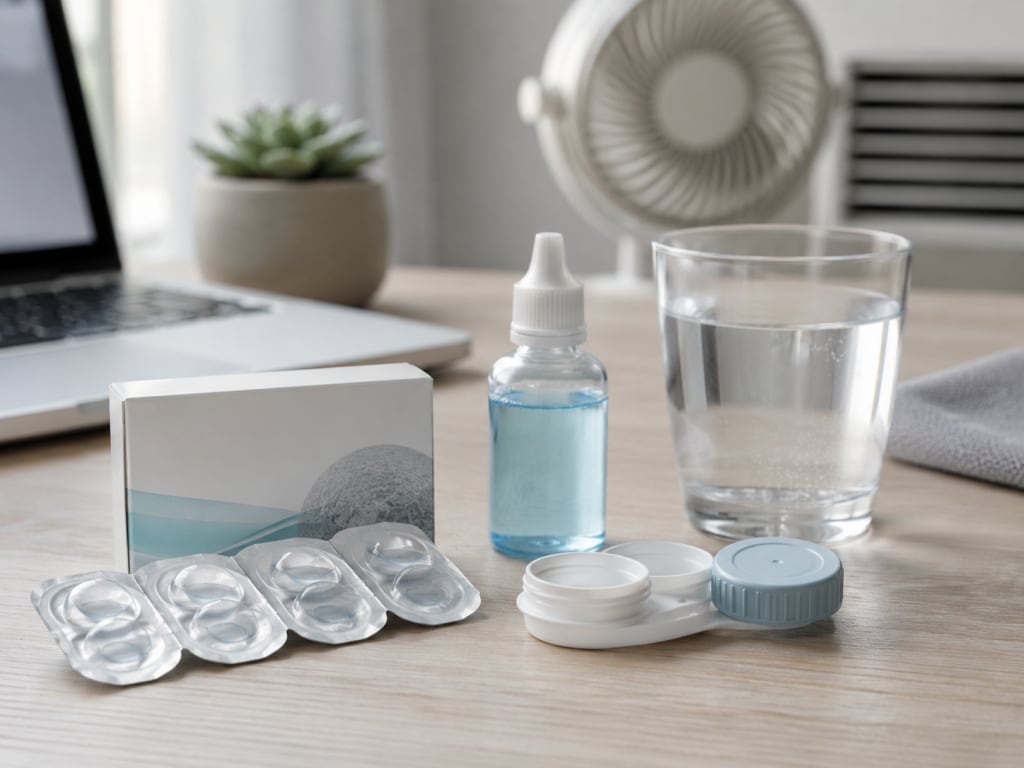
If your eyes often feel dry, ask about daily disposable lenses, moisture-focused materials, silicone hydrogel options, or contact-safe rewetting drops. Some wearers do better with a fresh lens each day, while others are comfortable with reusable lenses when they clean and replace them properly. Comfort should be part of the prescription conversation, not an afterthought.
4. Compare daily vs. reusable lenses.
Daily disposable contacts for presbyopia can be convenient because you start with a fresh pair each day and throw them away after wear. They may work well for travel, busy schedules, occasional contact lens use, or wearers who dislike cleaning lenses. They can also reduce the buildup that sometimes makes lenses feel less comfortable over time.
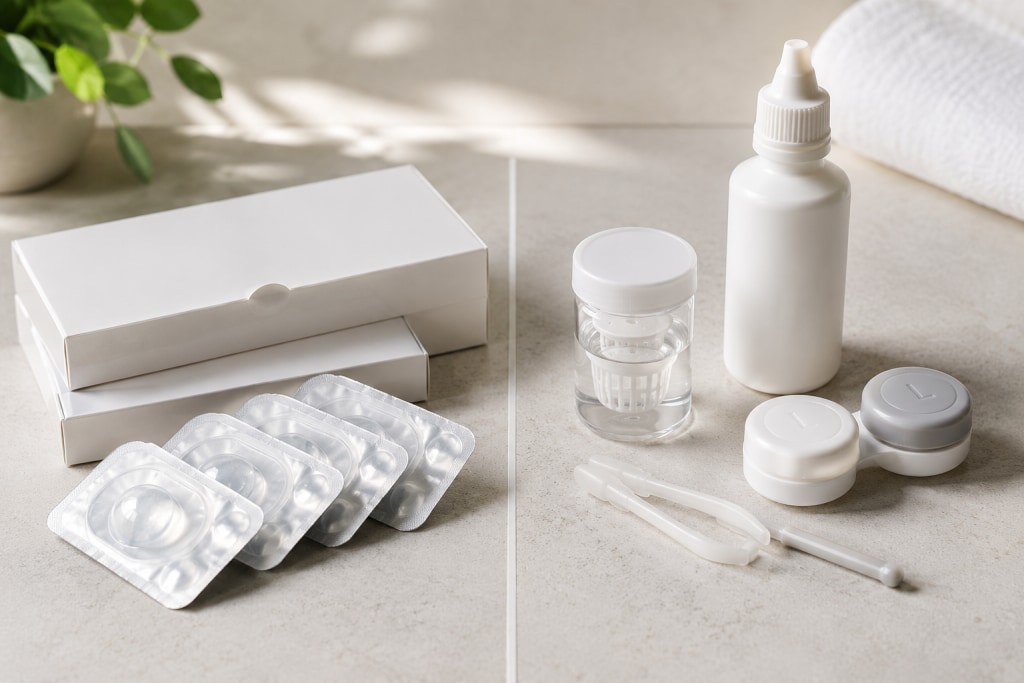
Reusable lenses, such as biweekly or monthly multifocal contacts, may still work well if they fit properly and you follow the care routine exactly. They require fresh contact lens solution, a clean case, and consistent replacement. When comparing daily and reusable lenses, think about convenience, cleaning habits, travel, cost, comfort, and how often you plan to wear them.
5. Plan for an adjustment period.
Multifocal and monovision contacts may take time to feel natural. Your brain is learning how to use the new focusing system, so near vision, distance sharpness, or night comfort may feel different during the first few days. Some wearers adjust quickly, while others need a week or two of consistent wear.
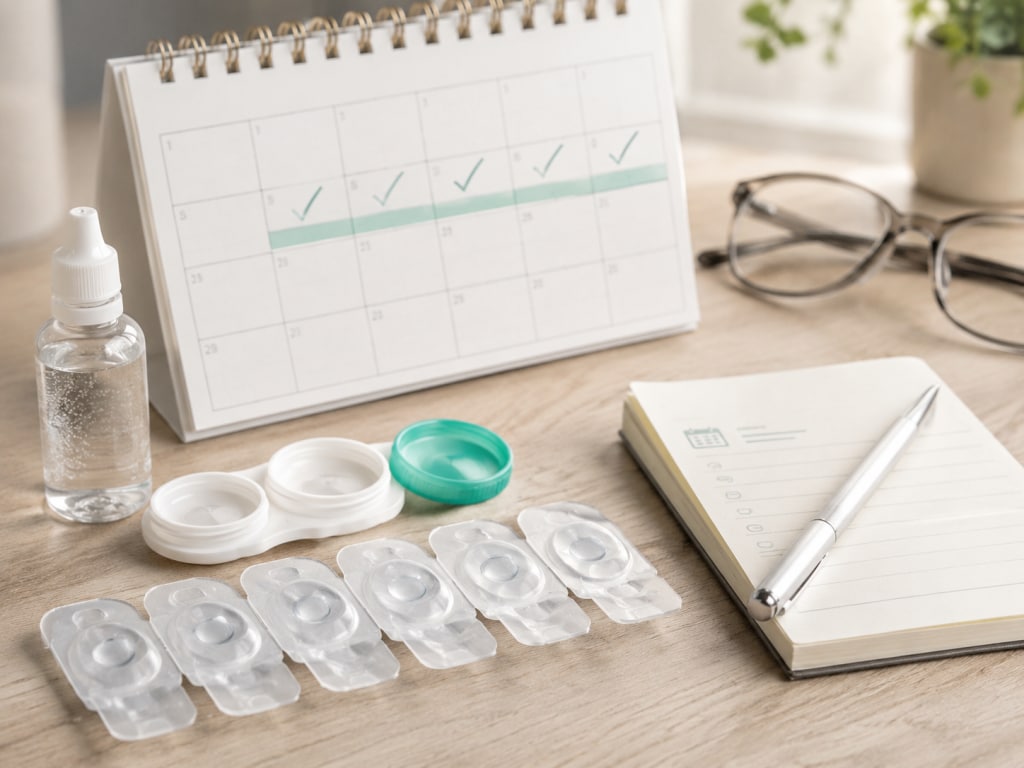
Follow-up visits help fine-tune the prescription, lens design, add power, or fit. If your first trial lens is not perfect, that does not mean contacts will not work for you. It may simply mean your eye doctor needs to adjust the lens choice until your near, intermediate, and distance vision feel more balanced.
Before comparing boxes or brands, remember that contact lens prescriptions are not the same as glasses prescriptions.
Why Contacts May Feel Different After 40
If your contacts suddenly feel less comfortable or less helpful after 40, the lens brand is not always the problem. Your tear film, focusing needs, and daily routine can change with age, especially if you spend long hours on screens, work in air conditioning, take certain medications, or notice more dryness than before. When the tear film becomes less stable, contacts may feel dry, sticky, gritty, or blurry even if the same lenses used to feel fine.
Presbyopia can also make your old contact lens prescription feel less useful for reading and close work. A prescription that still helps you see clearly at a distance may not support your phone, computer, menu, labels, or small print as well as it once did. Small updates such as daily disposable lenses, contact-safe rewetting drops, better lighting, screen breaks, backup glasses, or a new presbyopia contact lenses fitting may help make contacts feel clearer and more comfortable after 40.
Are your contacts no longer giving you the near vision comfort you need after 40? Browse our contact lenses that match your prescription, wearing schedule, and eye doctor’s recommendations.
FAQs About About Presbyopia After 40
What is presbyopia after 40?
Presbyopia after 40 is the normal age-related loss of clear close-up vision. It happens when the natural lens inside your eye becomes less flexible, making it harder to focus on nearby objects. You may first notice it when reading a menu, checking your phone, or looking at small print.
What are the first signs of presbyopia?
The first signs of presbyopia often include holding reading material farther away, needing brighter light, and seeing small print blur at a normal reading distance. You may also feel eye strain or get headaches after reading, using your phone, or doing close-up work. These presbyopia symptoms usually develop gradually, so they can be easy to ignore at first.
What causes presbyopia?
Presbyopia causes are mainly related to natural eye aging. The lens inside your eye becomes less flexible over time, so it cannot change shape as easily when you look at nearby objects. As a result, your close-up focus becomes weaker, especially during reading, phone use, and other near tasks.
Is presbyopia farsightedness?
Presbyopia can feel like farsightedness because both can make near vision blurry, but they are not the same condition. Presbyopia happens because the eye’s natural lens loses flexibility with age. Hyperopia, or farsightedness, is usually related to the shape or focusing power of the eye, so farsighted vs presbyopia depends on the cause of the blur.
Is presbyopia the same as myopia?
No. Myopia, or nearsightedness, affects distance vision, so faraway objects may look blurry. Presbyopia affects near focusing ability, usually after 40, so close-up tasks like reading, texting, and checking labels become harder.
Can you have myopia and presbyopia at the same time?
Yes, you can have myopia and presbyopia at the same time. A person can be nearsighted for years and still develop near vision problems after 40. If you wear distance glasses or contacts, you may notice that reading becomes harder while your correction is on.
Can contact lenses help presbyopia?
Yes, contact lenses for presbyopia may help, depending on your prescription, eye shape, comfort needs, and lens fit. Options may include multifocal contacts, bifocal contacts, monovision contacts, and modified monovision. Your eye doctor can help determine which presbyopia contacts are safest and most comfortable for your eyes.
Are multifocal contacts good for presbyopia?
Multifocal contacts for presbyopia can be a good option for many wearers because they help support more than one viewing distance. They may help with near, intermediate, and distance vision, which can be useful for reading, screen work, driving, and daily activities. However, they require proper fitting and may take time to adjust.
Are there daily contacts for presbyopia?
Yes, some multifocal contacts come in daily disposable options. Daily lenses can be convenient because you start with a fresh pair each day and throw them away after wear. They may be helpful if you want less cleaning, travel-friendly wear, or a simpler contact lens routine.
Can presbyopia be prevented?
No, presbyopia cannot usually be prevented because it is part of natural aging. You can still manage symptoms with regular eye exams, updated prescriptions, good lighting, proper correction, and healthy eye habits. The goal is not to stop presbyopia from happening, but to keep your vision comfortable as it changes.
Can presbyopia be cured?
Presbyopia cannot usually be reversed naturally, but it can be corrected or managed. Common presbyopia treatment options include reading glasses, progressive glasses, presbyopia contact lenses, prescription eye drops for presbyopia, and surgery for some candidates. Your eye doctor can help you choose an option based on your vision needs and eye health.
When should I see an eye doctor for presbyopia?
See an eye doctor if near blur affects reading, screen use, work, driving, hobbies, or daily activities. You should also seek care quickly if your symptoms are sudden, painful, one-sided, or come with flashes, floaters, halos, double vision, or sudden vision loss. Presbyopia is common, but unusual vision changes should not be ignored.
References
Presbyopia: Symptoms, Causes & Treatment. Cleveland Clinic. https://my.clevelandclinic.org/health/diseases/8577-presbyopia. Date Accessed: June 15, 2026.
Presbyopia – Symptoms and Causes. Mayo Clinic. https://www.mayoclinic.org/diseases-conditions/presbyopia/symptoms-causes/syc-20363328. Date Accessed: June 15, 2026..
Presbyopia. Prabhakar Singh, Marco Zeppieri, and Koushik Tripathy. StatPearls / NCBI Bookshelf.\ https://www.ncbi.nlm.nih.gov/books/NBK560568/. Date Accessed: June 15, 2026.
Monovision Contact Lenses for Presbyopia. ACUVUE. https://www.acuvue.com/en-us/products/types-of-contacts/monovision/. Date Published: September 20, 2024. Date Accessed: June 15, 2026.
What Are the Options Now? Jessica Conroy, OD, and Daniel Deligio, OD. Contact Lens Spectrum. https://www.clspectrum.com/issues/2025/may/what-are-the-options-now/. Date Accessed: June 15, 2026.