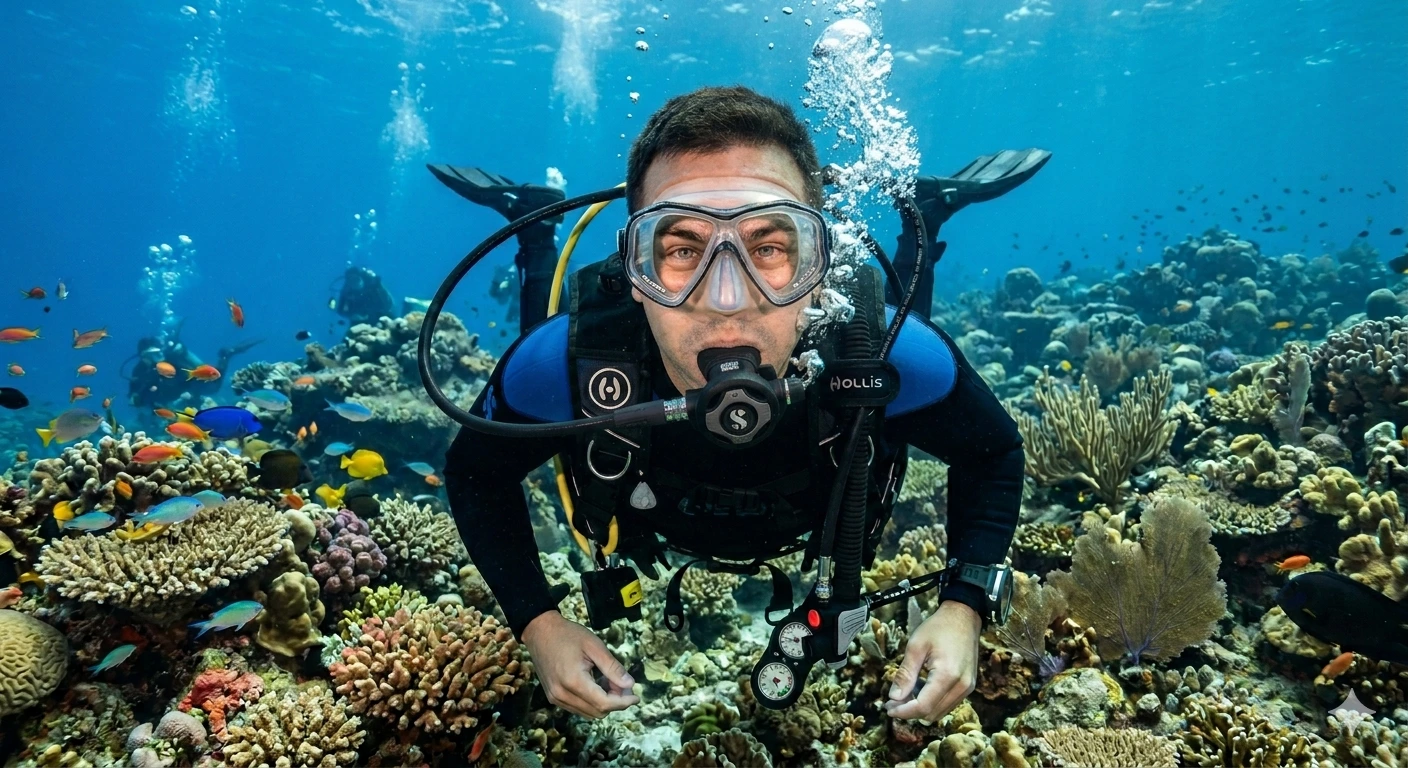
Imagine cruising along with giant manta rays under the blue waters off the Kona coast, or swimming alongside sea turtles over a vibrant coral reef in Maui. Picture yourself dropping down onto a historic shipwreck in Key Largo, or floating over the shallow, sun-drenched patch reefs of Key West. Hawaii and the Florida Keys offer some of the most breathtaking underwater adventures on the planet. There is nothing quite like the thrill of stepping off the boat deck into that crystal-clear turquoise wilderness.
But if you rely on contact lenses to see the world, diving into a tropical ocean adventure comes with its own unique set of questions. What happens if a rogue wave floods your mask? Will fine sand or reef-safe sunscreen ruin your lenses? Can you safely explore these reefs without risking an eye infection?
While you can absolutely wear contacts on your underwater excursions, exploring the marine environments of the Pacific and the Atlantic require a solid plan.
Can You Wear Contact Lenses While Snorkeling Or Scuba Diving in Salt Water?

Yes. The alien world under the waves is just waiting for you to discover.
However, you’ll want to treat your eyes with the same respect you show the ocean. Even in the crystal-clear waters of Maui, Oahu, or the Florida Keys, the ocean is a living ecosystem. Salt water harbors plankton, bacteria, and other microscopic organisms. A sudden mask leak can instantly trap water, fine volcanic sand, sunscreen, or tiny reef debris right against your contacts.
If you’re snorkeling, diving, or swimming along Hawaii’s coastlines, a sudden shift in wind or surf can send an unexpected splash into your mask. Over in Key West or the Middle Keys, you might find yourself floating over a shallow reef for hours, giving trapped salt or bacteria more time to irritate your eyes.
Salt water can spray and get into your eyes when you’re hopping from a sunny beach to a choppy boat deck. Or when you board your dive boat to travel from one dive site to another.
Hawaii Diving and Snorkeling Tips For Contact Lens Wearers
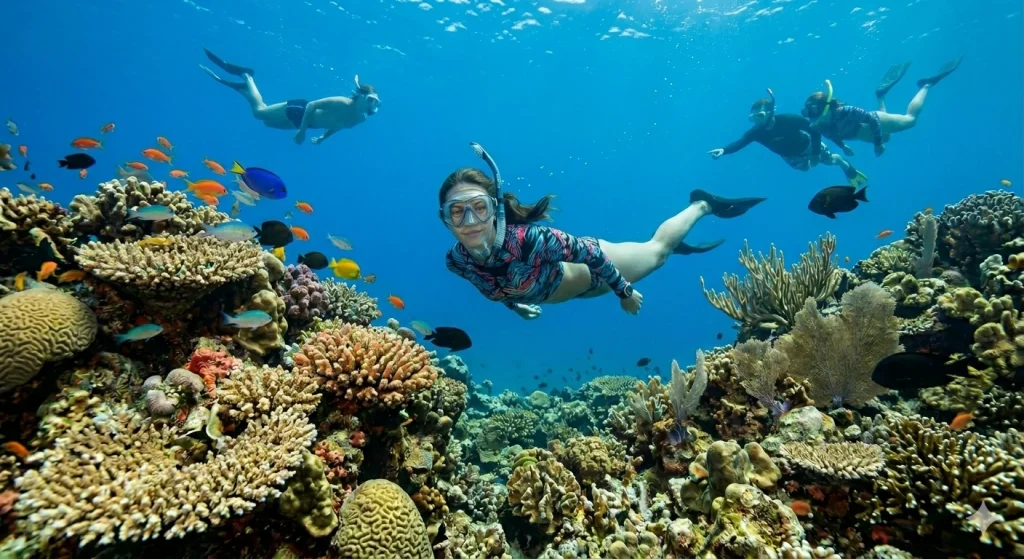
Scuba diving and snorkeling over Hawaii’s vibrant coral reefs is a bucket-list experience, but if you wear contacts, a little morning strategy goes a long way.
The Pacific can be unpredictable, so your best bet is always to head out early. Morning conditions across the islands offer glassy, calm waters and pristine visibility before the afternoon trade winds kick up. Calmer water means you won’t be constantly fighting the surf, adjusting your mask, or tempted to rub your eyes. For the safest conditions, stick to lifeguarded beaches like Oahu’s Hanauma Bay or Maui’s Napili Bay.
Your mask protects your eyes, while allowing you to clearly see underwater. Before you enter the water, give your mask a rigorous fit test. A flawless seal around your forehead, nose, and cheeks is your absolute best line of defense. Even a tiny, slow trickle of saltwater can turn a lovely swim into a gritty, stinging mess if it gets trapped under your lens.
Once you have your contacts on your eyes, practice a strict hands-off policy for your face. Your fingers are a magnet for irritants, especially if you can’t keep your fingers off the chips, rental scuba equipment, seaweeds, or sand.
If your lens starts acting up, don’t try to fix it on the shore or on the boat. Wait until you can access fresh water, wash and dry your hands thoroughly, and use fresh solution from your dry bag.
Speaking of your dry bag, treat it like your personal eye-care oasis. Pack a heavy backup kit: extra daily lenses, your regular glasses, a clean case, and plenty of contact-safe rewetting drops to soothe that inevitable post-ocean dryness.
However, if you find yourself spending more time looking at sea turtles than sitting on the sand, it might be time to ditch the contacts altogether for the trip and look into a prescription snorkel mask. It removes the worry entirely so you can just enjoy the view.
Florida Keys Diving And Snorkeling Tips For Contact Lens Wearers
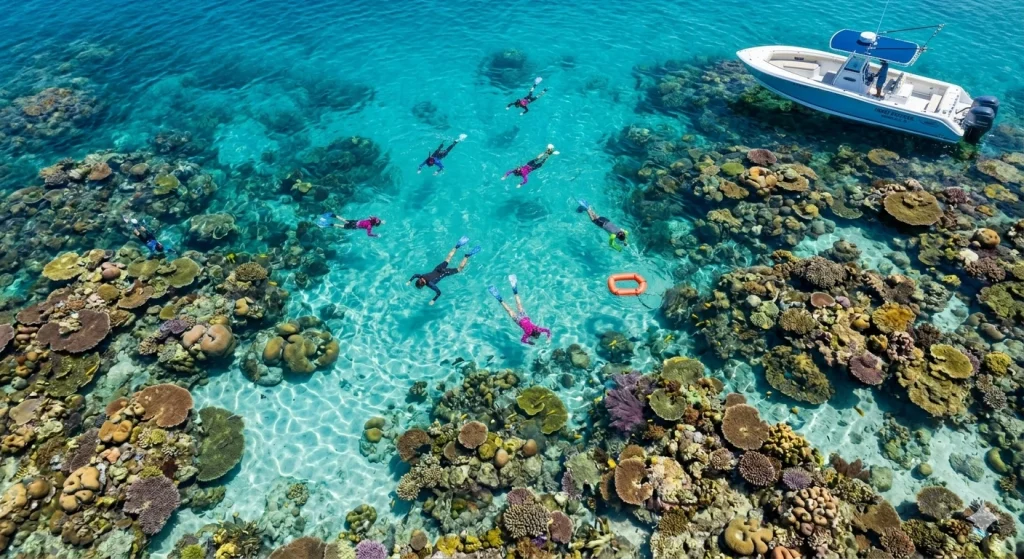
With its lovely sandy beaches, sand flats, and vibrant reefs, the Florida Keys practically demand that you get underwater. But the logistics of a Keys dive boat require some extra strategy for contact lens wearers. It doesn’t matter if you’re heading out to the massive coral formations of Key Largo, the shallow reefs of Islamorada, or the vibrant waters of Marathon and Key West. Your eye-safety game starts before the boat even leaves the dock.
As usual, ensure your mask has a flawless seal. A stray wave in the open Atlantic can easily breach a loose mask and send saltwater straight into your eyes and under your lens, leaving you with a gritty, stinging view of the reef.
Keep your hands away from your eyes entirely. Boat decks are hotbeds for hidden irritants and pathogens. Your fingers are likely coated in a mix of heavy reef-safe sunscreen, salt crust, and microscopic boat fuel residue from the ladders.
For a Keys trip, daily disposable lenses are your absolute best friend. Toss a fresh pair in before you board the boat, head out for your dive, and peel them out and discard them the second you peel off your wetsuit. This eliminates the nightmare of trying to clean reusable lenses with sandy, salty hands in a tiny boat marine head or a crowded marina bathroom. If you do stick to reusables, make sure they get a massive, sterile deep-clean the second you get back to your hotel.
Remember that the Florida Keys National Marine Sanctuary is a protected treasure. While you’re busy keeping an eye out for dive flags, boat traffic, and your snorkel buddy, make sure you’re practicing good reef etiquette. Keep your fins up and away from the delicate living coral.
What To Do If Seawater Gets In Your Eyes While Wearing Contacts
Let’s face it: your mask will be even the best divers and snorkelers get flooded by a rogue wave now and then. If a splash of Atlantic or Pacific saltwater breaches your mask and hits your contacts, your absolute first instinct will be to rub your eyes.
Don’t do it. Rubbing compresses the lens against your eye, grinding in fine sand, salt crystals, and sunscreen like sandpaper.
Instead, blink rapidly to let your natural tears do some heavy lifting, signal your buddy, and calmly head back to the boat or beach.
Once you’re out of the water, follow this step-by-step reset plan:
- Don’t rush to rip your lenses out with salty fingers. Find a spot out of the wind, wash your hands thoroughly with fresh water and soap, and dry them completely.
- If the saltwater has caused the lens to suction tightly or feel stuck to your eye, flush your eye with a few generous drops of contact-safe rewetting solution to loosen the lens before gently pinching it out.
- Never rinse your lenses or case with ocean water, bottled drinking water, or tap water. Invasive amoebas love fresh water just as much as salt water. Only use sterile contact lens solution.
- If you’re wearing dailies, toss them straight into the trash. If you wear reusable lenses, give them a deep, sterile disinfection soak. For the rest of the day, give your eyes a well-deserved break and rock your backup glasses.
Purging Flooded Masks
Even with a well-sealed mask, a rogue wave or a big smile can break the seal and let water trickle in. If you feel that familiar splash inside your frame, don’t panic. You can clear the water out in seconds before it ever touches your contacts.
If your mask instantly floods again, check for the usual suspects: a stray strand of hair, thick reef sunscreen, facial hair breaking the seal, or a strap that you’ve pulled too tight, which actually warps the silicone and creates gaps
What About Prescription Masks?
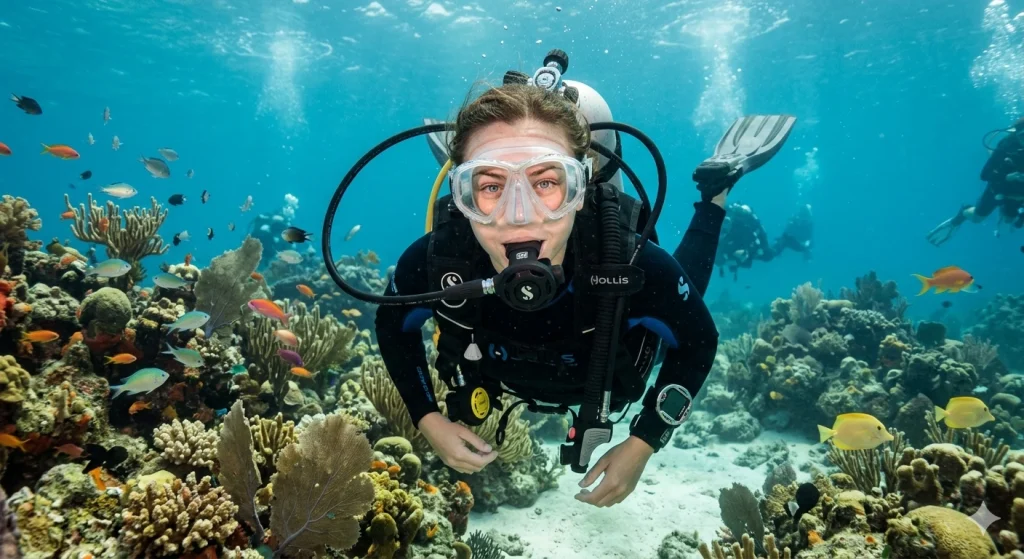
If you are planning intensive weeks of island-hopping through Hawaii or driving down the Florida Keys, there is an easier way to see the reefs without the constant contact lens anxiety. Wear a prescription dive mask.
Think of a prescription mask as a custom set of glasses built directly into your scuba or snorkel mask. Instead of wearing contacts under standard silicone skirts, the glass lenses themselves are matched exactly to your vision needs.
You can pick up affordable, off-the-shelf masks with step-diopter lenses (similar to reading glasses) for simple nearsightedness, or order custom-ground lenses that handle severe astigmatism and even bifocal needs.
For a water-centric vacation, this is perfect. Instead of fumbling with backup lens cases in a rocking boat cabin or trying to clean your hands with sandy beach towels, you simply apply a defogger on your mask, pull the strap over your head, and dive in. There is zero risk of a mask leak washing away a lens, and zero post-ocean eye dryness.
Check with your eye doctor or slide into a local dive shop before you catch your flight. Ditching the contacts might just be the best investment you make for your vision and your vacation.
Enjoy the Underwater World
While you can absolutely rock your contact lenses on a tropical getaway, diving into the ocean always introduces a game of risk versus reward. But now that you know exactly how to handle the waves, the sand, and the unexpected flooding of your mask, you are fully equipped to protect your eyes and enjoy the view.
The vibrant coral reefs, historic shipwrecks, and incredible marine life of Hawaii and the Florida Keys are waiting for you. Clear skies, calm seas, and happy diving galore! Go make some unforgettable underwater memories this summer.
Frequently Asked Questions
-
Yes, but be mindful of wind, salt spray, sunscreen, and dry air. Boat rides can make contacts feel dry before you enter the water. Bring contact-safe rewetting drops, and avoid touching your eyes while onboard.
-
Put your contacts in before applying sunscreen. This lowers the chance of transferring sunscreen residue from your fingers to your lenses. After applying sunscreen, wash and dry your hands well before touching your eyes or handling lenses again.
-
Yes. Salt air, wind, sun, and long boat rides can make your eyes feel drier than usual. If your lenses start feeling scratchy or uncomfortable, use contact-safe rewetting drops. Switch to glasses if the irritation continues.
-
Yes. Backup glasses are a smart part of any beach, snorkel, or dive trip. If your contacts get uncomfortable, lost, torn, or exposed to ocean water, glasses let you rest your eyes without being stuck with blurry vision.
-
Some dive shops may carry prescription masks for rent. However, availability can vary by location, prescription strength, and shop inventory. If you strongly rely on corrective lenses, call ahead or bring your own prescription mask so you’re not scrambling before your tour.
References
Scuba Diving With Contacts or Glasses. PADI/Megan Denny. https://blog.padi.com/scuba-diving-if-you-wear-contacts-or-glasses/. Published Date (August-19-2020). Date Accessed, June 17, 2026.
Wearing Contact Lenses While Diving. Divers Alert Network. https://dan.org/alert-diver/article/wearing-contact-lenses-while-diving/. Published Date (November-20-2024). Date Accessed, June 17, 2026.
Healthy Habits: Keeping Water Away from Contact Lenses. Centers for Disease Control and Prevention. https://www.cdc.gov/contact-lenses/about/healthy-habits-keeping-water-away-from-contact-lenses.html. Published Date (May-27-2025). Date Accessed, June 17, 2026.
How To Clear Your Mask. PADI/Emily Bates. https://blog.padi.com/how-to-clear-your-mask/. Published Date (August-12-2019). Date Accessed, June 17, 2026.
Preventing Eye Infections When Wearing Contacts. Centers for Disease Control and Prevention. https://www.cdc.gov/contact-lenses/prevention/index.html. Published Date (May-27-2025). Date Accessed, June 17, 2026.
Related Articles
-

Screen Time and Dry Eyes: Back-to-School Habits for Contact Lens Wearers
-

Exercising With Contact Lenses: Gym Tips That Keep Lenses Comfortable
-

10 Best Daily Contact Lens for Dry Eyes: Top Picks and Comfort Tips
-

How American Office Workers Can Reduce Dry Eyes From Screens and AC
-

The Ultimate Guide to Safe Contact Lens Removal: Key Dos and Don’ts