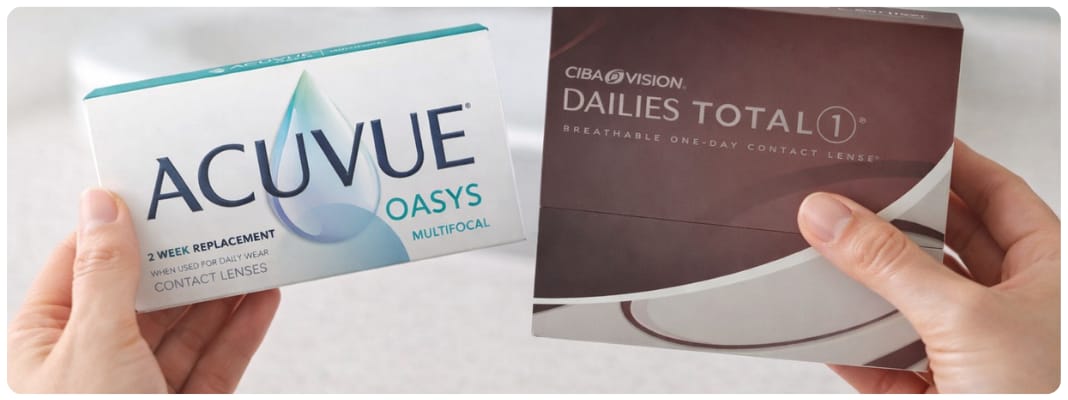
Choosing between daily vs biweekly contacts is less about “which is best” and more about what you will actually wear comfortably and care for consistently. If your schedule is busy, your eyes run dry, or you hate cleaning routines, the right choice can make a huge difference in comfort and confidence.
We will break down the real-world differences between daily disposable vs biweekly contacts, including routine, hygiene, comfort, and contact lens cost. By the end, you will know which option fits your routine better and what to ask your eye doctor before you order.
Quick Definition: Daily vs Bi Weekly Contacts
What Are Daily Contacts
Daily disposables are single-use lenses you wear once and throw away after removal. Since you start with a fresh lens every day, many new wearers find daily lenses simpler for contact lens hygiene and easier to manage with busy schedules. They are also a popular choice for travel, sports, and anyone who wants the convenience of “wear, remove, toss.”
What Do Biweekly Contact Lenses Mean
Biweekly contacts are also called two week contact lenses because each pair is designed to be worn for up to two weeks, as long as you clean and disinfect them properly every day. This option is considered reusable contacts, so you will need a consistent cleaning routine and the right contact lens solution. If you like a steady routine and do not mind nightly care, biweekly lenses can be a practical middle ground.
How Long Do Biweekly Contacts Last And How They Are Replaced
Biweekly lenses typically last up to 14 days from the time you open a new pair, not 14 wears. That means your contact lens replacement schedule matters even if you skip a few days, because the clock still runs once the lens is opened. If you are comparing 2 week contacts vs daily contacts, the biggest difference is that biweekly lenses require daily cleaning and proper storage, while dailies do not.
Daily vs Bi Weekly Contacts Comparison
Both lens types can be safe and comfortable when they match your prescription and routine. This quick table highlights the real differences you will notice when choosing daily vs biweekly contacts.
| What Changes | Daily Disposables | Biweekly Contacts |
| Routine | Wear once and toss. No cleaning steps after removal. | Wear up to two weeks with a consistent biweekly contacts cleaning routine. |
| Cleaning and supplies | No contact lens cleaning needed. Usually no contact lens solution or case required. | Requires daily contact lens cleaning, fresh contact lens solution, and a clean case. |
| Hygiene and buildup | Fresh lens daily supports easier contact lens hygiene daily vs biweekly. | Hygiene depends on how well you clean and replace on schedule. |
| Comfort late in the day | Often feels “clean” because buildup is less likely. | Can stay comfortable, but buildup can affect contact lens comfort if care slips. |
| Replacement schedule | Replace every day. Simple contact lens replacement routine. | Replace based on a contact lens replacement schedule counted from the day opened. |
| Best for | Busy schedules, travel, occasional wear, many people with contacts for allergies. | Routine wearers who are consistent with cleaning and want reusable lenses. |
| Cost factors | Often higher daily contacts cost for frequent wearers. | Lens cost may be lower, but add supplies, which impacts total contact lens cost. |
| “Set it and forget it” level | High. Minimal steps, less tracking. | Medium. Requires tracking replacement dates and nightly care. |
Daily Disposable vs Bi Weekly Contacts Pros and Cons
Both options can work well, but the best choice depends on how you live day to day. Use this quick breakdown to compare daily disposable vs biweekly contacts at a glance.
Daily Disposables
Pros
- Easy routine with no cleaning, which supports better contact lens hygiene
- Fresh lens every wear, which can help some people with contacts for allergies
- Convenient for travel, sports, and irregular wear schedules
- Often feels comfortable because there is less chance for buildup
Cons
- Daily contacts cost is often higher over time for frequent wearers
- You need to keep enough supply on hand to avoid running out
- More packaging waste compared to reusable options
Biweekly Contacts
Pros
- Often a practical balance of routine and value for frequent wearers
- Biweekly contacts cost can be lower than dailies depending on your brand and prescription
- Fewer lenses needed per month compared to dailies
- Can be very comfortable once you find the right fit and material
Cons
- Requires a consistent biweekly contacts cleaning routine and proper storage
- Needs ongoing supplies like contact lens solution and a clean case
- Higher risk of irritation if cleaning or replacement is inconsistent
- You must track the contact lens replacement schedule from the day you open a new pair
Daily vs Bi Weekly Contacts Cost
When people compare daily contact cost and biweekly contact cost, the real difference is not only the lenses. It is your wear frequency, whether you need specialty prescriptions, and what you spend on supplies for contact lens hygiene over time.
| Cost Factor | Daily Disposables | Biweekly Contacts |
| What you replace | One fresh pair per day you wear lenses | One pair lasts up to two weeks with proper care |
| Monthly usage estimate | If worn daily, about 30 pairs per month | If worn daily, about 2 pairs per eye per month |
| Supplies needed | Usually none beyond clean hands | Requires contact lens solution and a case |
| Extra ongoing costs | Mainly the lenses | Lenses plus solution and replacing the case |
| Specialty prescriptions | Can raise cost for both types | Can raise cost for both types |
| Best cost fit | Great if you wear lenses occasionally or want max convenience | Often better value if you wear lenses most days and follow the routine |
Prices shown are the lowest price per box after rebate from Lens.com listings for the same common products, and estimates assume daily wear, both eyes, and lens-only (bi-weekly also needs solution and a case).
Daily Contacts (Disposables)
| Product | Pack Size | Price Per Box | Approx Supply (per eye) | Est. Cost Per Month (both eyes) | Est. Cost Per Year (both eyes) |
|---|---|---|---|---|---|
| Dailies Total 1 | 90 pack | $41.49 | ~3 months | $27.66 | $331.92 |
| ACUVUE OASYS 1-Day with HydraLuxe | 90 pack | $40.99 | ~3 months | $27.33 | $327.92 |
| PRECISION1 | 90 pack | $42.74 | ~3 months | $28.49 | $341.92 |
Bi-weekly Contacts
| Product | Pack Size | Price Per Box | Approx Supply (per eye) | Est. Cost Per Month (both eyes) | Est. Cost Per Year (both eyes) |
|---|---|---|---|---|---|
| ACUVUE 2 | 6 pack | $10.19 | ~3 months | $6.79 | $81.52 |
| ACUVUE OASYS | 6 pack | $22.99 | ~3 months | $15.33 | $183.92 |
| ACUVUE OASYS | 12 pack | $23.99 | ~6 months | $8.00 | $95.96 |
Quick Note: For biweekly contacts, add the ongoing cost of contact lens solution and replacing your lens case, which increases the real monthly total.
Are Daily Contacts Healthier Than Bi Weekly Contacts
Both options can be safe when they fit your eyes and you follow your doctor’s instructions, but the “healthier” choice often comes down to hygiene habits. In many cases, daily disposable vs biweekly contacts can feel different because dailies reduce the chance of buildup over time and remove the need for a case, while two week contact lenses rely more on consistent cleaning and storage.
| Health And Comfort Factor | Daily Disposables | Biweekly Contacts |
| Buildup and residue | Often lower because the lens is replaced daily | Can increase if cleaning slips or lenses are overworn |
| Case related risk | No case needed which removes a common hygiene problem | Case care matters because poor case hygiene can cause issues |
| Allergy season and sensitivity | May help some people with contacts for allergies since each lens is fresh | Can still work well but needs strict cleaning to limit buildup |
| Dryness by end of day | Some wearers find dailies feel cleaner late day, but it depends on material | Can be comfortable with the right fit and care, especially if you follow your routine |
| Biggest risk driver | Overwearing or sleeping in lenses | Skipping cleaning steps or stretching the replacement schedule |
If you are prone to irritation, allergies, or inconsistent routines, dailies may be easier to manage for contact lens hygiene daily vs biweekly. While if you are consistent and follow the replacement schedule, biweeklies can be just as safe and comfortable, especially when your cleaning routine is solid and you use the right products.
Do Bi Weekly Contacts Need Solution and Daily Cleaning?
Yes. Biweekly contacts are reusable contacts, so they require daily care every time you wear them. A consistent biweekly contacts cleaning routine helps prevent buildup, keeps lenses comfortable, and supports better contact lens hygiene overall.
The Simple Nightly Routine (Clean, Rinse, Store)
Use this as your baseline routine for two week contact lenses unless your eye doctor gives different instructions.
- Wash and dry your hands before touching your lenses.
- Remove one lens and place it in your palm.
- Apply fresh contact lens solution and gently rub the lens (if your solution instructions recommend rubbing).
- Rinse the lens with fresh solution.
- Store it in a clean case filled with fresh solution and close the caps tightly.
Lens Case Rules That Prevent Problems
Your case can become the weak link in contact lens cleaning if it is not kept clean and dry.
- Empty the case after each use and rinse with fresh solution, not water.
- Let it air dry upside down with the caps off in a clean area.
- Replace the case regularly, especially if it looks worn or cloudy.
- Never “top off” old solutions. Always use fresh.
What To Avoid (Common Mistakes)
- Using tap water to rinse lenses or the case
- Reusing yesterday’s solution
- Wearing lenses past the contact lens replacement schedule
- Cleaning lenses with anything other than the recommended contact lens solution
- Sleeping in lenses unless your eye doctor specifically prescribed it
| What You Do | Why It Matters For Biweeklies |
| Clean and disinfect daily | Prevents deposits that affect comfort and vision |
| Use fresh solution every time | Old solution can reduce disinfection effectiveness |
| Keep the case clean and dry | Cases can collect germs and residue quickly |
| Replace on schedule | Overwearing increases dryness and buildup |
Can You Wear Bi Weekly Contacts Every Day Safely
For most people, yes, you can wear biweekly contact lenses every day as long as your prescription, fit, and eye health support it and you follow proper care. The “safe” part depends less on how often you wear them and more on whether you clean them daily, store them correctly, and replace them on time.
When Daily Wear Is Typically Fine
You are more likely to do well wearing two week contacts daily if you:
- Follow your contact lens replacement timeline from the day you open a new pair
- Stick to your biweekly contacts cleaning routine every night
- Use the right contact lens solution and keep your case clean
- Remove lenses at the recommended time instead of stretching wear hours
When It May Be Smarter To Switch To Dailies
Consider daily disposables if your routine is unpredictable or if you frequently experience irritation. Dailies can be easier for people who deal with contacts for allergies or who struggle with consistent cleaning because there is no case or solution step.
The Safety Rule That Matters Most
Do not push through discomfort. If your eyes feel dry, scratchy, or red, remove the lenses and switch to glasses, then reassess. Whether you wear daily contacts or biweeklies, consistent hygiene and replacement habits are what make contact lens wear safer and more comfortable over time.
Which Fits Your Routine Better
If you are choosing daily vs biweekly contacts, the best option is the one you will actually wear and care for consistently. Use this quick guide to match your lifestyle to the lens type that makes contact lens hygiene and comfort easiest.
| Your Routine Looks Like This | Best Fit | Why It Works |
| You want the simplest setup with no cleaning | Daily disposables | Fresh lens every wear and minimal steps supports consistent hygiene |
| You wear lenses most days and can follow a routine | Biweekly contacts | Great balance of value and routine if you follow the contact lens replacement schedule |
| You travel often or have unpredictable days | Daily disposable vs biweekly contacts tends to favor dailies | No case or solution needed and easy to pack |
| Allergy season bothers your eyes | Biweekly contacts vs daily disposables often favors dailies | Fresh lenses may help reduce buildup that can worsen irritation for some people |
| You sometimes forget nightly cleaning | Daily disposables | Skipping cleaning is a common reason reusable lenses get uncomfortable |
| You are budget-focused and consistent | Biweekly contact lenses | Biweekly contacts cost can be lower overall for frequent wearers who follow care rules |
| You want “best comfort” late in the day | Depends on fit and material | Both can be comfortable, but material and fit matter more than schedule |
Shortcut: If convenience and fewer steps matter most, daily contacts usually win. If you want a reusable routine and can commit to cleaning and replacing on time, two week contact lenses can fit your day-to-day well.
FAQs Daily vs Bi Weekly Contacts
1. Are daily vs biweekly contacts better?
Neither is universally “better” because the best choice depends on your routine and how consistent you are with care. Daily disposables are easiest for hygiene and convenience, while biweekly contact lenses can be a great value if you follow the cleaning routine and replace on schedule. Your eye doctor’s recommendation and your comfort in real wear should guide the decision.
2. What do biweekly contact lenses mean?
Biweekly contacts are two week contact lenses designed to be worn for up to 14 days from the day you open them, as long as you clean and disinfect them properly each day. They are reusable contacts, so they require a consistent cleaning and storage routine. If you do not want nightly care, dailies may feel easier.
3. How long do two week contacts last?
Most biweekly contacts last up to two weeks after opening, not two weeks of wear days. Even if you skip a few days, you still need to follow the contact lens replacement schedule based on the open date. Stretching past that window can increase dryness, buildup, and discomfort.
4. What are the disadvantages of daily disposables?
The main tradeoff is daily contact cost, which can be higher for people who wear lenses every day. You also need to keep enough supply on hand because you cannot reuse a daily lens safely. Many wearers still choose dailies because they simplify contact lens hygiene and reduce cleaning steps.
5. Is it cheaper to use dailies or biweekly lenses with solution?
It depends on how often you wear lenses and whether you factor in supplies. Biweeklies can look cheaper upfront, but you also need contact lens solution and a clean case, which adds to total contact lens cost. If you wear lenses occasionally or want maximum convenience, dailies can be worth it even if the per-lens price is higher.
Daily vs Bi Weekly Contacts Comes Down to Your Routine
Choosing daily vs biweekly contact lenses is really about matching your lenses to your habits. If you want fewer steps, travel often, or prefer a fresh lens every wear, daily disposables are usually the simplest fit for consistent comfort and hygiene. If you wear lenses most days and can commit to cleaning and replacing on time, biweekly contacts can be a smart balance of routine, value, and everyday wear.
Ready to choose the option that fits your schedule best? Shop daily contacts and biweekly contacts at Contacts America and stock up early so you are not stuck stretching your supply.
Disclaimer: This information is for general informational purposes only and is not a substitute for professional advice, diagnosis, or treatment.
References
About Contact Lenses. Centers for Disease Control and Prevention (CDC). https://www.cdc.gov/contact-lenses/about/index.html. May 27, 2025.
Buying Contact Lenses. U.S. Food & Drug Administration (FDA). https://www.fda.gov/medical-devices/contact-lenses/buying-contact-lenses. Content current as of Oct 28, 2020.
How Long Do Contacts Last? What To Know Before Getting Reusable or Daily Lenses. Cleveland Clinic Health Essentials. https://health.clevelandclinic.org/how-often-should-i-change-my-contact-lenses. March 26, 2025.
Contact lens care tips for patients: an optometrist’s perspective. Clinical Optometry (Auckland) via PubMed Central (National Library of Medicine). https://pmc.ncbi.nlm.nih.gov/articles/PMC6118862/. August 11, 2017.
ACUVUE OASYS Brand Contact Lenses Patient Instruction Guide. Johnson & Johnson Vision (ACUVUE). https://assets.contentstack.io/v3/assets/blt541542d4b6d9d1cc/blt4e981924c729d716/av-oasys-2week-pig.pdf. Revision date March 2023.
Related Articles
-
Weight Loss Drugs and Eye Stroke Risk (What Research Shows)
-
Dailies Total 1 Vs. Dailies AquaComfort Plus: Features, Comfort, and Value
-
Bausch & Lomb ULTRA vs Acuvue Vita: The Best Contact Lens for Your Lifestyle
-

What Should You Look for in Contact Lenses for an Active Spring Season?
-
FIFA World Cup 2026 Contact Lens Guide: Travel, Stadium, and Screen Tips