June is Cataract Awareness Month, so it’s a good time to answer a question many contact lens wearers have: Can you wear contact lenses if you have cataracts? Yes, many wearers can still use contacts with cataracts, especially in the early stage. The answer depends on how much the cataract affects vision, how stable the prescription is, and whether the eyes are still healthy enough for contact lens wear. Prevent Blindness lists Cataract Month from June 1 to June 30 and notes that more than 25.7 million Americans age 40 and older have cataracts.
Contact lenses can still correct common prescription needs while cataracts are developing. The National Eye Institute says a new pair of glasses or contact lens prescription can help some patients see better with early cataracts. Contacts can sharpen vision when nearsightedness, farsightedness, astigmatism, or presbyopia is part of the issue. They cannot clear the cloudy lens inside the eye, so vision can still feel hazy even when the contact lens prescription is correct.
What Are Cataracts?
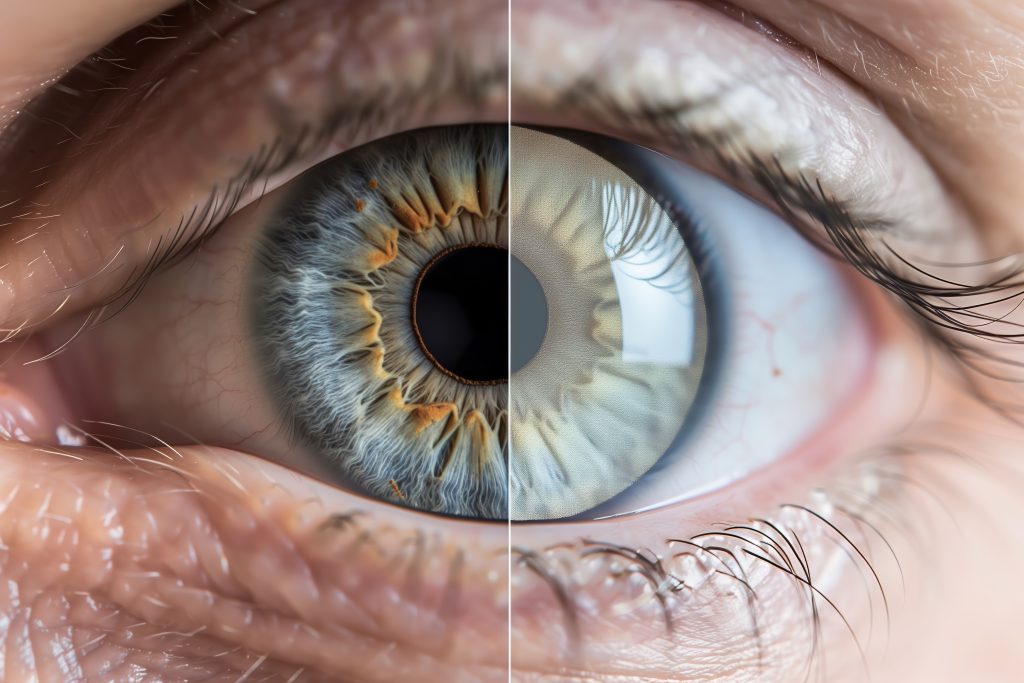
A cataract is a cloudy area in the eye’s natural lens. That lens sits inside the eye and helps focus light so you can see clearly. When proteins in the lens break down, the lens can become cloudy, making vision look blurry, hazy, dim, or less colorful. The American Academy of Ophthalmology explains that cataracts can make things look blurry, hazy, or less colorful as the eye’s natural lens becomes cloudy.
Cataracts are common with age, though they can also be linked with eye injury, medications, health conditions, or cataracts present at birth. The American Optometric Association describes a cataract as a cloudy or opaque area in the normally clear lens of the eye. Cataracts can interfere with vision depending on size and location. One eye can also be more affected than the other, which is why vision changes can feel uneven.
Can You Wear Contact Lenses With Cataracts?
Yes, you can wear contact lenses with cataracts if your eye doctor says contacts are safe for your eyes and your prescription still improves your vision. Contact lenses sit on the cornea, which is the clear front surface of the eye. Cataracts form deeper inside the eye, in the natural lens. A contact lens can correct the prescription error in front, but it cannot remove cloudiness from the lens inside the eye.
The U.S. Food and Drug Administration (FDA) states that contact lenses can correct myopia, hyperopia, astigmatism, and presbyopia. That means contacts can still help if your cataracts are mild and part of your blur comes from a correctable prescription. A wearer with cataracts and astigmatism, for example, might still benefit from toric contacts. A wearer with cataracts and presbyopia might still use multifocal contacts, though cataract haze can still limit sharpness.
When Contacts Can Still Work
Contacts can still work well when cataracts are mild, and vision still improves with an updated prescription. Some wearers notice small changes first, such as needing brighter light to read or having more trouble with glare at night. If the cataract is still early, a contact lens prescription update can make daily tasks feel easier. Your eye doctor can check whether the blur is mostly from the prescription, the cataract, dry eye, or another eye concern.
Contact lens comfort also matters. A cataract affects the lens inside the eye, not the contact lens sitting on the surface. Still, many adults with cataracts are also at an age where dry eye, medication use, or age-related tear changes can make contacts feel less comfortable. That is why a full eye exam is more useful than guessing based on symptoms alone.
When Contacts Might Not Be Enough
Contacts might not be enough when the cataract starts causing haze, glare, halos, poor contrast, or dull color that does not improve with a new prescription. A clean, properly fitted contact lens can still leave vision feeling foggy if the cloudy natural lens is scattering light inside the eye. Night driving can become harder because headlights create glare or rings around lights. Reading can also feel more tiring if the cataract reduces contrast.
Mayo Clinic states that when prescription glasses or contacts can no longer clear vision, surgery is the only effective treatment for cataracts. That does not mean every patient needs surgery right away. It means contacts have limits once cataracts begin blocking clear vision during daily activities. An eye doctor can help decide whether a prescription update is still enough or whether cataract surgery should be discussed.
How Cataracts Can Affect Contact Lens Wear
Cataracts do not always change how a contact lens fits on the eye. A wearer can have a good lens fit and still feel like the vision is not crisp. That can be confusing because the first instinct is to blame the contacts, the lens solution, or screen use. An exam can help confirm whether the contact lens prescription, eye surface, or cataract is causing the blur.
Common cataract-related changes include:
- Cloudy or blurry vision
- More glare from headlights, sunlight, or screens
- Halos around lights
- Trouble seeing clearly at night
- Colors looking faded, dull, or yellowed
- More frequent prescription changes
- Clearer vision in one eye than the other
- Vision that still feels off with clean lenses
These symptoms can overlap with contact lens issues. Dry lenses, protein buildup, old lenses, allergies, and an outdated prescription can also make vision blurry. The difference is that contact lens issues can sometimes improve with lens care, fresh lenses, rewetting drops, or a prescription update. Cataract-related blur can stay even when the contact lens itself is clean and the fit is correct.
Contacts, Glasses, Or Cataract Surgery?
The best option depends on how much the cataract affects daily life. Some wearers do well with updated contacts for a while. Others prefer glasses when vision keeps changing or when contacts feel dry. Surgery becomes the stronger option when cataracts make everyday tasks harder despite updated glasses or contacts.
Eye Health Guide
Vision care options for cataracts
Click any row to learn more about each option.
| Option | When it can help | What to know |
|---|---|---|
|
Contact Lenses
Non-surgical
|
Early cataracts with a correctable prescription | Contacts can sharpen refractive vision, but they cannot clear the cloudy natural lens. |
|
Best suited for
Limitations
|
||
|
Glasses
Non-surgical
|
Mild cataracts, changing prescriptions, or contact lens discomfort | Glasses can be easier on days when contacts feel dry or vision feels unstable. |
|
Best suited for
Limitations
|
||
|
Cataract Surgery
Surgical
|
Cataracts interfere with reading, driving, work, or daily tasks | Surgery removes the cloudy lens and replaces it with an artificial lens. |
|
Best suited for
What to expect
|
||
Cataract surgery removes the cloudy natural lens and replaces it with an artificial lens. Mayo Clinic describes cataract surgery as a procedure that removes the cloudy lens and replaces it with a clear artificial lens. Many patients still need glasses or contacts after surgery, depending on the artificial lens chosen, healing, and remaining prescription needs. Your eye doctor can explain what vision correction might look like after surgery based on your eyes.
Can Contacts Help Before Cataract Surgery?
Contacts can help before cataract surgery if your prescription still improves your vision enough for daily tasks. An updated contact lens prescription can be useful when the cataract is still early, and the eye still responds well to correction. Your eye doctor can also check whether contact lens wear should be paused before surgical measurements. Accurate measurements are needed before cataract surgery, so follow the timing your doctor gives you.
Updated Prescriptions
Cataracts can change vision over time, which can make a once-reliable contact lens prescription feel weaker. A wearer might notice that distance signs look softer, reading feels harder, or one eye seems less clear than the other. If the cataract is mild, an updated prescription can still improve daily comfort and clarity. If the cataract has progressed, the new prescription might help only a little.
Multifocal Or Monovision Contacts
Some wearers use multifocal or monovision contacts to manage presbyopia, which is the age-related change that affects near vision. These lens options can still work for some patients with early cataracts. The challenge is that cataracts can reduce contrast, sharpness, and make lights appear more scattered. A multifocal design can be correct on paper, while the cataract still makes the view feel dim or hazy.
Eye Exams Before Surgery
Regular eye exams are especially helpful if you wear contacts and have cataracts. Your eye doctor can check the cataract, contact lens fit, cornea, tear film, and retina. That exam can show whether a contact lens update is worth trying or whether cataracts are the bigger reason for poor vision. It also helps catch other eye concerns that can mimic cataract symptoms.
Can You Wear Contacts After Cataract Surgery?

Some wearers can use contact lenses after cataract surgery, but only after the eye doctor says the eye has healed enough. The eye needs time to recover after surgery, and contact lenses sit directly on the eye surface. Wearing contacts too soon can irritate the eye or interfere with healing. Your surgeon or eye doctor will give you the right timeline based on your recovery.
A new contact lens prescription might be needed after cataract surgery. The prescription can change once the cloudy natural lens is removed and replaced with an artificial lens. Some patients need correction for astigmatism, presbyopia, or a remaining refractive error. Others rely more on glasses, depending on the lens implant and how the eye heals.
Wait Until Your Eye Doctor Clears You
Do not put contact lenses back in right after cataract surgery unless your eye doctor gives clear approval. Even if the eye feels comfortable, healing is still happening. Your doctor might prescribe medicated drops, limit certain activities, or ask you to avoid eye rubbing. Contact lens wear should restart only when the eye surface is stable enough.
Get A New Prescription After Healing
Do not reorder old contact lenses after cataract surgery without a new exam. Your old prescription was based on your vision before the cloudy lens was removed. After healing, your eye doctor can measure your updated vision and check whether contacts are still the right choice. That prescription will also reflect any remaining astigmatism, near-vision needs, or comfort concerns.
Can Contact Lenses Prevent Cataracts?
Contact lenses do not prevent cataracts. Cataracts are linked with aging, eye injury, diabetes, smoking, prolonged sunlight exposure, and some medications. The Centers for Disease Control and Prevention states that cataract is the leading cause of vision loss in the United States and the leading cause of blindness around the world.
Some contact lenses include UV-blocking features, but they are not a full replacement for sunglasses. Contact lenses cover only part of the eye, so the eyelids, the whites of the eyes, and the skin around the eyes still need protection. The National Eye Institute notes that some contacts block UV, and wearing UV-blocking sunglasses over contacts can protect areas that contacts do not cover. For outdoor wear, sunglasses with UV protection are still the safer habit.
Tips For Wearing Contacts With Cataracts
If your eye doctor says you can keep wearing contacts, healthy lens habits become even more helpful. Cataracts can already make vision feel less clear, so poor contact lens care can add another layer of blur or discomfort. Fresh lenses, clean hands, and the right replacement schedule can help prevent avoidable irritation. Contact lens wear should feel comfortable, not like something you have to push through.
Helpful habits include:
- Wear only the contact lenses prescribed for you.
- Replace your lenses on the schedule your eye doctor gave you.
- Clean and store reusable lenses with fresh solution.
- Do not sleep in contacts unless your prescription allows overnight wear.
- Switch to glasses if your eyes feel dry, sore, red, or irritated.
- Schedule an eye exam if vision changes quickly.
- Do not assume blurry vision is only a contact lens issue.
Safe contact lens wear also depends on having a valid prescription. The FDA states that patients should receive a copy of their contact lens prescription after the fitting is complete. A valid prescription helps confirm the lens power, fit, product name, and wearing schedule your eyes need. It also helps prevent ordering lenses that do not match your current vision or eye health needs.
When Should You Talk To An Eye Doctor?
Talk to an eye doctor if your contacts no longer give you clear, comfortable vision. Cataract symptoms can develop slowly, so changes can be easy to brush off at first. A wearer might think the lenses are dirty, the room is too dim, or the prescription is slightly outdated. An eye exam can show what is actually causing the change.
Schedule an eye exam if you notice:
- Cloudy or foggy vision
- More glare than before
- Trouble driving at night
- Halos around lights
- Frequent prescription changes
- Double vision in one eye
- Colors looking dull
- Eye redness, pain, or irritation with contacts
These symptoms do not automatically mean cataracts are the only concern. Dry eye, corneal changes, retinal conditions, medication side effects, and other eye concerns can affect vision, too. Contact lens wearers should be especially careful with redness, pain, discharge, or sudden vision changes. Those symptoms need prompt care because they can point to more urgent eye problems.
Should You Wear Contacts If You Have Cataracts?
Yes, you can wear contact lenses with cataracts if your eye doctor says your eyes are healthy enough and your prescription still gives you useful vision. Contacts can help with nearsightedness, farsightedness, astigmatism, and presbyopia. They can also be part of your routine while cataracts are mild. The limit is that contacts cannot clear the cloudy lens inside the eye.
If vision still feels blurry, hazy, dim, or glare-filled with clean contacts and an updated prescription, cataracts might be affecting vision more than the contact lens prescription can correct. That is the point where an eye exam becomes the best next move. Your eye doctor can tell you whether a prescription update, glasses, contact lens change, or cataract surgery discussion makes sense. Once you have a valid, updated prescription, you can shop for contact lenses that match your doctor’s instructions, comfort needs, and wearing schedule.
FAQ
Wearing contacts with cataracts
Tap any question to read the answer.
Contact lenses do not directly make cataracts worse because they sit on the cornea, not on the eye's natural lens where cataracts form. Cataracts develop inside the eye when the natural lens becomes cloudy. Poor contact lens habits can still harm eye health, especially if lenses are overworn, cleaned poorly, or worn during eye irritation. Follow your eye doctor's wearing schedule and book an exam if your vision or comfort changes.
Your contacts might be correcting your prescription, but the cataract can still scatter light inside the eye. That can leave vision looking cloudy, hazy, dim, or washed out, even when the contact lens is clean. Dry eye, lens buildup, or an old prescription can also cause blur, so an exam is the safest way to separate the causes. If a new prescription no longer clears your vision well, your eye doctor might discuss cataract treatment options.
Yes, some wearers can use multifocal contacts with cataracts, especially when cataracts are still mild. Multifocal contacts can help with near and distance correction, but cataracts can reduce contrast and sharpness. A lens can be the right design for your prescription and still feel less clear if the cataract is causing haze. Your eye doctor can check whether multifocal contacts still work well or if another option makes more sense.
Yes, some wearers can wear contacts before cataract surgery if their eye doctor says it is safe. Your doctor might ask you to stop wearing contacts for a period before surgical measurements. Contact lenses can affect the eye surface and corneal measurements, so timing matters before surgery planning. Follow your doctor's instructions rather than guessing when to pause or restart contact lens wear.
Yes, some patients can wear contacts after cataract surgery, but only after the eye has healed and the doctor gives approval. Some still need contacts for astigmatism, presbyopia, or another remaining prescription need. Others do better with glasses or need little correction after surgery. A new exam after healing will show what type of vision correction fits your eyes.
You might need a new contact lens prescription if your vision has changed, especially if blur, glare, or night vision problems are becoming more noticeable. A new prescription can help when cataracts are still early and your vision still responds to correction. If cataracts have progressed, a prescription update might not fully clear your vision. Your eye doctor can tell whether contacts are still enough or if cataract treatment should be discussed.
References
Cataract Month. Prevent Blindness. Accessed June 1, 2026.
Cataracts. National Eye Institute. Updated November 26, 2025.
What Are Cataracts? American Academy of Ophthalmology. Updated December 1, 2025.
Cataract. American Optometric Association. Accessed June 1, 2026.
Contact Lenses. U.S. Food and Drug Administration. Updated October 28, 2019.
Cataracts Diagnosis and Treatment. Mayo Clinic. Updated March 14, 2026.
Cataract Surgery. American Academy of Ophthalmology. Updated December 1, 2025.
About Common Eye Disorders and Diseases. Centers for Disease Control and Prevention. Updated May 15, 2024.
Protecting Your Eyes From The Sun’s UV Light. National Eye Institute. Published July 5, 2022.