You know that quick moment of worry when your contact lens box sits in a hot mailbox, your lenses feel dry during a long flight, or your eyes start watering when a cold wind hits your face. It is easy to wonder whether the temperature damaged your contacts or made them unsafe to wear. In most cases, sealed contact lenses are not instantly ruined by heat or cold, but temperature can affect comfort, moisture, hygiene, and how you care for your lenses.
That is why understanding how temperature affects your contacts matters. Hot weather can make lenses feel dry faster, cold weather can make your eyes feel scratchy, and travel can expose your lenses to changing temperatures and dry air.
Can Temperature Damage Your Contact Lenses?
Can Contact Lenses Melt In Your Eyes?
No, contact lenses will not melt in your eyes from normal hot weather, outdoor heat, or a sunny day. Your lenses sit on your tear film, and your eyes naturally stay close to body temperature. Long before heat could damage a lens in your eye, your face and eyes would feel uncomfortable enough for you to move away from the heat source.
This is one of the biggest myths about hot-weather contact lenses. You can wear contacts on warm days, but you still need to protect your eyes from dryness, sweat, wind, sunscreen, and ultraviolet exposure. A hat and sunglasses can help reduce glare and wind, while contact-safe rewetting drops can help when your lenses start to feel dry.
The real concern is not melting. It is comfortable and safe. If your eyes feel gritty, red, painful, or unusually sensitive to light, remove your lenses and switch to glasses. The United States Food and Drug Administration advises contact lens wearers to remove lenses and contact an eye care professional if signs of irritation or infection appear.
If heat makes your lenses feel dry faster, this guide on why your eyes feel dry when the AC or heater is on explains the tear-film side of the problem.
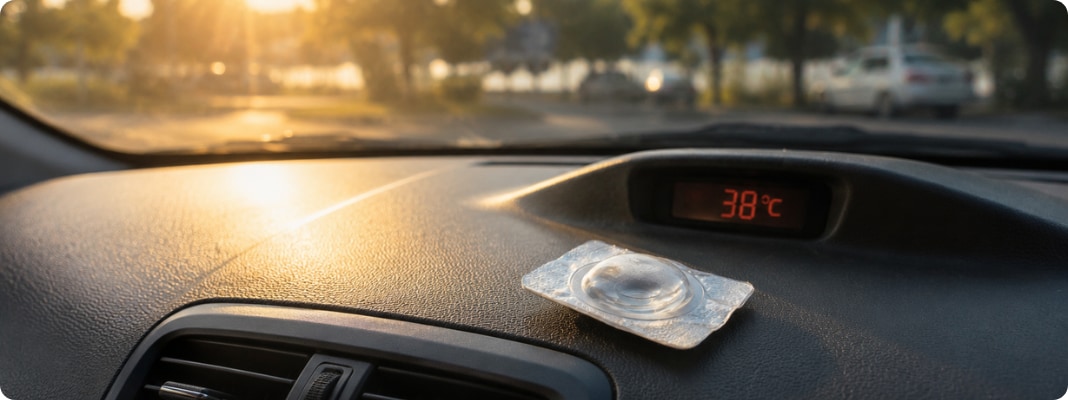
Can Contacts Melt In A Hot Car Or Mailbox?
If you are worried about contacts left in a hot car or a warm mailbox, the answer is usually less scary than you might think. Sealed contact lenses are generally more temperature-resistant than many wearers expect, especially when the blister pack or original packaging is still intact.
That said, do not use heat-exposed lenses unthinkingly. Check the packaging first. If the blister is sealed, the solution looks clear, and the lens still looks fully hydrated and normal, it is usually a good sign. If the package is damaged, leaking, swollen, dried out, cloudy, or already opened, do not use that lens.
Here is a simple inspection routine:
- Check if the foil seal is still fully attached.
- Look for leaks, cracks, or dried solutions.
- Make sure the lens is floating in a clear sterile solution.
- Do not use the lens if it looks dry, folded, torn, cloudy, or misshapen.
- When in doubt, ask your eye doctor or replace the lens.
This is especially important for online orders, travel bags, gym bags, and lenses left inside cars. Heat may not automatically ruin sealed lenses, but damaged packaging changes the risk.
For reusable lenses, storage habits matter too, here’s a quick guide on how to store contact lenses overnight (temperature and no-case tips).
Can Contact Lenses Freeze?
Yes, contact lenses can freeze if stored in solution during very cold conditions, but they will not freeze while on your eyes. Your cornea and tears keep the lens warm enough during normal wear.
If sealed contact lenses arrive cold or frozen, do not open them right away. Let the unopened package thaw naturally at room temperature. Do not microwave it, place it near a heater, run it under hot water, or try to speed up the process. Once thawed, inspect the package and lens carefully.
Use the lens only if:
- The blister pack is still sealed.
- The solution did not leak.
- The lens looks soft, hydrated, and normal.
- The solution is clear.
- The lens feels comfortable after insertion.
If the lens feels sharp, dry, warped, or uncomfortable, remove it immediately and use a fresh lens or your backup glasses.
When Should You Throw Lenses Away?
Some situations are not worth risking. Contacts sit directly on your eyes, so a questionable lens is not something to “test” for the rest of the day. Throw the lens away or avoid using it if you notice any of the following:
| Do Not Use the Lens If… | Why It Matters |
|---|---|
| The blister pack is open, leaking, or damaged | The sterile seal may be compromised. |
| The lens is dried out or stuck to the package | A dried lens can become brittle, warped, or uncomfortable. |
| The solution looks cloudy or unusual | Cloudiness can signal contamination or packaging damage. |
| The lens is torn, folded, or misshapen | A damaged lens can scratch or irritate your eye. |
| The lens touched tap water, pool water, shower water, or hot tub water | Water can introduce germs and increase infection risk. |
| Your eye hurts after insertion | Pain is not normal contact lens adjustment. Remove the lens. |
| Your eye becomes red, swollen, light-sensitive, or blurry | These can be signs of irritation or infection. |
Water exposure deserves extra caution. The Centers for Disease Control and Prevention says water can cause soft contact lenses to change shape, swell, and stick to the eye, which can scratch the cornea and make it easier for germs to enter. The agency also warns that Acanthamoeba, a germ found in many water sources, can cause a rare but serious eye infection.
The safest rule is simple: when a lens looks wrong, feels wrong, or touches water, do not push through it. Your eyes are worth more than one pair of contacts.
If you are traveling or at the beach a lot, it helps to know how to properly dispose of contact lenses so you are not tempted to “reuse” a risky lens.
1. Heat Can Dry Out Your Eyes and Lenses Faster
What Happens In Hot Weather
Hot weather does not have to be extreme to affect how your contacts feel. A warm afternoon, direct sun, dry wind, air conditioning, or a long outdoor day can make your tear film dry up faster. Your tear film is the thin layer of moisture that helps your lenses move smoothly every time you blink. When that moisture breaks down too quickly, your contacts can start to feel dry, sticky, gritty, or blurry.
This is why hot weather contact lenses can feel comfortable in the morning but annoying by the afternoon. The lens itself may still be fine, but your eyes may not have enough stable moisture to keep it feeling smooth. The National Eye Institute explains that dry eye can occur when tears evaporate too quickly, and symptoms can include scratchiness, burning, redness, light sensitivity, and blurry vision.
Heat is not the only factor. Wind, smoke, dry air, and air conditioning can also make your tears evaporate faster. That matters when you are walking outside, driving with vents blowing toward your face, sitting under an office air conditioner, or spending time near fans. The top-page research also repeatedly connects hot weather with dry eyes, contact lens discomfort, sweat irritation, and the need for sunglasses or rewetting drops.
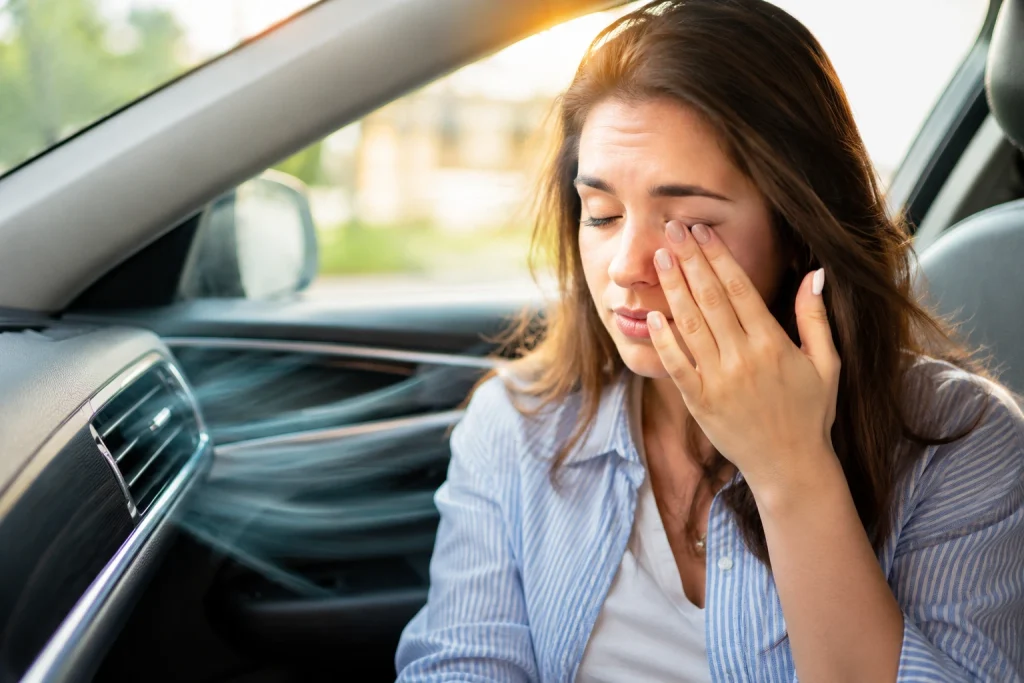
If dryness is a frequent pattern for you, these best daily contacts for dry eyes are worth comparing with your current lenses.
Signs Your Contacts Are Drying Out
You can usually tell when your lenses are losing that fresh, comfortable feel. Watch for these common signs of contact lens dryness:
- Your lenses feel scratchy or rough when you blink.
- Your vision clears after blinking, then gets blurry again.
- Your eyes feel tired earlier than usual.
- You blink more often to sharpen your vision.
- Your lenses feel sticky or harder to move in the eye.
- Your eyes feel dry after being outdoors, in air conditioning, or near a fan.
- Your lenses feel harder to remove at the end of the day.
A little dryness can occur from time to time, especially in summer or on long-wear days. But pain, strong redness, swelling, discharge, or blurry vision that does not clear after removing your lenses is not normal.
How To Fix Heat-Related Contact Lens Dryness
The best way to manage heat-related dryness is to protect your tear film before your eyes start feeling irritated. These simple habits can help keep your lenses comfortable during hot, sunny, windy, or air-conditioned days.
Use Contact-Safe Rewetting Drops
Choose rewetting drops labeled safe for contact lenses, as regular eye drops are not always made for use with lenses. If your eyes often dry out, ask your eye doctor whether preservative-free artificial tears are a better option for your lens type and wearing schedule.
Drink Water Throughout the Day
Hydration will not solve every case of dry eyes with contacts, but dehydration can make dryness feel worse. Keep water nearby during hot weather, workouts, outdoor activities, and travel days.
Wear Sunglasses Outdoors
Sunglasses help protect your eyes from the sun, glare, dust, and wind. They also reduce direct airflow across your eyes, helping your tear film stay stable for longer.
Avoid Direct Air Conditioning or Fan Airflow
Air conditioning and fans can dry out your eyes by making your tears evaporate faster. In the car, at work, or at home, point vents and fans away from your face whenever possible.
Shorten Your Wear Time When Your Eyes Feel Irritated
If your lenses start to feel dry, sticky, or uncomfortable, do not force yourself to finish the day wearing them. Remove your contacts, switch to glasses, and give your eyes time to recover.
Switch to Glasses If Dryness Continues
Glasses can give your eyes a break on extra-hot, windy, smoky, or dusty days. If dryness keeps happening, schedule a contact lens check so your eye doctor can review your tear film, lens fit, prescription, and replacement schedule.
If your vision clears after blinking and then gets blurry again, this breakdown of why contacts get blurry and how to fix it can help you pinpoint whether it’s dryness or lens film.
2. Sweat, Sunscreen, and Outdoor Debris Can Irritate Your Contacts
Why Sweat Affects Contact Lens Comfort
Summer discomfort is not always caused solely by heat. Sometimes the problem is what heat brings with it: sweat, sunscreen, dust, pollen, makeup, and outdoor debris. When any of these get near your eyes, your contacts can start to feel uncomfortable fast.
Sweat can sting because it contains salt. Sunscreen can blur your vision or leave an oily film in your eyes if it gets into them. Dust and pollen can stick to your lashes, eyelids, or lenses, making your eyes feel itchy or gritty. If you rub your eyes, you can move more debris onto the lens or shift the lens out of place.
This is where contact lens comfort depends heavily on clean handling. Your lenses sit directly on your eyes, so even small amounts of sweat, oil, or residue can feel much bigger than they look.
How To Keep Sweat Away From Your Contacts
A few simple habits can make outdoor wear much easier:
- Wear a sweatband, cap, or towel during workouts.
- Apply sunscreen carefully around your eyes, then let it dry before handling your lenses.
- Choose a sunscreen that is less likely to run into your eyes when you sweat.
- Wash and dry your hands before touching your lenses or eyes.
- Avoid rubbing your eyes when sweating.
- Rinse your face carefully after outdoor activity, but remove your lenses before showering.
- Remove and clean reusable lenses if they feel contaminated.
- Replace daily lenses instead of trying to rinse and reuse them.
Be extra careful at the beach, pool, lake, or hot tub. Water exposure is a bigger safety concern than sweat because water can carry germs that may stick to contact lenses.
Best Fix For Hot-Weather Activity
For workouts, beach days, long errands, outdoor events, and travel, daily disposable lenses can be a practical choice if your eye doctor approves them for your prescription and eye needs. You start with a fresh pair in the morning, then throw them away after use. That means less cleaning, less storage, and fewer chances for sweat, sunscreen, dust, or pollen to build up over multiple wears.
Daily lenses are especially helpful when your routine is not predictable. If you are flying, hiking, attending an outdoor event, or spending the day in humid weather, you can pack extra pairs and switch to a fresh lens if needed. Just remember that daily disposable lenses are still not safe for swimming, showering, or hot tubs. “Fresh” does not mean water-safe.
For reusable lenses, bring a clean lens case, fresh disinfecting solution, rewetting drops labeled for contacts, and backup glasses. If your eyes start to sting, burn, or blur during activity, remove your lenses rather than rubbing your eyes and hoping the feeling goes away. A quick glass break is often the smartest fix.
If you wear lenses during workouts or long outdoor days, these gym and exercise contact lens tips can help you avoid stingy, gritty lenses mid-activity.
3. Water Exposure Is Riskier Than Heat Itself
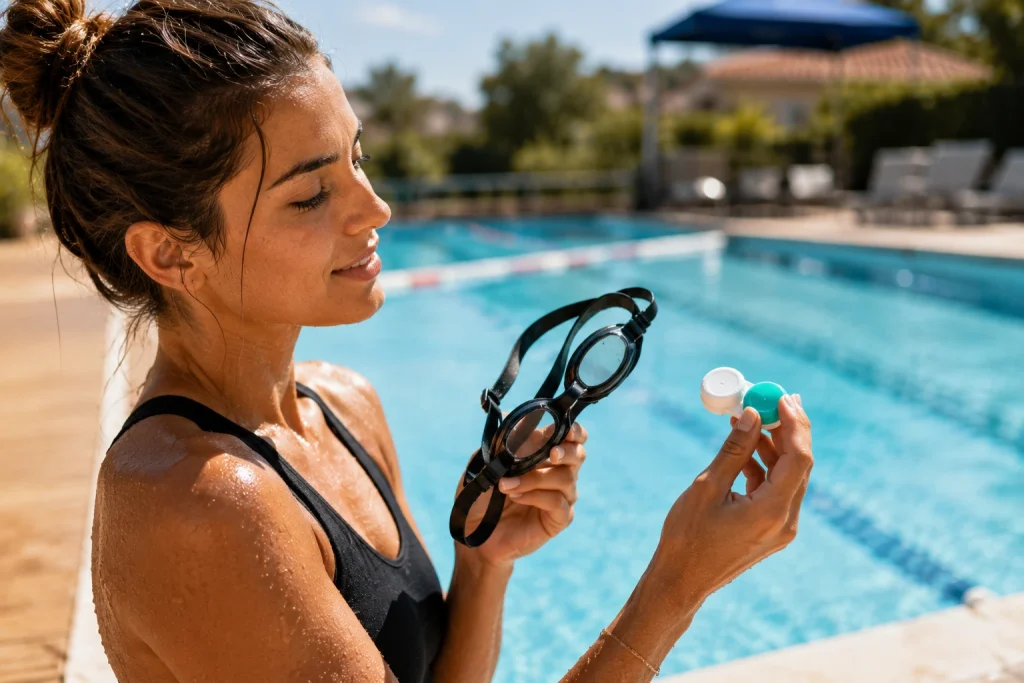
If there is one contact lens safety rule to remember in hot weather, it is this: heat is usually not the biggest problem. Water is. Your contacts are unlikely to melt on a sunny day, but swimming with contacts, showering with lenses in, using a hot tub, or rinsing lenses with tap water can put your eyes at real risk.
Water is not sterile. Even clean-looking tap water, pool water, lake water, ocean water, and hot tub water can carry microorganisms that should not get trapped between your lens and your eye. The United States Food and Drug Administration advises wearers not to expose contact lenses to any water, including tap, bottled, distilled, lake, or ocean water, and recommends removing lenses before swimming due to the risk of infection from pools, hot tubs, lakes, and the ocean.
This is why water and contact lenses are a bad mix, even when you are doing something quick, like rinsing your face, taking a fast shower, or dipping into a hot tub for a few minutes. A few seconds of water exposure can be enough to contaminate a lens.
What To Do If Water Touches Your Contacts
If water gets in your eyes while you are wearing contacts, do not panic; act quickly. The goal is to remove the lens, reduce the risk of germs remaining on your eye, and avoid wearing a contaminated lens again.
Follow these steps:
- Remove your lenses as soon as possible. Wash and dry your hands first if you can do so safely.
- Throw away daily disposable lenses. Daily lenses are for single-use, so do not try to clean or reuse them.
- Clean and disinfect reusable lenses overnight if your eye doctor’s care system allows it. Use fresh disinfecting solution, not saline alone.
- Do not rinse lenses with tap water. Water does not disinfect lenses and can introduce germs.
- Wear glasses if your eyes feel irritated. Give your eyes time to calm down before wearing contacts again.
If your eye feels painful, red, light-sensitive, watery, or blurry after water exposure, remove your lenses and contact your eye care professional right away.
For a bigger picture on the “don’t shortcuts” that lead to infections, read this contact lens safety checklist you can follow daily.
Are Contacts Safe In Hot Tubs?
No, contact with hot tub water is not safe. Hot tubs are warm, wet environments where germs can grow, and the heat does not make the water safe for contact lenses. In fact, the combination of water, heat, steam, and lens wear can make your eyes more vulnerable to irritation and infection.
The same rule applies to showers, pools, lakes, oceans, and water parks. If you are searching “can I shower with contacts?” or “is it okay to swim with contacts just once?” the safest answer is no. Remove your lenses first. If you need clear vision in water, prescription swim goggles are a safer option than wearing contacts. The Centers for Disease Control and Prevention specifically recommends removing lenses before water activities such as showering or swimming and notes that prescription goggles can be an option for people who need clear vision during water sports.
A helpful habit is to treat water exposure the same way you treat a torn lens. Once it happens, stop wearing that lens until it is replaced or properly disinfected according to your eye doctor’s instructions. Your eyes do not get a second layer of protection just because the water looks clean.
4. Cold Weather, Wind, and Indoor Heating Can Make Contacts Feel Dry
Why Contacts Feel Worse In Winter
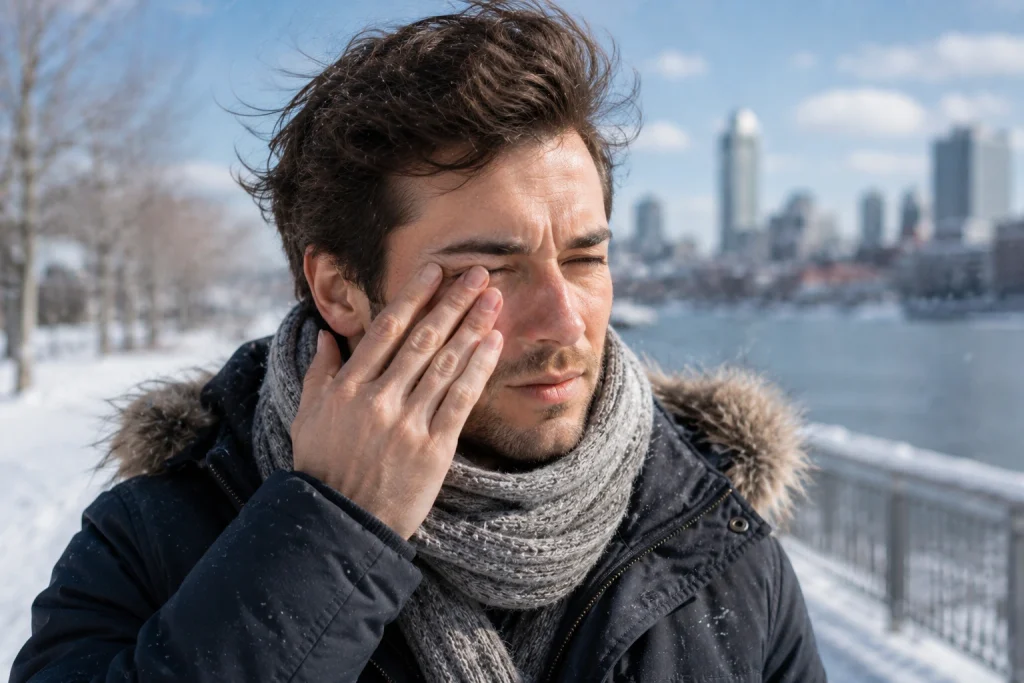
Cold weather can be confusing for contact lens wearers. Your lenses may look normal, your prescription may still be correct, and your cleaning routine may not have changed, but your eyes suddenly feel dry, tired, or scratchy. That usually happens because winter affects the moisture around your eyes.
Cold air often holds less moisture. Wind can make your tears evaporate faster. Indoor heating can dry out the air in your home, office, or car. When your tear film dries too quickly, your contacts do not glide as smoothly over your eyes. That is when cold-weather contact lenses can become uncomfortable, even when the lenses themselves are not damaged.
The National Eye Institute explains that dry eye can occur when your eyes do not produce enough tears or when tears evaporate too quickly. Symptoms can include a scratchy feeling, stinging or burning, red eyes, light sensitivity, and blurry vision. This is why your lenses may feel worse when you move from a windy sidewalk into a heated car, sit under an office vent, or spend hours on screens during colder months.
How To Fix Dry Contacts In Cold Weather
You do not have to stop wearing contacts every time the weather gets cold. Most winter discomfort can be managed with small changes that protect your tear film.
- Use contact-safe lubricating drops. Look for drops labeled safe for contact lenses, or ask your eye doctor which drops work with your lens type.
- Run a humidifier indoors. This can help keep indoor air from becoming too dry, especially while you sleep or work.
- Redirect car vents away from your face. Warm air blowing directly at your eyes can make dryness worse.
- Wear wraparound sunglasses or goggles outdoors. They help block wind and reduce tear evaporation.
- Take blink breaks during screen time. You blink less when using screens, which can worsen dryness.
- Switch to glasses when your eyes need rest. Glasses are a smart backup on windy days, long screen days, or days when your eyes already feel irritated.
If winter dryness keeps coming back, ask your eye doctor to check your tear film and lens fit. Sometimes the problem is not just the weather. It may be your lens material, replacement schedule, cleaning solution, allergies, screen habits, or an underlying dry eye condition.
If winter is when your eyes feel the worst, these winter dry-eye contact picks and comfort tips are helpful for planning your cold-weather routine.
Can Contacts Freeze In Your Eyes?
No, contacts will not freeze while you are wearing them. Your eyes and tears keep the lenses warm enough during normal wear. Even if the weather is below freezing, the lens in your eye is not sitting in the same condition as a lens left in a frozen mailbox or storage case.
What can happen is dryness. Cold wind and dry indoor heat can make your lenses feel stiff, sticky, or uncomfortable because your tear film is struggling to stay stable. That feeling can make it seem like the lens is “freezing,” but the more likely issue is low moisture, not a frozen lens.
If your lenses were stored in freezing conditions, let the sealed package or lens case return to room temperature naturally. Do not heat it quickly. After it thaws, inspect the packaging, solution, and lens. If anything looks damaged, cloudy, dry, torn, or unusual, do not wear the lens. Use a fresh pair of your glasses instead.
5. Storage and Travel Conditions Can Affect Lens Safety and Comfort
What If Your Contacts Were Delivered In Extreme Heat Or Cold?
If your contact lenses were delivered on a hot porch, left in a cold mailbox, or sat in your bag during a long travel day, do not assume they are ruined right away. Sealed soft contact lenses are generally more stable than many wearers expect when the original blister packaging is still intact.
A CooperVision study tested sealed hydrogel and silicone hydrogel contact lenses under extreme conditions, including 45°C / 113°F for 3 months and -50°C / -58°F for 72 hours, and reported that the tested lenses were not negatively impacted when the primary packaging was not compromised. The same article notes that this can help give confidence when lenses are exposed to temperature changes during shipping or transit.
Still, your eyes are not the place to take chances. Before wearing lenses that were exposed to heat or cold, inspect the blister pack, lens, and solution carefully.
Use this quick check before inserting them:
| Check This First | What You Want to See |
|---|---|
| Foil seal | Fully sealed, not lifted, punctured, or leaking |
| Blister pack | No cracks, swelling, dents, or dried areas |
| Solution | Clear, not cloudy, discolored, or missing |
| Lens | Soft, hydrated, floating normally, not torn or stuck |
| Comfort | No pain, burning, sharpness, or unusual blur after insertion |
If the package is leaking, the lens is dry, or the solution looks cloudy, throw that lens away. If the lens looks normal but feels wrong in your eye, remove it immediately and switch to glasses or a fresh pair. A sealed box can usually handle short-term temperature changes better than an opened or damaged lens, but once the sterile seal is compromised, the risk changes.
Best Storage Temperature for Contact Lenses
Your contact lens storage temperature should follow the product packaging or your eye doctor’s instructions. If you cannot find a specific temperature range on the box or insert, room-temperature storage is the safest general rule. Do not try to “protect” lenses by refrigerating them unless the manufacturer or your eye care professional specifically tells you to.
Good storage habits include:
- Keep unopened boxes in a clean, dry cabinet.
- Store lenses away from direct sunlight and heat.
- Avoid leaving contacts in the car, especially on very hot or freezing days.
- Keep lens cases away from sinks, showers, and humid bathroom counters.
- Use only fresh disinfecting solutions for reusable lenses.
- Replace your lens case as directed, often every three months or sooner if it looks dirty or damaged.
For reusable lenses, storage is not only about temperature. It is also about hygiene. A reusable lens sitting in an old solution, a dirty case, or a damp bathroom has a bigger safety concern than a sealed lens box sitting briefly in warm weather.
How To Travel With Contacts In Changing Temperatures
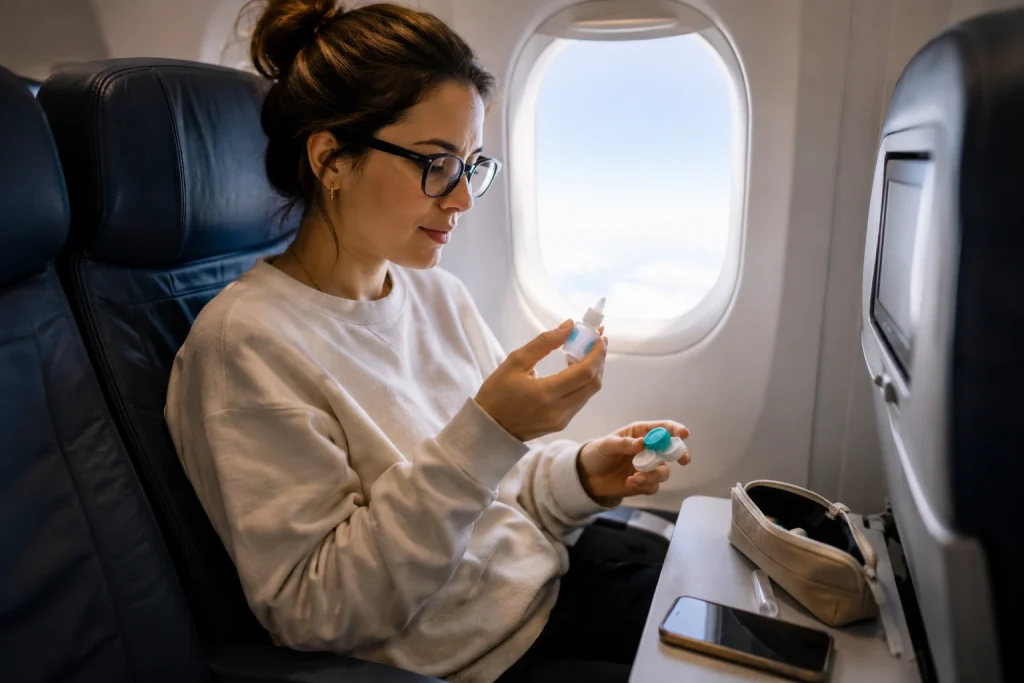
Travel can make your contacts feel different because you are dealing with more than temperature. You may be moving from humid outdoor air to dry airplane cabins, from cold airports to heated vehicles, or from long screen time to outdoor sun. Your lenses can feel dry or blurry even when undamaged.
Pack your lenses as if your eyes might need options. Keep lenses in your carry-on when possible, especially on long trips, during delays, or when checked bags are subject to temperature changes. Bring backup glasses, extra lenses, and contact-safe rewetting drops. If you wear reusable contacts, pack a travel-size disinfecting solution and a clean case.
Use this travel checklist:
- Keep contacts in your carry-on when possible.
- Pack backup glasses in an easy-to-reach pocket.
- Bring extra daily disposable lenses or a spare reusable pair.
- Use a travel-size solution when needed.
- Pack contact-safe rewetting drops for dry flights.
- Avoid wearing contacts during long flights if your eyes get very dry.
- Never rinse lenses with airplane tap water, hotel sink water, or bottled water.
- Remove lenses before swimming, showering, or using a hot tub.
- Follow the airport liquid rules for contact lens solution.
If your eyes often feel dry during flights, consider wearing glasses until you land. Airplane cabins can be dry, and long naps in contact lenses can increase irritation unless your eye doctor specifically prescribed lenses for that type of wear.
5 Contact Lenses to Consider for Temperature Changes
Temperature changes do not mean one lens is automatically best for every wearer. Your prescription, eye shape, tear film, wearing schedule, and comfort history all matter. Your eye doctor should confirm which lens matches your eyes and how you actually use your contacts.
| Product | Feature | Benefit |
|---|---|---|
| DAILIES TOTAL1 | Water Gradient Technology and SmarTears Technology | Helps support lens surface moisture, making it a strong daily disposable option for dry-weather, travel, and long wear days. |
| ACUVUE OASYS 1-Day with HydraLuxe | HydraLuxe Technology and built-in ultraviolet blocking | Supports comfort during demanding days, screen-heavy routines, and outdoor activities. Ultraviolet-blocking contacts still need sunglasses for full eye protection. |
| 1-DAY ACUVUE MOIST | LACREON Technology with embedded wetting agent | Provides a fresh daily lens with moisture support, useful for hot weather, travel, and hygiene-focused routines. |
| Biofinity | Aquaform Technology | Helps retain moisture and allows oxygen flow, making it a reusable monthly option for everyday comfort. |
| AIR OPTIX plus HydraGlyde | SmartShield Technology and HydraGlyde Moisture Matrix | Helps resist irritating deposits and supports lens surface moisture from Day 1 to Day 30. |
When Temperature-Related Contact Lens Discomfort Needs an Eye Doctor
Some contact lens discomfort is easy to explain. Maybe your eyes feel dry after a windy commute, your lenses feel sticky after hours in air conditioning, or your eyes feel tired after a hot day outside. In those cases, removing your lenses, using your glasses, and giving your eyes a break can help.
Remove your lenses and contact your eye care professional if you notice:
- Eye pain
- Redness that does not improve
- Light sensitivity
- Swelling around the eye or eyelid
- Discharge or unusual tearing
- Blurry vision that continues after lens removal
- A gritty feeling, like something is stuck in your eye
- Burning or itching that feels stronger than usual
- Discomfort after water exposure, such as swimming, showering, or using a hot tub
A good rule is this: if your eyes feel better after removing your lenses and resting, it may be mild dryness or irritation. If your symptoms continue, recur quickly, or affect your vision, treat them as a medical concern. Your eyes should not have to “adjust” to pain.
If you are unsure whether symptoms are minor or urgent, this list of warning signs in contact lens use is a good “do not wait” reference.
Quick Temperature Safety Checklist for Contact Lens Wearers
When temperature affects your contacts, the safest response is usually simple: protect moisture, avoid water, inspect packaging, and listen to your eyes. Use this quick checklist before hot days, cold mornings, flights, road trips, and outdoor plans.
In Hot Weather
Hot weather can make your lenses feel dry faster, especially when sweat, sunscreen, wind, and air conditioning are part of your day. Keep these habits in mind:
- Keep sweat, sunscreen, makeup, and dust away from your eyes.
- Wear sunglasses outdoors to reduce glare, wind, and dryness.
- Use rewetting drops labeled safe for contact lenses.
- Drink water throughout the day, especially during outdoor activities.
- Avoid fans and air conditioning blowing directly into your eyes.
- Wash and dry your hands before touching your lenses.
- Remove lenses before swimming, showering, or using a hot tub.
- Switch to glasses if your eyes feel dry, red, or irritated.
For hot-weather contact lenses, comfort is not only about the lens. It is also about your tear film, your hygiene habits, and what comes into contact with your eyes during the day.
In Cold Weather
Cold air, wind, low humidity, and indoor heating can dry out your eyes even when your lenses are not damaged. To make cold-weather contact lenses feel more comfortable:
- Use contact-safe lubricating drops when your eyes feel dry.
- Run a humidifier indoors when the air feels dry.
- Redirect the heater and car vent airflow away from your face.
- Wear sunglasses or goggles outside to shield your eyes from the wind.
- Take blink breaks during screen time.
- Avoid sleeping in lenses unless your eye doctor has prescribed them for overnight wear.
- Give your eyeglasses breaks when they feel tired or scratchy.
The National Eye Institute explains that dry eyes can occur when tears evaporate too quickly or do not work properly, and symptoms can include a scratchy feeling, burning, blurry vision, and red eyes.
For Storage and Travel
Travel can expose your lenses to heat, cold, dry airplane cabins, hotel bathrooms, and long wear times. Protect your lenses and your eyes with these habits:
- Store lenses at room temperature when possible.
- Keep lenses away from direct sunlight, heaters, dashboards, and freezing areas.
- Do not use damaged, leaking, cloudy, or dried-out packages.
- Carry backup glasses.
- Pack extra lenses and contact lens solution.
- Keep lenses in your carry-on when possible.
- Use a fresh solution for reusable lenses.
- Never rinse or store lenses in tap water, bottled water, or homemade saline.
- Replace your lens case as directed, often every three months or sooner if damaged.
For the safest contact lens storage temperature, think clean, dry, sealed, and room temperature. If your lenses were exposed to heat or cold during shipping or travel, check the package before use. If anything in your eye looks damaged or feels wrong, do not risk it. Use a fresh lens or your glasses instead.
Keep Your Contacts Comfortable in Any Temperature
Temperature can change how your contacts feel, but that does not always mean your lenses are damaged. Heat, cold, wind, indoor heating, air conditioning, sweat, and travel conditions can all affect your tear film, lens moisture, and overall comfort. That is why your contacts may feel dry in summer, scratchy in winter, blurry during travel, or uncomfortable after a long day outdoors.
The safest approach is simple: inspect your lenses before use, store them properly, keep water away from your contacts, use only contact-safe drops, and switch to glasses when your eyes need a break. If your lenses were exposed to heat or cold, but the packaging is sealed, and the lenses look normal, they may still be safe to wear. But if the package is leaking, the lens looks dry or damaged, or your eyes feel painful, red, or irritated, do not push through it.
Have questions about choosing lenses for hot, cold, dry, or travel-heavy days? Browse contact lenses online and compare options that fit your prescription, comfort needs, and wearing schedule.
FAQs about Temperature and Contact Lenses
Can contact lenses melt in your eyes?
No. Contact lenses do not melt in your eyes from normal hot weather. Even on a very warm day, your lenses sit on your tear film and stay close to your natural eye temperature. The bigger issue is not melting. It is dryness, sweat, sunscreen, wind, and eye irritation.
If your contacts feel uncomfortable in the heat, remove them instead of rubbing your eyes. Use your glasses for a while, and ask your eye doctor about contact-safe rewetting drops if this happens often.
Can contacts melt in a hot car?
Sealed contacts are usually more stable than people think, but you should still inspect the packaging and lens before use. CooperVision reported that tested sealed soft contact lenses stayed within approved tolerances after exposure to high and low temperature extremes, including 45°C / 113°F and -50°C / -58°F, as long as the primary packaging was not compromised.
That does not mean you should store lenses in a hot car. A dashboard, glove box, or trunk can get much hotter than normal room conditions. If you find contacts left in a hot car, check the foil seal, blister pack, solution, and lens. Do not use the lens if the pack is leaking, the solution looks cloudy, or the lens appears dry, torn, or misshapen.
Can contact lenses freeze in winter?
Yes, contact lenses can freeze in their storage solution during very cold conditions, but they will not freeze while they are on your eyes. Your eyes and tears keep the lenses warm during normal wear.
If you are wearing cold weather contact lenses and they feel stiff or uncomfortable outside, dryness is usually the more likely reason. Cold air, wind, and indoor heating can dry out your tear film, which can make lenses feel scratchy or noticeable.
What should you do if contacts freeze in the package?
Let the sealed package thaw at room temperature before opening it. Do not warm it with hot water, a microwave, a heater, or direct sunlight. Once it has thawed, inspect the blister pack, solution, and lens.
Do not use the lens if the foil seal is damaged, the solution leaked, the lens looks dry, or the lens appears distorted. If the packaging looks normal but the lens feels painful, sharp, or blurry after insertion, remove it right away and switch to glasses or a fresh lens.
Why do my contacts feel dry in winter?
Your contacts can feel dry in winter because cold air, wind, and indoor heating can lower moisture around your eyes. When your tear film dries too fast, your lenses do not move as smoothly with each blink. That can make them feel scratchy, sticky, or blurry.
The National Eye Institute explains that dry eye can happen when tears dry up too quickly or do not work well, and symptoms can include scratchiness, burning, redness, light sensitivity, and blurry vision. Contact lens wearers can be more likely to experience dry eye symptoms.
Can you wear contacts in hot weather?
Yes, you can wear contacts in hot weather, but you need to manage dryness, sweat, sun exposure, and water safety. Hot weather contact lenses can feel less comfortable when your tear film dries faster or when sweat, sunscreen, dust, or pollen gets near your eyes.
To stay comfortable, wear sunglasses outdoors, use contact-safe rewetting drops when needed, drink water throughout the day, and keep fans or air conditioning from blowing directly into your eyes. If your lenses start to sting or blur, remove them and use your glasses.
Is it safe to shower or swim with contacts?
No. Remove contacts before showering, swimming, or using a hot tub. The Food and Drug Administration warns not to expose contact lenses to any water, including tap, bottled, distilled, lake, or ocean water, and recommends removing lenses before swimming because of infection risks from pools, hot tubs, lakes, and the ocean.
The Centers for Disease Control and Prevention also says water can make soft contact lenses change shape, swell, and stick to the eye. This can scratch the cornea and make it easier for germs to enter.
Are daily contacts better for hot weather?
Daily disposable lenses can be convenient for hot, sweaty, or travel-heavy days because you start with a fresh pair and throw them away after wear. That means you do not have to clean and store the same pair after a long day of sweat, sunscreen, dust, or pollen exposure.
They are not automatically the best choice for every wearer, though. Your prescription, eye shape, tear film, budget, and wearing schedule still matter. Your eye doctor can tell you whether daily lenses are a good fit for your eyes.
What is the best storage temperature for contact lenses?
Room temperature storage is best for most contact lenses. Keep lenses away from direct sunlight, freezing areas, dashboards, heaters, humid bathrooms, and damaged packaging. Your best guide is still the storage instruction on the product box or package insert.
For everyday contact lens storage temperature, think clean, dry, sealed, and stable. Do not store opened lenses in water, old solution, homemade saline, or a dirty case. The Food and Drug Administration also recommends replacing your contact lens storage case every three months or as directed by your eye care professional.
When should you switch to glasses?
Switch to glasses when your eyes feel dry, red, painful, irritated, or unusually sensitive to light. Glasses are also a smarter choice when you are sick, swimming, showering, traveling for long hours, spending time in harsh wind or heat, or dealing with heavy allergy symptoms.
You should also stop wearing contacts and call your eye care professional if discomfort continues after lens removal, your vision stays blurry, or your eye feels like something is stuck in your eye.
Disclaimer: This content is for general informational purposes only and is not a substitute for professional advice, diagnosis, or treatment.
References
Dry Eye. National Eye Institute (National Institutes of Health). https://www.nei.nih.gov/eye-health-information/eye-conditions-and-diseases/dry-eye. Date Accessed: May 12, 2026.
Preventing Eye Infections When Wearing Contacts. Centers for Disease Control and Prevention. https://www.cdc.gov/contact-lenses/prevention/index.html. Date Accessed: May 12, 2026.
Healthy Habits: Keeping Water Away from Contact Lenses. Centers for Disease Control and Prevention. https://www.cdc.gov/contact-lenses/about/healthy-habits-keeping-water-away-from-contact-lenses.html. Date Accessed: May 12, 2026.
Everyday Eye Care. U.S. Food and Drug Administration. https://www.fda.gov/medical-devices/contact-lenses/everyday-eye-care. Date Accessed: May 12, 2026.
Effects of Temperature and Blinking on Contact Lens Dehydration of Contemporary Soft Lens Materials Using an In Vitro Blink Model. Vivian W.Y. Chan et al. (Translational Vision Science & Technology). https://doi.org/10.1167/tvst.10.8.11. Date Accessed: May 12, 2026.
Ocular effects of exposure to low-humidity environments with contact lens wear: A pilot study. M. Vaughan et al. (Ophthalmic & Physiological Optics). https://doi.org/10.1111/opo.13308. Date Accessed: May 12, 2026.
Effects of indoor low humidity on eye discomfort and tear-film parameters in soft contact lens and non-contact lens wearers. K. Ito et al. (Indoor and Built Environment). https://doi.org/10.1177/1420326X221126352. Date Accessed: May 12, 2026.
In-vitro dehydration kinetics coefficient of Kalifilcon A and other contact lens materials. Erika Ponzini et al. (Scientific Reports). https://doi.org/10.1038/s41598-024-55937-2. Date Accessed: May 12, 2026.
Acanthamoeba Keratitis Risk Factors for Daily Wear Contact Lens Users: A Case-Control Study. Nicole Carnt et al. (Ophthalmology). https://doi.org/10.1016/j.ophtha.2022.08.002. Date Accessed: May 12, 2026.
TFOS Lifestyle Report: Impact of environmental conditions on the ocular surface. Monica Alves et al. (Tear Film & Ocular Surface Society; The Ocular Surface). https://www.tearfilm.org/ckfinder/userfiles/files/Environmental%20conditions.pdf. Date Accessed: May 12, 2026.