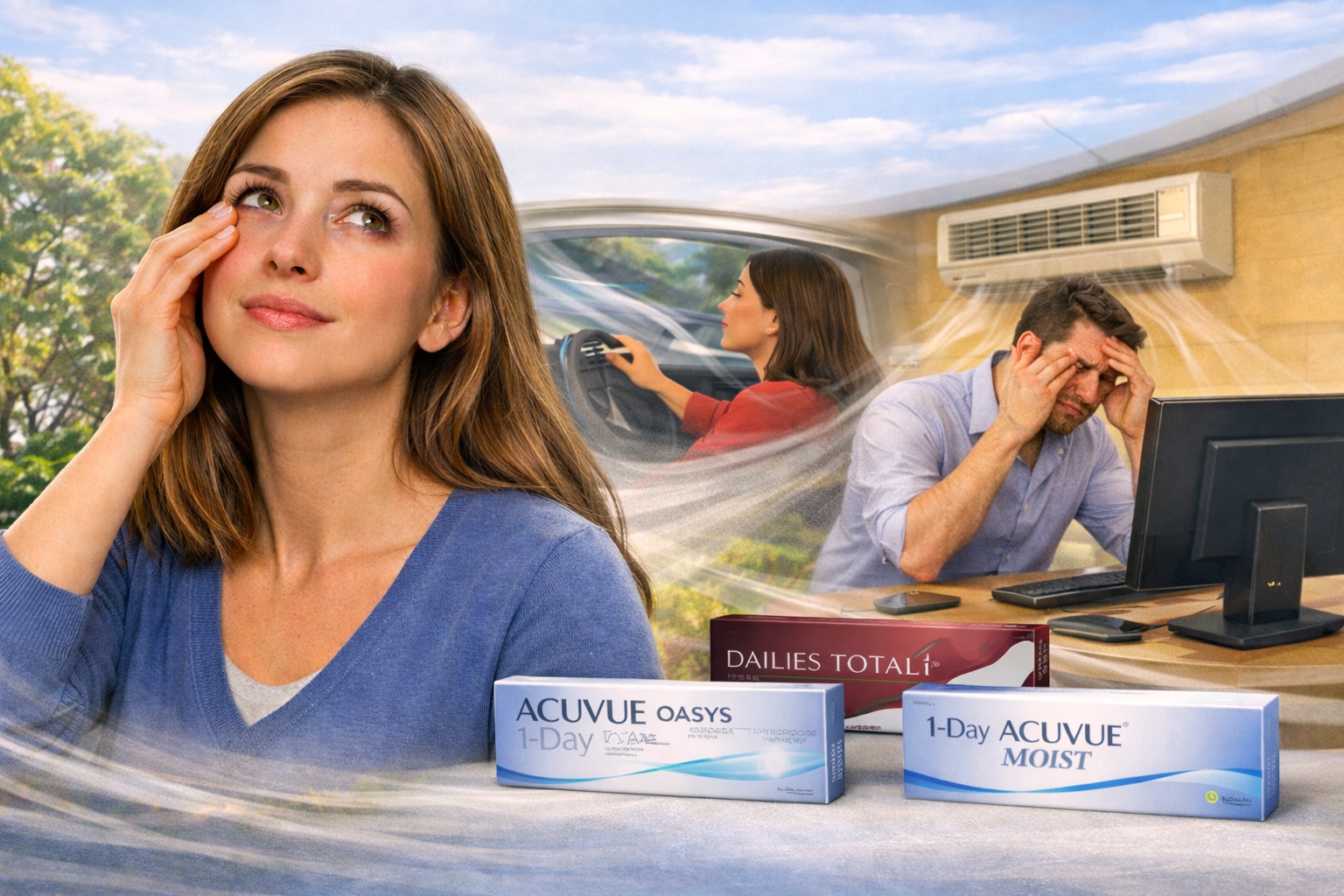
Ever notice your eyes start feeling dry the moment the AC kicks on? It can happen in offices, cars, and even at home when the air is running nonstop. Your eyes might feel scratchy, tired, or like there is a tiny grain of sand stuck under the lid. Some people also get watery eyes, which sounds weird, but it is a common reaction to dryness. If you wear contact lenses, the discomfort can show up faster and feel stronger.
Dryness happens because your eyes rely on a thin tear film to stay smooth and comfortable. This tear layer is not just water, since it also includes oils and proteins that help tears spread evenly. When the tear film stays stable, your vision feels clearer and blinking feels easy. When it breaks up too quickly, the surface of your eye gets exposed in small patches. That exposure is what triggers burning, stinging, and that “tight” feeling.
What AC and Heating Do to Your Tear Film
Air conditioning and heating often change the air in two big ways, humidity and airflow. Many AC systems pull moisture from the air as they cool, so the room can feel crisp but dry. Heating can also drop indoor humidity, especially when windows are closed and the room is sealed. On top of that, vents push air around the room and across your face. Dry air plus steady airflow speeds up tear evaporation, so your tear film breaks faster than it normally would.
This idea is backed by well-known eye research and public health guidance. TFOS DEWS II reports explain that low humidity and airflow across the eye can increase tear evaporation and make symptoms more likely to show up. The National Eye Institute also lists wind and air conditioning as common triggers people try to avoid when dryness flares. The EPA often cites a comfortable indoor humidity range around 30% to 50%, which can be a helpful target if your home or office feels “extra dry.”
Signs Your Dryness Is Coming From AC or Heat
The timing is usually the giveaway. Your eyes feel okay, then the AC or heater turns on and the discomfort starts within minutes. You might notice more blinking, more rubbing, or more squinting because your eyes feel “off.” Vision can also blur on and off, especially after long screen time in a cooled or heated room. Watery eyes can happen too, because irritation can trigger reflex tearing that still does not fix the underlying dryness.
Here are common signs the room air is the trigger:
- Symptoms start soon after the AC or heater turns on
- Your eyes feel worse in one specific spot, like under a vent
- One eye feels drier depending on airflow direction
- Your eyes water while still feeling dry or irritated
- You wake up with dryness after sleeping with air blowing toward your face
- Your vision blurs on and off and clears after a few bigger blinks
Why Contacts Can Feel Worse in Air-Conditioned or Heated Rooms
Contact lenses sit right on the tear film, so any change in moisture can affect comfort fast. When tears evaporate quicker, lenses can feel dry or sticky by midday, even if they felt fine in the morning. Screens can make this worse because people blink less while reading or scrolling. Some lenses also hold onto deposits more when your eyes feel dry, which can add to that gritty feeling.
If this happens often, it does not always mean your prescription is wrong, but it does mean your eyes need more support. Some people do better with daily contact lenses for sensitive eyes, since you are starting with a fresh lens each day instead of reusing one that has picked up residue. It is a common option eye doctors suggest for comfort issues, especially when the environment is a constant trigger.
Quick Fixes You Can Try Today
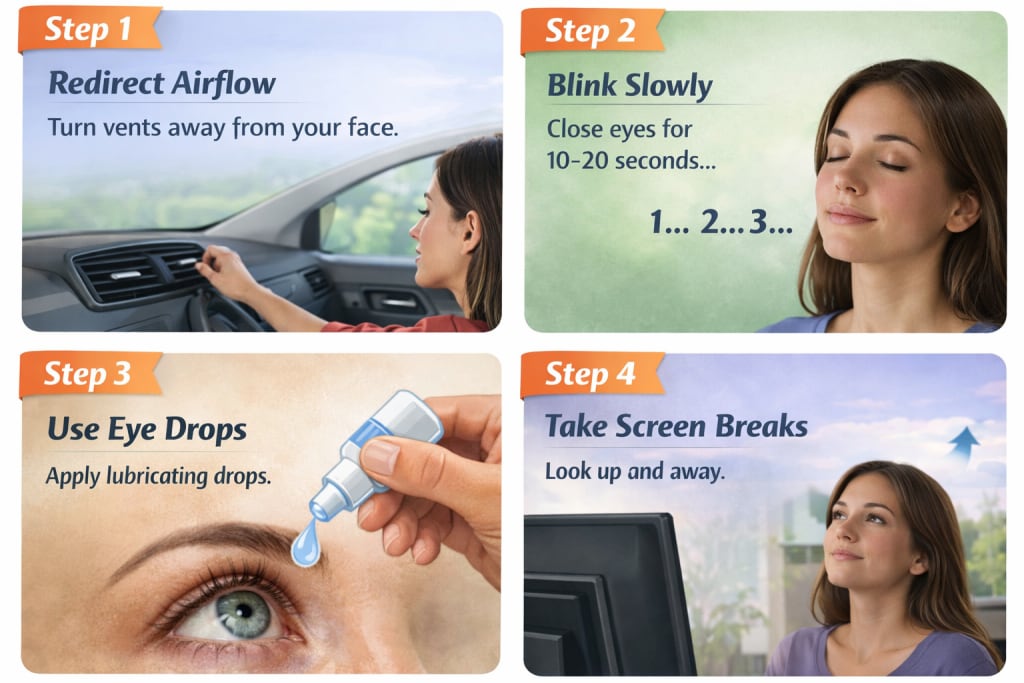
Start by changing where the air hits your face, since direct airflow is a big trigger. A vent tweak can make your eyes feel better without buying anything. Drops help too, but they work best when the room air is not drying your eyes out constantly. Try these steps for two or three days and see what makes the biggest difference.
Daily Contact Lenses for Sensitive Eyes
If you keep drying out in AC or heated rooms, ask your eye doctor if daily lenses make sense for you. A fresh lens each day can feel more comfortable for some people, especially when dryness is linked to long indoor hours and lots of screen time. Comfort still depends on fit and prescription, so it is best to test trial lenses with your doctor’s guidance. Keep notes on what you feel, and when it happens, so you can compare properly.
Some popular daily lens options people often ask about include DAILIES TOTAL1, ACUVUE OASYS 1-Day, and 1-Day ACUVUE MOIST. Other options include MyDay and Clariti 1 day, depending on your prescription. If one lens feels “fine” in the morning but rough by afternoon, that detail matters. It helps narrow down what your eyes respond to best.
When Dry Eyes Need a Doctor Visit
Occasional dryness in AC or heated rooms is common, but persistent symptoms should not be ignored. If you feel pain, strong light sensitivity, thick discharge, or a steady drop in vision, get checked soon. If you wear contacts and redness does not settle after removing them, that also deserves attention. Dry eye can be linked to allergies, eyelid inflammation, medications, or health conditions, so the right fix depends on the cause.
An eye doctor can check tear stability and look for issues like eyelid inflammation that can keep symptoms coming back. Getting checked also helps if you are deciding between lens types or trying to figure out whether dryness is coming from your environment or from your eyes. It saves you from guessing and cycling through random fixes.
Takeaway
If your eyes feel dry when the AC or heater is on, it usually comes down to faster tear evaporation and constant airflow. Small changes like redirecting vents, using the right drops, and blinking more on screens can make a noticeable difference. If you wear contacts, staying on schedule and asking about daily contact lenses for sensitive eyes can help a lot. When symptoms keep coming back, it is smart to involve an eye doctor so you are not guessing. If you need a fresh supply of contacts or contact-safe rewetting drops, Contacts America can help you stock up so your routine feels easier in every season.
Related Articles
-

How to Choose Colored Contact Lenses that Match Your Skin Tone
-

Here Are the Best Colored Contact Lenses to Wear for the Holidays
-

Are Colored Contact Lens Safe? Tips on Safe Colored Contacts Use (2024)
-

How American Office Workers Can Reduce Dry Eyes From Screens and AC
-

Spring Allergies vs Contact Lens Dryness: What’s the Difference?