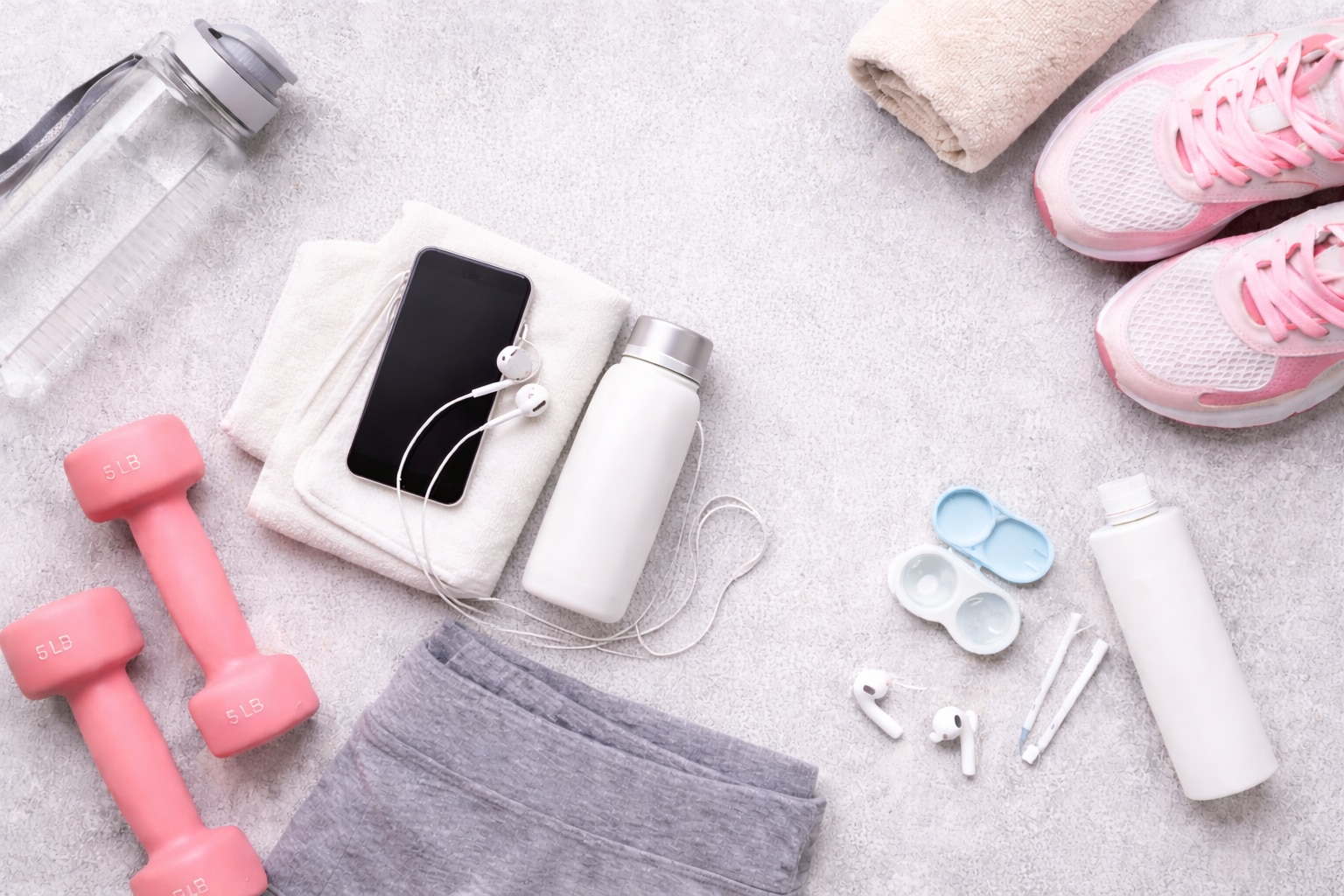
Exercising with contact lenses is usually fine, and for a lot of people, it feels easier than working out in glasses. Trouble starts when sweat, fans, and dry air hit at the same time. That’s when lenses can feel dry, stingy, or a little blurry. The good part is that most of those issues are fixable with a few small habit changes.
Below are practical tips you can use before, during, and after a workout so your lenses stay comfortable. You don’t need a complicated routine to make it work. You just need to know what triggers discomfort and how to respond fast when it shows up.
Why Contacts Can Feel Uncomfortable During Workouts

Most gym discomfort comes from a few predictable triggers. Sweat is salty, so when it runs into your eyes, it can sting. Airflow from fans or A/C can dry your eyes out fast. You also tend to blink less when you’re focused, which makes dryness show up sooner.
Another factor is what’s on your skin. Sunscreen, moisturizer, and makeup can mix with sweat and migrate into your eyes. Even a little residue can make lenses feel gritty. Once irritation starts, it’s easy to rub your eyes without thinking, and that usually makes things worse.
10 Tips for Working Out With Contact Lenses
A lot of comfort comes down to prevention. If you handle sweat and dryness early, you’re less likely to have that “my lens feels weird” moment mid-set. These tips are meant to fit into a normal gym routine without slowing you down.
If you only try three things, start with keeping sweat off your lash line, using contact-lens-safe drops, and packing a backup (even just glasses). Those tend to solve the biggest issues for most wearers. Here are the full tips:
1) Start with clean, dry hands.
If you need to touch your lenses, wash up first. Gym equipment and sweaty hands don’t belong near your eyes. Dry your hands well, too, since wet fingers can make lenses harder to handle.
2) Use contact-lens-safe rewetting drops before you start.
If your eyes usually dry out, put drops in before your workout begins. It’s easier than trying to fix it once your lenses already feel sticky. Make sure the drops say they’re meant for use with contact lenses.
3) Keep sweat off your lash line.
Wipe your forehead early, not only when sweat starts dripping. That small timing change helps a lot. If sweat reaches your lashes, it’s much more likely to run into your eyes.
4) Wear a headband if you sweat heavily.
A basic sweatband can stop sweat from running straight into your eyes during cardio or lifting. It also helps during moves where you’re looking down, like rows or burpees. If a headband feels annoying, a sweat cap can do the same job.
5) Don’t rub your eyes mid-workout.
Rubbing can shift the lens, trap debris, or irritate the surface of your eye. If something feels off, step aside and handle it safely. Even a quick rub with the back of your wrist can still move the lens around.
6) Be careful with sunscreen and face products.
Keep sunscreen away from your eyes as much as possible. Once it mixes with sweat, it can run into your eyes and cause burning or a gritty feeling. If you’re sweating a lot, consider using products that stay put better and avoid heavy layers near the brow area.
7) Avoid blasting your face with a fan.
That airflow can dry your lenses quickly. If you can, angle the fan toward your body instead of straight at your eyes. This matters even more during treadmill runs or spin classes, where the air hits you nonstop.
8) Blink on purpose between sets.
It sounds small, but it helps. A few full blinks during rest breaks can refresh the tear film and reduce that dry, sticky feeling. If you’re staring at a screen (treadmill, timer, phone), your blink rate can drop without you noticing.
9) Keep water and cleanser off your eyelids.
If you rinse your face at the sink, close your eyes and pat dry. Splashing can push sweat, residue, or product into your eyes. If you’re wiping your face, use a clean towel and avoid dragging it across your lash line.
10) Bring a backup plan.
If a lens starts acting up, you’ll want an easy way out. Even just having glasses in your bag can save your workout. If you wear daily lenses and already have an extra pair, that’s a great backup too.
A Simple Gym Kit for Contact Lens Wearers
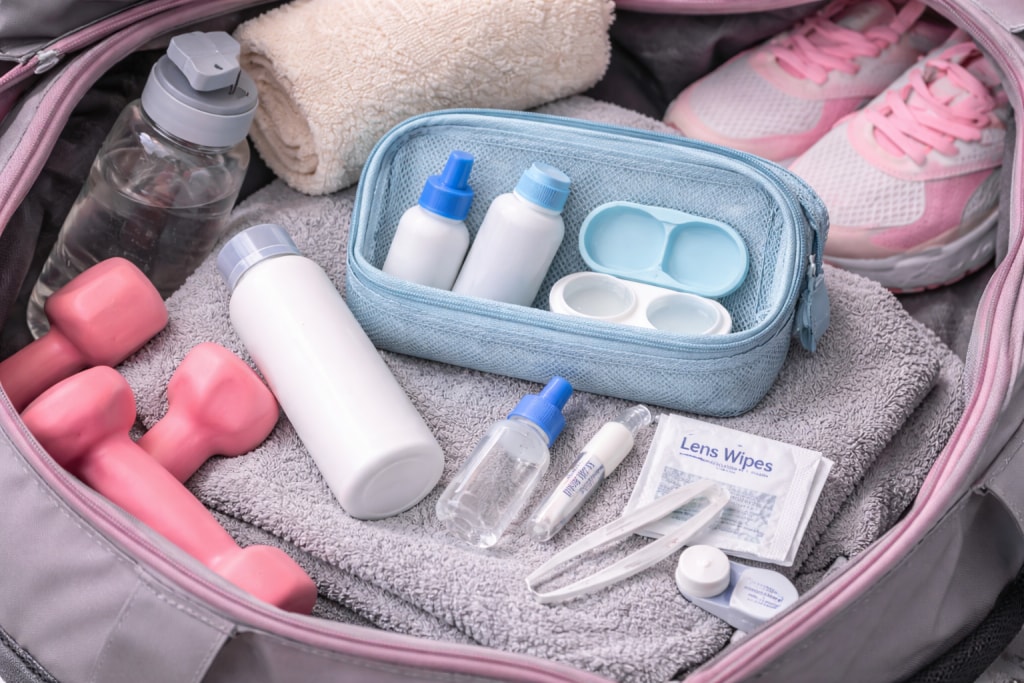
Keep it minimal. Rewetting drops and your glasses are usually enough for most people. If you wear daily lenses and you already have an extra pair, toss them in too. The goal is to have a quick fix available without turning your gym bag into a medicine cabinet.
If you wear reusable lenses, it helps to keep a case and fresh solution on hand in case you need to remove a lens. Don’t rely on water from the sink to “rinse” anything. If you can’t clean and store the lens the right way, switching to glasses is the safer move for the rest of the session.
What to Do If Sweat Gets in Your Eyes
First, stop and blink a few times. Let tears flush the sweat out. If you have rewetting drops, use them. Give it a minute before you decide you need to touch the lens.
If the lens still feels wrong after blinking and drops, wash and dry your hands before removing it. Switch to glasses or a fresh lens if you have one. If you keep feeling a sharp scratchy sensation after removal, don’t put the lens back in right away.
When You Should Remove Your Contacts During a Workout
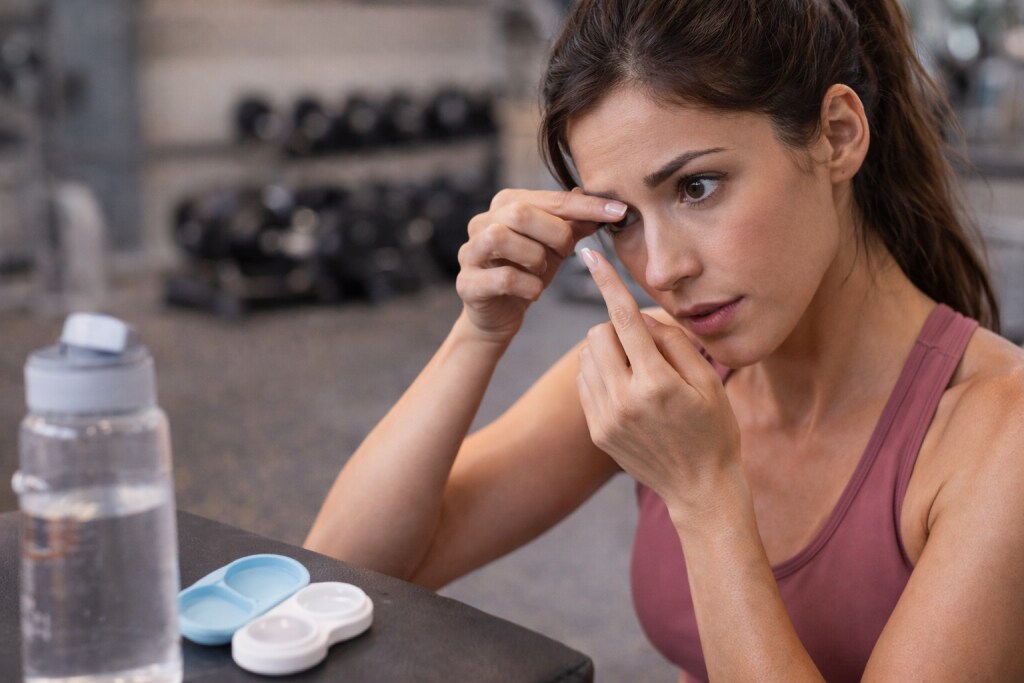
Take your lenses out if you feel sharp pain, strong redness that doesn’t settle, light sensitivity, or blurry vision that won’t clear after blinking and drops. Those signs usually mean it’s not just “normal gym dryness.” Trust the signal and pause instead of trying to power through.
If discomfort continues after you remove the lens, it’s worth checking in with your eye doctor. Your eye might be irritated, or the lens might have had debris stuck to it. Either way, it’s better to get it looked at than to keep re-inserting and hoping it improves.
Quick Takeaway
Working out with contact lenses should feel effortless. Keep sweat away from your eyes, limit direct fan airflow, and use contact-lens-safe drops when you need them. Having glasses in your bag is a simple backup that prevents a small annoyance from ruining your whole session.
If your lenses feel uncomfortable every single workout, it might be time for a fit check or a different lens type. Comfort issues that repeat often have a clear cause, and small tweaks can make a big difference. You deserve workouts that don’t involve thinking about your contacts at all.
Frequently Asked Questions About Exercising With Contact Lenses
Can you wear contact lenses while exercising?
Yes, most people can wear contact lenses while exercising. Contacts are common for gym workouts and sports since they don’t fog or slide like glasses. If you feel frequent irritation, that’s usually a comfort or dryness issue, not a “you can’t exercise in contacts” issue.
Is working out with contact lenses safe if you sweat a lot?
It can be, but sweat management matters more if you’re a heavy sweater. Sweat in your eyes can sting and trigger rubbing, which can shift the lens. A headband, a towel, and rewetting drops usually help a lot.
Why do contacts feel dry during workouts?
Airflow from fans or A/C can dry your eyes, and you may blink less while you focus. Sweat and face products can also irritate the eyes once they run downward. Using rewetting drops before your workout and avoiding direct fan-to-face airflow can help.
Should you wear contacts to the gym or switch to glasses?
Contacts are fine for the gym if they feel comfortable and your eyes stay calm. Glasses can be a better choice if your eyes are irritated, your prescription is outdated, or your lenses keep bothering you mid-workout. Keeping glasses in your bag gives you a no-stress option either way.
What should you do if a contact lens starts bothering you mid-workout?
Pause and blink first, then try rewetting drops if you have them. Don’t rub your eye. If the lens still feels wrong, remove it with clean hands and switch to glasses or a fresh lens.
References:
Healthy Habits: Keeping Water Away from Contact Lenses. Centers for Disease Control and Prevention (CDC). https://www.cdc.gov/contact-lenses/about/healthy-habits-keeping-water-away-from-contact-lenses.html. May 27, 2025.
Preventing Eye Infections When Wearing Contacts. Centers for Disease Control and Prevention (CDC). https://www.cdc.gov/contact-lenses/prevention/index.html. May 27, 2025.
Contact Lens Solutions and Products. U.S. Food and Drug Administration (FDA). https://www.fda.gov/medical-devices/contact-lenses/contact-lens-solutions-and-products. January 16, 2018.
How to Take Care of Contact Lenses. American Academy of Ophthalmology (AAO). https://www.aao.org/eye-health/glasses-contacts/contact-lens-care. April 22, 2022.
Contact Lens Care. American Optometric Association (AOA). https://www.aoa.org/healthy-eyes/vision-and-vision-correction/contact-lens-care. Accessed February 16, 2026.
Related Articles
-

Are Colored Contact Lens Safe? Tips on Safe Colored Contacts Use (2024)
-

Are Contact Lens Prescriptions the Same as Glasses?
-

Battle of the Tints: FreshLook Colors vs Air Optix Colors
-

Here Are the Best Colored Contact Lenses to Wear for the Holidays
-
Spring Allergies vs Contact Lens Dryness: What’s the Difference?