Contacts can feel effortless until one shortcut turns into contact lens irritation, redness, or a ruined pair halfway through your day. And the tricky part is you might not notice a problem until your eyes start feeling gritty, blurry, or just “off.”
Since May is Healthy Vision Month, it’s a perfect time to refresh your contact lens safety habits and book an exam if you’re overdue. A current prescription and a quick fit check can prevent a lot of avoidable discomfort.
Healthy Vision Month Reminder: Why Contact Lens Safety Matters
Healthy Vision Month is observed every May, and it’s all about protecting your sight through simple prevention habits. Think of it as a yearly reset button for eye care routines, from scheduling checkups to improving daily habits that reduce avoidable risk.
For contact lens wearers, this month is a great reminder that comfort is not the same as safety. You can feel “fine” while still building up risk if your routine is sloppy or you stretch wear times.
Contact lenses are medical devices that sit directly on your eye, so contact lens hygiene and your contact lens cleaning routine are not optional. Small mistakes like topping off solution, using an old contact lens case, or wearing lenses in water are among the most common ways people end up with avoidable irritation and, in some cases, contact lens infections.
If you want a routine that actually sticks, keep it simple, repeatable, and realistic for your day.
Takeaways
- Protect your eyes first, not your “wear time” goals. Contact lens overwear is one of the fastest paths to discomfort.
- Keep routines simple enough that you’ll actually follow them. A consistent contact lens care checklist beats a “perfect” routine you skip.
- When something feels off, switch to glasses and reset. It’s the easiest safety move you can make.
If you’re not sure when you’re due, here’s a simple guide on how often you should get an eye exam (and when to go sooner).
The 30-Second Contact Lens Safety Checklist
- Wash and fully dry your hands before touching your lenses, every time. This one habit does more for contact lens safety than any “extra” product.
- If you wear reusable contact lenses, use fresh contact lens solution each time and never use water, not even “just to rinse.” Water can carry germs that increase the risk of contact lens infections.
- Replace lenses exactly on schedule and do not stretch wear time, even when they “still feel fine.” Overwear is a common reason for irritation and blurred vision.
- Remove the lenses right away if you notice persistent redness, pain, stinging, or unusual light sensitivity. That is your cue to switch to glasses and reset.
- Keep glasses as your backup plan so you can stop troubleshooting fast when something feels off.
If you want a deeper list of small habits that quietly cause trouble, start with contact lens mistakes that seem harmless but can hurt your eyes.
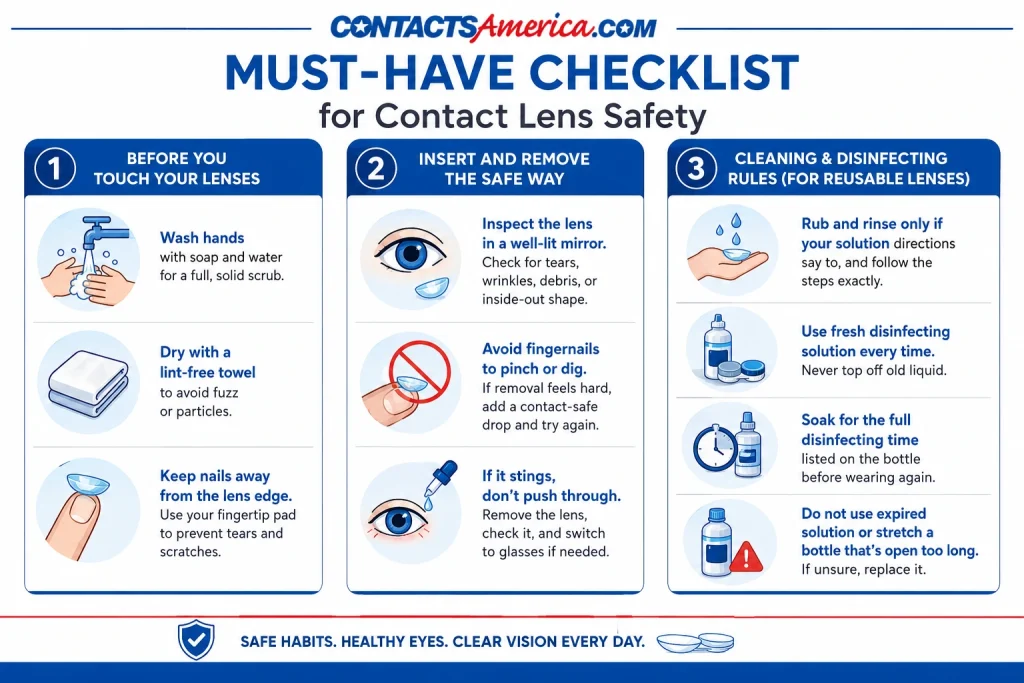
The Must-Have Safety Checklist You’ll Use Every Day
Before You Touch Your Lenses
- Wash with soap and water for a full, solid scrub, then rinse well. Clean hands are the foundation of contact lens hygiene.
- Dry with a lint-free towel so you are not transferring fuzz or particles onto the lens.
- Keep nails away from the lens edge, and use your fingertip pad instead. This helps prevent tiny tears and reduces accidental scratches.
Insert and Remove The Safe Way
- Use a well-lit mirror and take two seconds to inspect the lens before it goes in. Look for a tear, a wrinkle, obvious debris, or an inside-out shape.
- Avoid using fingernails to pinch or “dig” the lens out. If removal feels hard, pause, add a drop labeled safe for contact lenses, and try again with clean, dry hands.
- If something stings right away, do not push through. Remove the lens, check it, and switch to glasses if the discomfort or blur does not clear quickly.
If removal is the step you rush most often, this ultimate guide to safe contact lens removal is worth bookmarking.
Cleaning and Disinfecting Rules (For Reusable Lenses)
- Rub and rinse only if your solution directions say to, and follow the steps exactly. Different contact lens cleaning systems have different instructions.
- Use fresh disinfecting solution every time and never top off old liquid. Topping off is one of the quickest ways to weaken disinfection.
- Soak for the full disinfecting time listed on the bottle before wearing again. A short soaking time means you are not getting the protection you expect.
- Do not use expired solution, and do not “stretch” a bottle that has been open too long. If you are unsure, replace it rather than guessing.
If you’ve ever wondered whether you’re cleaning correctly, this walkthrough on cleaning contact lenses properly (tips and mistakes) clears up the most common slip-ups.
The Don’t Checklist That Prevents Most Infections
A lot of contact lens safety comes down to avoiding a few high-risk shortcuts. If you remember nothing else from this contact lens safety checklist, remember this: water and “just this once” habits are where most problems start.
Water Is the Biggest Avoidable Risk
Tap water is not sterile, so it can carry microbes that are unsafe for your eyes and your lenses. That’s why you should never rinse or store contacts in water, and you should avoid swimming, showering, or using a hot tub while wearing them since water can get trapped under the lens. Even in a pinch, do not use saliva because it introduces bacteria and can increase the risk of a higher contact lens infection.
Sleeping in Contacts
Sleeping in contact lenses increases your risk of redness, pain, and infection because your eyes get less oxygen, and germs can accumulate on the lens surface. Avoid naps and overnight wear unless your eye doctor specifically prescribed an extended-wear lens and gave you a clear schedule. If you wake up and realize you dozed off in lenses, remove them as soon as you can with clean hands and give your eyes a break from glasses.
If you ever nod off “just once,” read what happens if you sleep with contacts so you know what to do next time.
Sharing and “Non-Prescription” Lenses
Never share lenses, cases, or drops, even with family, because sharing can spread germs and break basic contact lens hygiene rules. Decorative lenses still count as medical devices, so you should only buy them with a valid prescription and a proper fitting. An incorrect fit can irritate your eye and increase the risk of contact lens irritation and infection.
Safety Note: If your eye is painful, very red, light-sensitive, or you notice discharge or sudden vision changes, take the lens out, switch to glasses, and get same-day guidance from an eye doctor.
Planning to wear colored or decorative lenses? Here’s a safety refresher on whether colored contact lenses are safe and how to wear them properly.
Special Situations That Trip People Up
These are the moments when good habits slip. A simple contact lens checklist you can follow every time makes it much easier to stay consistent.
Makeup and Skincare
Put your contacts in before makeup so powders, mascara, and liner are less likely to transfer onto the lens surface. Apply skincare and sunscreen first, then wash and dry your hands again before handling lenses so you don’t trap residue under the lens. At the end of the day, remove your contacts before taking off makeup to help prevent irritation from oils and removers.
Travel, Events, and Long Days Out
Plan a simple backup kit so you are not forced to “make it work” when your lenses start feeling off. Bring glasses, spare lenses, and rewetting drops labeled safe for contact lenses, and, if you wear reusables, pack a clean case and fresh contact lens solution. Expect dry air on planes, in bars, and in air-conditioned venues, and be willing to shorten wear time and switch to glasses if comfort drops.
If you wear reusables while traveling, this guide on how to store contact lenses overnight (temperature and no-case tips) helps you avoid risky “make it work” moments.
Allergy Season and Dusty Environments
Pollen and dust can stick to lenses and make contact lens deposits build up faster, which can trigger itchy or gritty eyes. On flare-up days, daily disposable contacts can reduce the buildup and cleaning variables that often make allergy days worse. Avoid rubbing your eyes, and if symptoms spike, switch to glasses and reset once your eyes feel calm again.
What to Do When Something Goes Wrong
Most contact lens problems have a quick fix, as long as you stop early and reset safely. Use this mini decision guide when your lenses feel off.
| Problem | Do This | Switch to Glasses When |
|---|---|---|
| Lens feels scratchy | Remove and inspect with clean, dry hands. Replace if it’s a daily, or clean and disinfect with fresh solution if it’s reusable. | Scratchy feeling doesn’t improve quickly, or your eye looks red or feels sore. |
| Lens looks cloudy or hazy | Stop reinserting it. Swap to a fresh lens or switch to glasses and clean/disinfect later with a clean case and fresh solution. | Cloudiness continues after a fresh lens, or vision still isn’t clear. |
| Lens is torn, damaged, or expired | Discard it immediately and do not try to “stretch” it. Use a new lens if available. | You don’t have a safe replacement available. |
| You dropped a lens and can’t disinfect it properly | Do not wear it. Replace it if it’s a daily, or only wear it again after a full disinfection cycle with fresh solution if it’s reusable. | You’re in a low-hygiene setting or don’t have fresh solution, a clean case, and time to disinfect. |
When to Stop Troubleshooting and Get Help
A little irritation can happen, but these signs are your “do not wait” list. Remove the lens, switch to glasses, and get same-day care (or urgent care) if you have:
- sharp pain
- worsening redness
- discharge
- strong light sensitivity
- sudden vision changes
Most mild contact lens irritation improves quickly once you remove the lens and give your eye a break, but the warning signs above are not worth guessing about.
5 Contact Lenses to Ask About for a Simpler Safety Routine
Lens choice does not replace contact lens safety habits, but the right wear schedule can make it easier to stick with contact lens hygiene. These are common options to discuss after your contact lens exam, based on comfort, routine, and prescription fit.
DAILIES TOTAL1
DAILIES TOTAL1 is a daily disposable that keeps your routine simple because you start with a fresh lens every morning and skip nightly storage. That “new lens” start can be a big plus if you want fewer hygiene variables, especially around contact lens case handling and contact lens solution steps. It is also an easy fit for busy days because there is nothing to clean or disinfect at night.
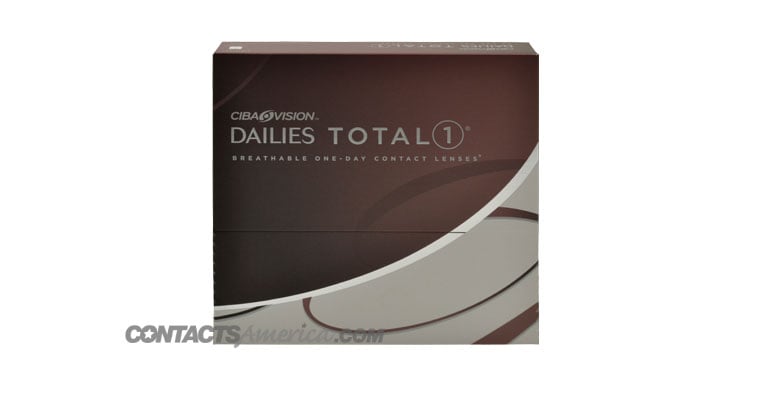
Safety Note: Use it once, then discard it, and toss it immediately if it feels torn, contaminated, or uncomfortable.
Try DAILIES TOTAL1 if you want the simplest daily routine with fewer steps to forget.
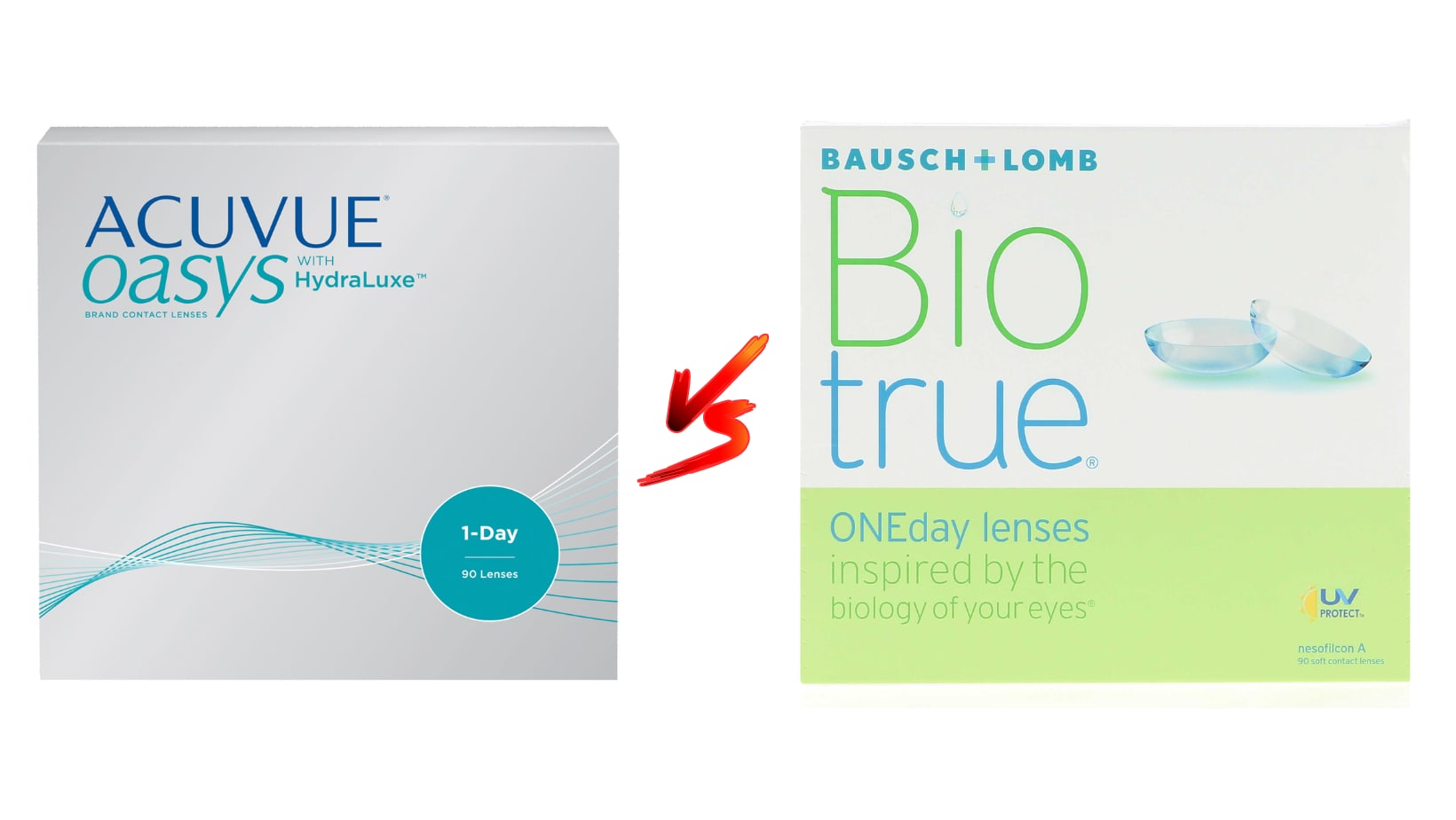
ACUVUE OASYS 1-Day with HydraLuxe
ACUVUE OASYS 1-Day with HydraLuxe is often brought up by wearers who want a steady, comfortable daily lens for long indoor routines. Because it is a daily disposable, it helps reduce buildup and removes the cleaning and storage steps that can trigger irritation when routines slip. It is a strong discussion pick if your days include lots of screens, air conditioning, or long wear hours.
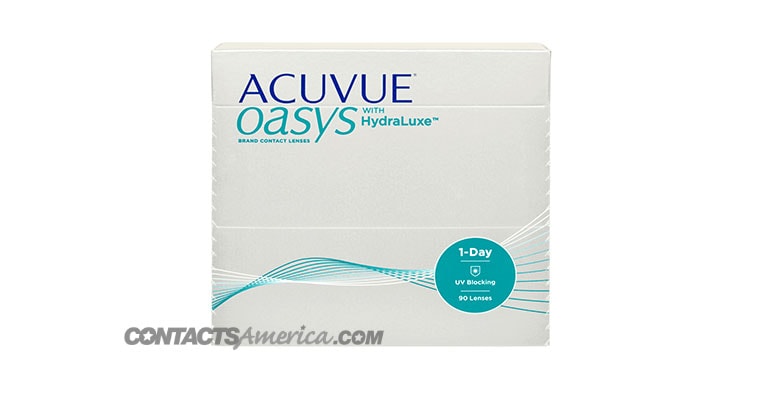
Safety Note: Keep glasses as a backup and use only rewetting drops labeled safe for contacts when your eye doctor approves.
Consider ACUVUE OASYS 1-Day with HydraLuxe for consistent daily wear on long, indoor-heavy days.
PRECISION1
PRECISION1 is a straightforward daily lens that fits well for people who want a predictable routine without extra maintenance. Daily disposables like this can reduce the small shortcuts that raise risk, such as topping off solution or reusing an old case. It is also a practical choice when you want daily convenience but still care about comfortable, clear wear.
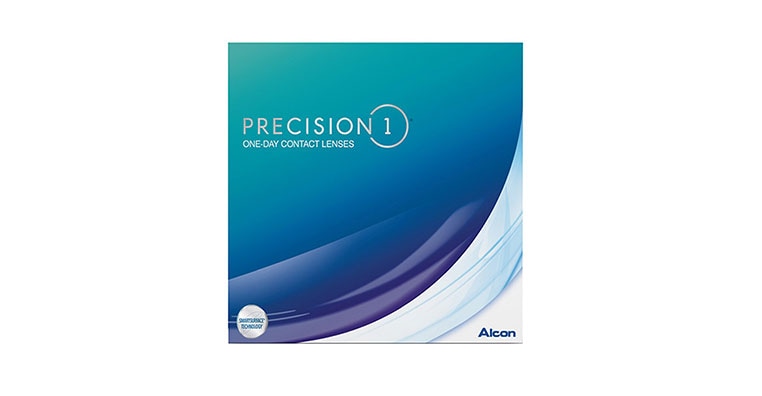
Safety Note: Clean, dry hands matter most because daily lenses can still pick up oils and debris quickly.
Pick PRECISION1 when you want an easy, repeatable daily routine with fewer opportunities for hygiene slip-ups.
Biotrue ONEday
Biotrue ONEday is a daily disposable that often shows up in comfort-focused comparisons for everyday wear. It works well for busy schedules because you do not need to clean, store, or disinfect lenses at night, which keeps your contact lens hygiene routine simpler. It is a good lens to ask about if you want daily convenience while staying consistent with safe wear habits.
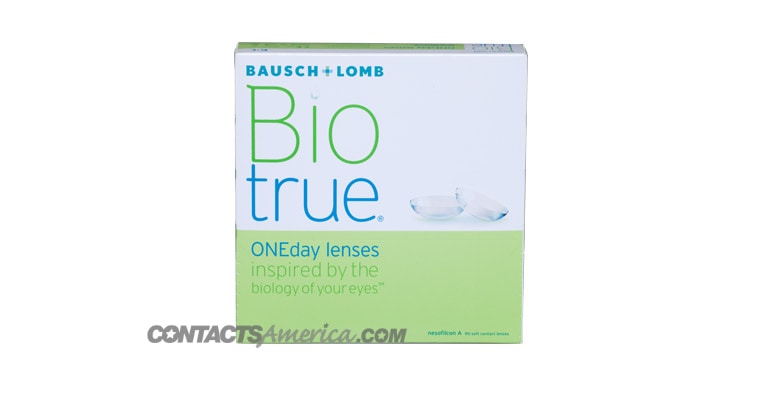
Safety Note: Do not nap in lenses, and switch to glasses if your eyes feel irritated or look red.
Try Biotrue ONEday if you want a daily option that keeps your nighttime routine low-maintenance.
Biofinity
Biofinity is a monthly lens that can be a good match if you prefer a reusable schedule and you are consistent with cleaning and replacement. It can offer steady day-to-day wear for people who use contacts most days and want fewer boxes to manage than dailies. The value comes from sticking to the routine exactly, since comfort and safety depend heavily on cleaning quality and on-time replacement.
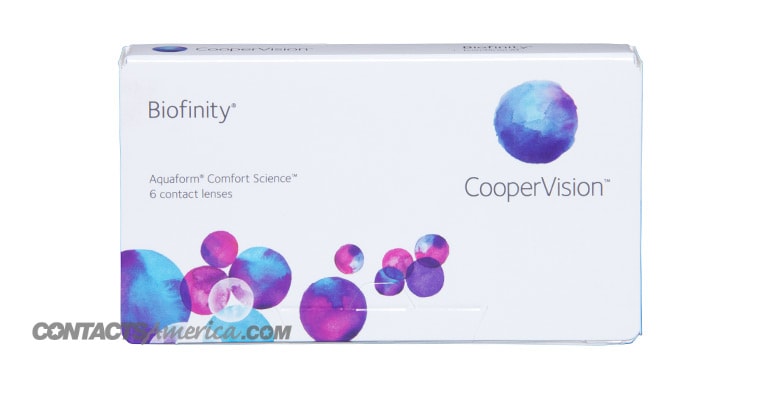
Safety Note: This option stays safe only when your cleaning routine is strict and your case is kept clean and replaced regularly.
Choose Biofinity if you want a reusable monthly routine and you know you can follow the cleaning and replacement schedule every time.
Mini Comparison Table
| Product | Best For | Safety Note |
|---|---|---|
| DAILIES TOTAL1 | Lowest maintenance routine | No case or solution steps, discard after wear |
| ACUVUE OASYS 1-Day with HydraLuxe | Long indoor days, steady routine | Use contact-safe drops only, keep glasses backup |
| PRECISION1 | Simple daily routine | Hand hygiene prevents most issues |
| Biotrue ONEday | Busy schedules, comfort focused daily wear | Do not nap in lenses, switch to glasses if irritated |
| Biofinity | Consistent wearers who clean well | Requires strict solution and case habits |
Safe Contact Lens Wear Starts With Consistent Habits
Contact lens safety is mostly routine, not perfection. Clean hands, clean storage, a fresh solution, on-time replacement, and a simple rule to switch to glasses when your eyes are not happy will prevent most avoidable problems and keep small irritations from turning into bigger issues.
May is Healthy Vision Month, so it is a smart time to book a contact lens exam if you are due, and to make sure your fit and prescription still match your eyes and lifestyle. Once you have your updated prescription and wear schedule, browse our contact lenses and pick the option that is easiest for you to follow safely every day.
FAQs About Contact Lens Safety Checklist
1. Are contact lenses safe for everyone?
They can be safe when they are properly fitted and you follow good contact lens hygiene. If you have frequent irritation, dry eye, or repeated infections, your eye doctor may recommend a different lens type or more glasses time.
2. Can contact lenses cause eye infections?
Yes, especially when hygiene slips or you wear lenses longer than prescribed. The biggest risks usually come from contacts in water, sleeping in lenses, and not disinfecting reusables correctly.
3. What happens if I clean lenses with tap water?
Tap water is not sterile and can carry germs that increase the risk of serious infection. If your lens touches water, the safest move is usually to discard it if it is a daily lens, or disinfect it properly and follow your doctor’s guidance if it is reusable.
4. Can I sleep in contacts “just once”?
Even one nap can raise the risk of irritation and infection because the eye gets less oxygen and the lens can trap debris. Only sleep in contacts if your eye doctor specifically prescribed an extended wear lens and schedule.
5. How often should I replace my contact lens case?
A common guideline is at least every three months, and sooner if it looks damaged, cloudy, or smells. Daily habits matter too: empty it, rinse with fresh solution, and let it air dry face down on a clean surface.
6. What should I do if my contact causes redness?
Remove the lens and switch to glasses so the eye can calm down. If redness comes with pain, discharge, light sensitivity, or vision changes, do not put the lens back in and get same day advice.
7. Can I swim or shower with contacts?
It is safest not to. Water exposure raises infection risk, so use prescription goggles if you must be in water, or switch to glasses and wear lenses after you are dry and your hands are clean.
8. What drops are safe to use with contacts?
Use only drops labeled safe for contact lenses, such as rewetting drops made for lens wear. Avoid using random redness reliever drops unless your eye doctor tells you to, since some can worsen dryness for certain people.
Disclaimer: This content is for general informational purposes only and is not a substitute for professional advice, diagnosis, or treatment.
References
Healthy Vision Month. National Eye Institute (National Institutes of Health). https://www.nei.nih.gov/about/education-and-outreach/healthy-vision-resources/healthy-vision-month. Date Accessed: May 4, 2026.
The Vision Council Supports National Eye Institute in Celebrating Healthy Vision Month. The Vision Council. https://thevisioncouncil.org/blog/vision-council-supports-national-eye-institute-celebrating-healthy-vision-month. Date Accessed: May 4, 2026.
Preventing Eye Infections When Wearing Contacts | Healthy Contact Lens Wear and Care. Centers for Disease Control and Prevention. https://www.cdc.gov/contact-lenses/prevention/index.html. Date Accessed: May 4, 2026.
Healthy Habits: Keeping Water Away from Contact Lenses | Healthy Contact Lens Wear and Care. Centers for Disease Control and Prevention. https://www.cdc.gov/contact-lenses/about/healthy-habits-keeping-water-away-from-contact-lenses.html. Date Accessed: May 4, 2026.
What Causes Contact Lens-related Eye Infections | Healthy Contact Lens Wear and Care. Centers for Disease Control and Prevention. https://www.cdc.gov/contact-lenses/causes/index.html. Date Accessed: May 4, 2026.
What Causes Bacterial Keratitis | Healthy Contact Lens Wear and Care. Centers for Disease Control and Prevention. https://www.cdc.gov/contact-lenses/causes/what-causes-contact-lens-related-bacterial-keratitis.html. Date Accessed: May 4, 2026.
Decorative Contact Lenses for Halloween and More. U.S. Food and Drug Administration. https://www.fda.gov/medical-devices/contact-lenses/decorative-contact-lenses-halloween-and-more. Date Accessed: May 4, 2026.
Contact Lens–Related Complications (StatPearls). Bharat Gurnani; Kirandeep Kaur / StatPearls Publishing (NCBI Bookshelf, National Library of Medicine). https://www.ncbi.nlm.nih.gov/books/NBK587443/. Date Accessed: May 4, 2026.
Acanthamoeba Keratitis (StatPearls). Bharat Gurnani; Yasmyne Ronquillo; Majid Moshirfar / StatPearls Publishing (NCBI Bookshelf, National Library of Medicine). https://www.ncbi.nlm.nih.gov/books/NBK549863/. Date Accessed: May 4, 2026.
Contact Lenses (StatPearls). Bharat Gurnani; Kirandeep Kaur / StatPearls Publishing (NCBI Bookshelf, National Library of Medicine). https://www.ncbi.nlm.nih.gov/books/NBK580554/. Date Accessed: May 4, 2026.
Related Articles
-

US Truck Drivers’ Guide to the Best Contact Lenses for Night Driving
-

Eye to Eye: Decoding the Differences Between Toric and Multifocal Lenses
-

How American Office Workers Can Reduce Dry Eyes From Screens and AC
-
10 Best Daily Contact Lens for Dry Eyes: Top Picks and Comfort Tips
-
On Eco-Friendly Contact Lenses: ACUVUE Oasys 1-Day vs Biotrue ONEday