News about weight loss drugs and eye stroke risk can be alarming, especially if you take Wegovy, Ozempic, Mounjaro, or Zepbound. Headlines about sudden vision loss, optic nerve damage, and “Ozempic blindness” may leave you wondering whether your medication could affect your eyesight. That uncertainty can feel even more stressful when the reports do not clearly explain how common the risk is or what symptoms you should watch for.
Current research has found a possible association between some GLP-1 medications, especially Semaglutide, and a rare optic nerve condition called NAION. The link is still being studied, and an association does not prove that the medication directly caused the condition. Clear information about the research, personal risk factors, and urgent warning signs can help you make informed decisions with your prescribing clinician and eye doctor.
Do Weight Loss Drugs Increase Eye Stroke Risk?
Some studies suggest a possible link between certain weight loss drugs and NAION, a rare condition that causes sudden vision loss when blood flow to the optic nerve is reduced. The strongest concern so far involves Semaglutide medications such as Ozempic and Wegovy. However, study results vary, and researchers have not proved that these medications directly cause NAION. Most people who take GLP-1 medications do not develop an eye stroke.
Observational studies and adverse-event analyses have reported higher rates or stronger safety signals for ischemic optic neuropathy among some Semaglutide users. One 2026 analysis found a stronger reporting signal for Wegovy than Ozempic, but this type of data cannot show the true frequency of the condition or confirm cause and effect. Do not stop or change a prescribed medication without speaking with your clinician, since it may be helping manage your weight, blood sugar, or cardiovascular risk. Seek urgent medical care if you develop sudden vision loss, a fixed dark or gray area, faded colors, persistent sudden blur, or a new blind spot.
What Is an Eye Stroke?
An eye stroke is an informal term for sudden vision loss caused by reduced blood flow to the eye or optic nerve. In discussions about weight loss drugs, the condition most often studied is non-arteritic anterior ischemic optic neuropathy, or NAION. NAION happens when blood flow to the front part of the optic nerve becomes too low and damages the nerve fibers that carry visual signals to the brain.
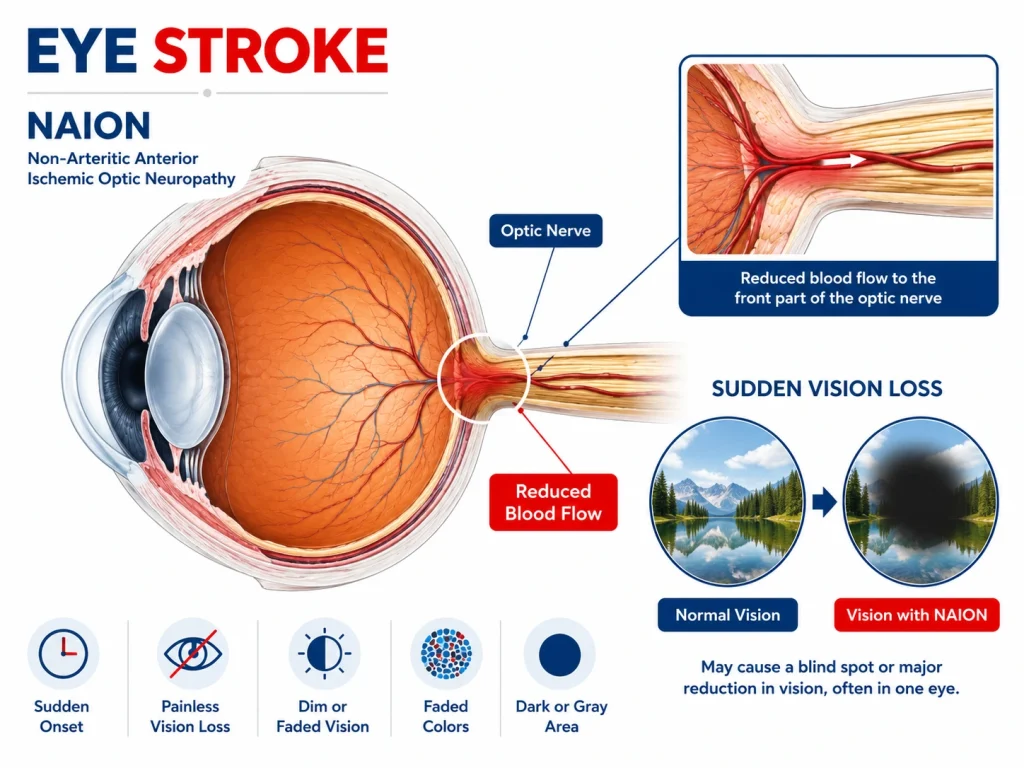
The term “non-arteritic” means the condition is not caused by inflammation of the arteries, while “ischemic” means reduced blood supply. NAION is not the same as a brain stroke, and it usually does not cause facial drooping, arm weakness, or trouble speaking. It is also different from retinal artery occlusion, which blocks blood flow to the retina rather than the optic nerve.
NAION can cause permanent vision loss, ranging from a small blind spot to a major reduction in sight. It often affects one eye first and may cause sudden painless blur, dim vision, faded colors, or a fixed dark or gray area. There is no proven treatment that reliably restores lost vision, so any sudden or unexplained vision loss should be treated as an urgent medical problem.
Eye-chart results are only one part of the picture, so this guide to understanding 20/40 vision and what visual acuity numbers mean can provide helpful context.
Which Weight Loss Drugs Are Being Studied?
Research on weight loss drugs and vision loss has focused mainly on GLP-1 receptor agonists and related medicines. These medications do not all contain the same active ingredient, work in exactly the same way, or have the same evidence regarding eye stroke risk.
| Medication | Active Ingredient | Approved Use | Research Focus |
|---|---|---|---|
| Wegovy | Semaglutide | Chronic weight management and certain other approved conditions | NAION, ischemic optic neuropathy, and whether dose or formulation affects the safety signal |
| Ozempic | Semaglutide | Type 2 diabetes and cardiovascular or kidney risk reduction in eligible adults | NAION, temporary blurred vision related to blood sugar changes, and diabetic retinopathy |
| Rybelsus | Semaglutide | Type 2 diabetes | Whether oral semaglutide has the same optic nerve safety signal seen with injectable forms |
| Mounjaro | Tirzepatide | Type 2 diabetes | Optic nerve outcomes, temporary vision changes, and diabetic eye disease |
| Zepbound | Tirzepatide | Chronic weight management and obstructive sleep apnea in eligible adults | Emerging research on optic nerve and retinal outcomes |
| Saxenda | Liraglutide | Chronic weight management | Broader GLP-1 eye effects, with less research focused specifically on NAION |
| Other weight loss medications | Varies | Weight management | Eye effects differ by ingredient and may include risks unrelated to NAION |
Note: Semaglutide is used in Wegovy, Ozempic, and Rybelsus, while Tirzepatide in Mounjaro and Zepbound works through both the GIP and GLP-1 pathways. Because these medications differ in how they work, their doses, approved uses, and patient populations, a possible eye-risk signal for one drug should not be assumed to apply equally to every weight loss medication.
What Does the Research Show About Semaglutide and NAION?
Research on Semaglutide and NAION is still developing, and the findings do not all point in the same direction. Several studies have reported a possible link, but they have not proved that Semaglutide directly causes an eye stroke.
The 2024 Mass Eye and Ear Study
A 2024 study reviewed records from patients evaluated by neuro-ophthalmologists at Mass Eye and Ear. Researchers found more NAION diagnoses among people prescribed semaglutide than among patients using other medications for similar conditions. The association was more than four times higher in the type 2 diabetes group and more than seven times higher in the overweight or obesity group. However, the study looked back at existing records, included relatively few NAION cases, and came from a specialty eye hospital, so the results may not apply to every semaglutide user.
Later Large-Database Studies
Later studies used much larger health-record databases to test whether the same pattern appeared in broader patient groups. Some found a smaller increase in NAION risk with Semaglutide, especially among people with type 2 diabetes. Other studies did not find the same level of risk or a clear increase in every group. Differences in patient health, comparison drugs, follow-up periods, diabetes severity, obesity, blood pressure, and sleep apnea may help explain why the results vary.
The 2026 Wegovy Safety-Signal Analysis
A 2026 study reviewed reports submitted to the FDA Adverse Event Reporting System between 2017 and 2024. Wegovy showed the strongest reporting signal for ischemic optic neuropathy among the Semaglutide products studied, while Ozempic also showed a signal. This does not mean the reporting odds equal the actual risk for every person taking Wegovy. The database can alert researchers to a possible safety issue, but it cannot prove that a medicine caused the event or show how commonly it happens among all users.
What Systematic Reviews and Meta-Analyses Suggest
Systematic reviews and meta-analyses have also reached mixed conclusions about Semaglutide eye stroke risk. Some pooled results suggest a possible increase in NAION, particularly among people with type 2 diabetes or existing vascular risks. Other reviews of clinical trials and GLP-1 medications have not found a statistically clear increase. The evidence remains limited because NAION is rare, case numbers are small, and many studies use different patient groups, definitions, comparison treatments, and research methods.
Does Wegovy Carry More Eye Stroke Risk Than Ozempic?
Wegovy and Ozempic both contain Semaglutide, but they are used for different medical reasons and may be prescribed at different doses. Wegovy is mainly used for chronic weight management, while Ozempic is used for type 2 diabetes and certain heart and kidney risk-reduction needs. One 2026 analysis found a stronger ischemic optic neuropathy reporting signal with Wegovy than with Ozempic. However, that result does not show the exact risk for each person or prove that Wegovy directly causes NAION.
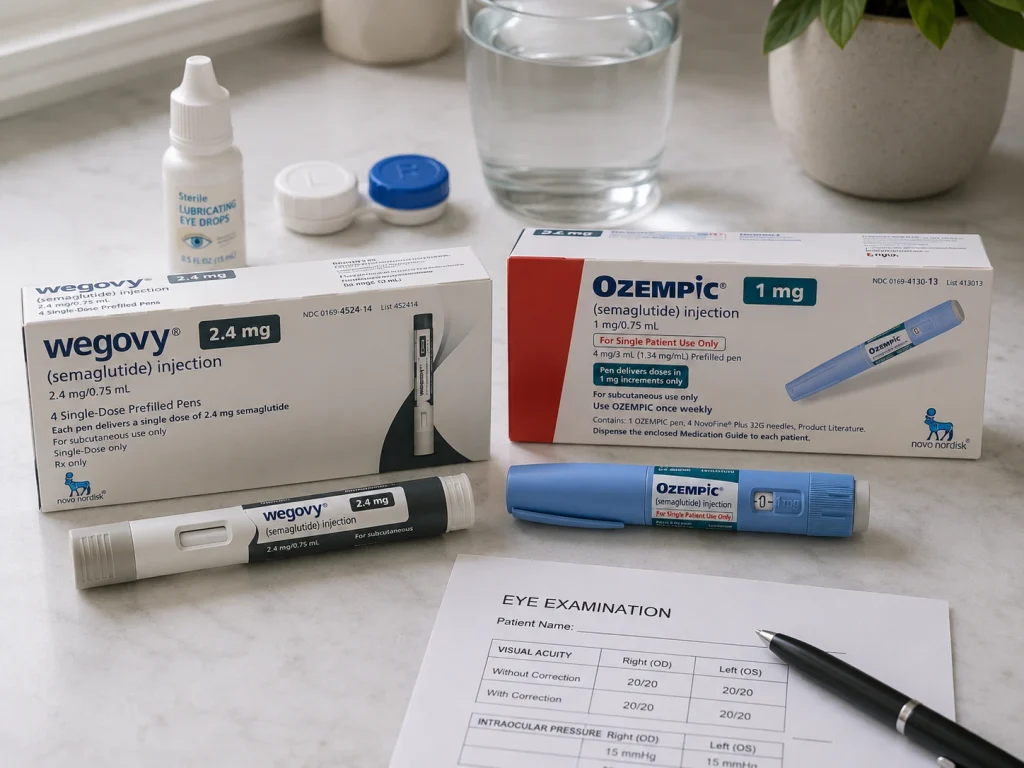
Several factors may explain why Wegovy showed a stronger signal, including dose, treatment population, fluid loss, lower blood pressure, rapid weight loss, and differences in reporting. Ozempic has also been available longer and is often prescribed to people with diabetes, while Wegovy is commonly used by people with obesity who may have other NAION risk factors such as sleep apnea or vascular disease. Adverse-event databases can count reported cases, but they cannot show how many total users were truly at risk or confirm every diagnosis. The safest takeaway is to follow your clinician’s advice and seek urgent care for sudden painless vision loss, dimming, a fixed shadow, faded colors, or a new blind spot.
Do Mounjaro and Zepbound Carry the Same Risk?
Mounjaro and Zepbound both contain Tirzepatide, which acts on the GIP and GLP-1 pathways. This makes Tirzepatide different from Semaglutide, the active ingredient in Ozempic and Wegovy, which mainly acts on the GLP-1 receptor. Mounjaro is mainly used for type 2 diabetes, while Zepbound is used for chronic weight management and certain other approved conditions. Because these medicines work differently and are prescribed to different patient groups, research on Semaglutide should not automatically be applied to Tirzepatide.

Current evidence linking Tirzepatide to NAION is still limited and comes mainly from case reports, observational studies, and pharmacovigilance data. These studies can identify possible safety signals, but they cannot prove that Tirzepatide caused an optic nerve problem or show the exact risk for each person. Newer research also suggests that Tirzepatide may lower the risk of diabetic retinopathy in some people with type 2 diabetes, although that benefit does not rule out rare problems affecting the optic nerve. If you have previous NAION, serious optic nerve disease, or sudden vision changes, discuss your individual risk with both your prescribing clinician and eye doctor.
How Weight Loss Drugs May Affect the Optic Nerve
Researchers do not yet know whether weight loss drugs directly cause NAION or exactly how they might affect the optic nerve. The possible explanations below are still theories, and more than one factor may be involved.
Rapid Changes in Blood Sugar
GLP-1 and related medications can lower blood sugar quickly, especially when treatment begins or the dose increases. Fast glucose changes may temporarily affect the eye’s focusing ability and can sometimes worsen existing diabetic retinopathy early in treatment. Researchers are also studying whether sudden metabolic changes could stress the small blood vessels that supply the optic nerve, but this has not been proven to cause NAION.
Lower Blood Pressure and Dehydration
The optic nerve needs a steady blood supply, and very low blood pressure may reduce the oxygen and nutrients reaching it. Severe nausea, vomiting, diarrhea, or poor fluid intake can cause dehydration and may lower blood volume or blood pressure. These changes could theoretically affect a vulnerable optic nerve, but normal blood pressure improvement or mild nausea does not mean that an eye stroke is developing.
Underlying Health and Circulation Factors
Many people taking semaglutide or tirzepatide already have diabetes, obesity, high blood pressure, high cholesterol, obstructive sleep apnea, cardiovascular disease, or other NAION risk factors. These conditions may raise the risk of optic nerve injury even before treatment begins, which makes the research harder to interpret. The medication, existing health problems, rapid weight loss, or several factors together may play a role, so sudden painless vision loss, dimming, faded colors, or a fixed blind spot should always receive urgent medical attention.
Who Has a Higher Risk of NAION?
NAION can affect people who have never taken a weight loss medication. Many GLP-1 users already have diabetes, obesity, high blood pressure, sleep apnea, or other conditions that may raise their baseline risk, which makes the medication’s possible role harder to separate.
Health and Circulation Risk Factors
- Type 2 Diabetes: Long-term high blood sugar can damage small blood vessels and affect circulation to the retina and optic nerve.
- High Blood Pressure: Hypertension can damage blood vessels, while unusually low blood pressure may reduce blood flow to the optic nerve.
- High Cholesterol: Elevated cholesterol can contribute to vascular disease and poor circulation.
- Obstructive Sleep Apnea: Repeated drops in oxygen and changes in nighttime blood pressure may place stress on the optic nerve.
- Smoking: Tobacco use damages blood vessels and reduces oxygen delivery to body tissues.
- Cardiovascular or Vascular Disease: Heart and blood vessel conditions may increase the risk of circulation problems affecting the optic nerve.
- Older Age: NAION is most often diagnosed in adults over 50, although younger adults can also develop it.
Eye and Optic Nerve Risk Factors
- A Crowded Optic Nerve or “Disc At Risk”: Some people naturally have a small, tightly packed optic nerve opening with less room for swelling.
- Previous NAION in One Eye: Having NAION in one eye increases the chance of developing it in the other eye.
- Existing Diabetic Eye Disease: Diabetic retinopathy shows that diabetes has already affected the eye’s small blood vessels and may require closer monitoring.
- Previous Optic Nerve Disease or Serious Vision Loss: Existing damage does not automatically cause NAION, but it makes new symptoms more concerning.
Treatment and Short-Term Health Changes
- Rapid Changes in Blood Sugar: Fast glucose improvement can temporarily blur vision and may worsen existing diabetic retinopathy early in treatment, although it has not been proven to directly cause NAION.
- Significant Dehydration: Severe vomiting, diarrhea, or poor fluid intake may lower blood volume and blood pressure.
- Very Low Blood Pressure: Reduced blood pressure, particularly during sleep, may limit blood flow to a vulnerable optic nerve.
Having one or more of these risk factors does not mean you will develop NAION or that you cannot take a GLP-1 medication. Discuss your eye history, diabetes control, blood pressure, sleep apnea, vascular health, and previous vision problems with your prescribing clinician and eye doctor.
What AreThe Common Eye Stroke Symptoms?
An eye stroke involving the optic nerve may begin suddenly and without the pain many people expect from a serious eye problem. Because several urgent eye conditions can cause similar symptoms, you should not wait to see whether a sudden vision change clears on its own.
Sudden Painless Vision Loss
NAION often causes sudden loss, dimming, or blurring of vision in one eye without pain. The change may be mild or severe, and you may notice that part of your visual field is missing rather than losing all vision. Some people can still see straight ahead but lose part of their upper, lower, or side vision.
A Dark, Gray, or Shadowed Area
A new dark, gray, or shadow-like area may appear in the center or along one part of your vision. Some people describe it as a smudge, curtain, cloud, or fixed patch that does not move when they blink. The missing area may affect the lower half, upper half, center, or side of what you see.
Colors Looking Faded
Optic nerve damage can change how your brain receives color information from the affected eye. Colors may look less bright, washed out, or different when you compare one eye with the other. A sudden change in color vision, especially with dimming or blur, needs prompt medical attention.
Blurry or Hazy Vision That Does Not Clear
Temporary blur can happen when blood sugar changes, your eyes are dry, or your prescription needs updating. That type of blur may fluctuate, improve after blinking, or affect both eyes in a similar way. Sudden blur that stays fixed, affects one eye, or comes with a missing area of vision is more concerning.
Changes Noticed After Waking
Some people first notice NAION when they wake up in the morning. Researchers think nighttime drops in blood pressure may reduce blood flow to the optic nerve in people who are already susceptible. Waking with sudden dim, shadowed, or missing vision in one eye should be treated as an emergency.
Eye-care Warning: Seek urgent medical care for sudden vision loss, a new blind spot, dim or shadowed vision, loss of side vision, or a sudden change in color vision. Do not stop a prescribed weight loss or diabetes medication on your own, but tell the emergency clinician and your prescribing doctor which medicine you take.
If you wear contacts, it also helps to know the warning signs in contact lens use so you can tell routine lens discomfort from a symptom that needs prompt attention.
Temporary Blurry Vision vs. Eye Stroke
Not every episode of blurred vision while taking a GLP-1 medication is an eye stroke. Changes in blood sugar, dry eye, fatigue, or an outdated prescription may cause temporary blur, while NAION usually creates a sudden and persistent change that needs urgent evaluation.
| Feature | Temporary Vision Fluctuation | NAION or Eye Stroke |
|---|---|---|
| Onset | May develop gradually as blood sugar changes or the eyes become dry | Often begins suddenly, sometimes after waking |
| Pain | Usually painless, although dry eyes may feel irritated or gritty | Usually painless |
| Vision Pattern | General blur that may fluctuate or improve after blinking | A missing, dark, dim, gray, or shadowed area in the visual field |
| Duration | May improve as blood sugar stabilizes, dryness clears, or the eyes rest | Often remains fixed or persistent |
| One or Both Eyes | May affect both eyes, especially when linked to blood sugar changes | Commonly noticed in one eye first |
| Color Vision | Colors usually remain normal | Colors may appear faded, dull, or washed out |
| Response To Blinking | May briefly improve after blinking or using contact-safe lubricating drops | Usually does not clear with blinking |
| What To Do | Report ongoing or repeated changes to your doctor | Seek urgent eye care or emergency medical evaluation |
Do not try to diagnose sudden vision changes at home or assume that persistent blur is a normal GLP-1 eye side effect. Sudden vision loss, a new blind spot, missing side vision, faded colors, or a fixed shadow requires urgent medical care, even if there is no pain.
If you wear contacts and the blur comes and goes, this guide to why contacts get blurry and how to fix common causes can help you check for dryness, deposits, or a fit issue.
Can GLP-1 Drugs Cause Other Eye Problems?
GLP-1 medications can sometimes cause temporary blurred vision when changing blood glucose alters the fluid balance and shape of the eye’s natural lens. Your glasses or contact lens prescription may feel less accurate until your blood sugar becomes more stable, but sudden or persistent blur should still be checked. If your glucose is changing quickly, ask your eye doctor before ordering a new vision prescription.

Rapid improvement in blood sugar can also temporarily worsen existing diabetic retinopathy, especially during the first months of treatment. Better long-term control of blood sugar, blood pressure, and cholesterol generally helps protect the retina, but you may need a baseline dilated eye exam and closer monitoring if you already have diabetic eye disease. Research on age-related macular degeneration is mixed, with some studies reporting a higher risk of neovascular, or wet, AMD and others suggesting a lower risk of nonexudative, or dry, AMD in certain groups.
Other reported problems include macular edema, retinal vascular changes, papillitis, and paracentral acute middle maculopathy. These conditions may cause distorted central vision, faded colors, floaters, dark spots, or missing areas of vision, but the limited case reports do not prove that Semaglutide or Tirzepatide directly caused them. Report new vision changes promptly and tell your eye doctor the medication name, dose, treatment start date, and any recent dose changes.
Before replacing your lenses, remember that contact lens prescriptions are not the same as glasses prescriptions, even when both are used to correct the same vision problem.
Can Weight Loss Drugs Protect Eye Health?
The effects of weight loss drugs on the eyes may include benefits as well as possible risks. GLP-1 and related medications can improve blood sugar, body weight, blood pressure, and cardiovascular health. Better control of diabetes and obesity may reduce long-term damage to the small blood vessels that supply the retina.
Research suggests that eye effects may differ by medication and by the condition being studied. A 2026 study found that Tirzepatide, the active ingredient in Monjaro and Zepbound, was associated with a lower risk of diabetic retinopathy than certain medications that act only on the GLP-1 receptor. Some studies have also linked GLP-1 treatments to a lower risk of dry age-related macular degeneration in selected groups, although the overall findings remain mixed.
A possible benefit for one eye condition does not remove every possible risk. Diabetic retinopathy affects the retina, while NAION affects the optic nerve, so a medication may affect these parts of the eye differently. Your age, diabetes status, existing eye disease, medication, dose, and treatment duration can all influence the balance of benefits and risks.
Should You Stop Taking Ozempic, Wegovy, Mounjaro, or Zepbound?
Do not stop Ozempic, Wegovy, Mounjaro, or Zepbound without first speaking with the clinician who prescribed it. Stopping treatment on your own may affect your blood sugar, appetite, weight management, cardiovascular health, kidney health, or other treatment goals. Your clinician can help you decide whether to continue the medication, adjust the dose, or consider another option based on your health history.
Sudden vision loss still requires immediate medical care, especially if you notice a fixed dark area, blind spot, dim vision, faded colors, missing side vision, or blur that does not clear. After the eye examination, your ophthalmologist and prescribing clinician can review the diagnosis and decide what should happen next. If you have previous NAION, serious optic nerve disease, or unexplained permanent vision loss, discuss your individual risk before starting or continuing treatment.
How to Protect Your Eyes While Taking Weight Loss Drugs
Most people taking GLP-1 or related medications will not develop a serious eye complication. Understanding your risks, keeping eye exams current, and reporting new symptoms quickly can help protect your vision.
Schedule a Baseline Eye Exam
A baseline eye exam may be helpful if you have diabetes, diabetic retinopathy, previous NAION, optic nerve disease, macular disease, or unexplained vision loss. Your eye doctor can examine your retina and optic nerve, record your current eye health, and decide whether you need closer monitoring.
Keep Diabetes Eye Screenings Up to Date
If you have diabetes, follow your eye doctor’s schedule for comprehensive dilated eye exams. You may need more frequent monitoring if you already have diabetic retinopathy or your blood sugar is expected to improve quickly.
Report Vision Changes Promptly
Tell your doctor about new blur, dimming, faded colors, floaters, distortion, shadows, or missing areas of vision. Seek urgent care for sudden vision loss or a fixed blind spot, even when the change is painless.
Manage Blood Pressure, Cholesterol, and Sleep Apnea
High blood pressure, high cholesterol, cardiovascular disease, and obstructive sleep apnea are recognized risk factors for NAION and other vascular eye conditions. Follow your treatment plan, but do not change blood pressure medication or aim for very low readings without medical advice.
Avoid Dehydration
Nausea, vomiting, diarrhea, reduced appetite, and poor fluid intake can cause dehydration and lower blood pressure. Contact your clinician if you cannot keep fluids down, feel faint, urinate less than usual, or struggle to stay hydrated.
Do Not Change Doses on Your Own
Do not increase, reduce, skip, pause, or restart your medication without speaking with the prescribing clinician. Your clinician can decide whether you need a slower dose increase, a temporary pause, or a different treatment based on your symptoms and health needs.
Coordinate Your Care
Tell your eye doctor the medication name, dose, start date, and any recent changes. Your ophthalmologist, prescribing clinician, primary care doctor, and endocrinologist can then work together if you develop diabetic retinopathy, NAION, optic nerve disease, or another vision problem.
Your doctor will personalize the schedule, but this guide to how often you should get an eye exam can help you understand when routine monitoring or an earlier visit may be appropriate.
Questions to Ask Before Starting a GLP-1 Weight Loss Drug
A short conversation with your prescribing clinician and eye doctor can help you understand what applies to your own health. Consider asking:
- Do I have any existing eye disease or optic nerve risk factors?
- Should I have a baseline comprehensive or dilated eye exam?
- How quickly is my blood sugar expected to improve?
- Do I already have diabetic retinopathy or macular edema?
- What vision symptoms require urgent or emergency care?
- Could dehydration, vomiting, or low blood pressure affect my risk?
- How often should my eyes be monitored after treatment begins?
- What should I do if my vision becomes blurry or part of my visual field disappears?
- Should my eye doctor and prescribing clinician share examination results?
- Does a history of NAION, optic nerve disease, diabetic retinopathy, or macular disease change the treatment plan?
- Should my dose be increased more gradually because of my health history?
- Who should I call first if I notice a sudden vision change?
Write down the answers or keep them in your medical portal so you know what to do later. Clear instructions are especially useful when a sudden symptom makes it difficult to decide whether to wait, schedule an appointment, or seek urgent care.
What the Research Still Does Not Know
Research into weight loss drugs and eye stroke risk is growing, but several important questions remain unanswered. Current studies use different patient groups, databases, and research methods, so their findings cannot always be compared directly.
Whether the Medications Directly Cause NAION
Some studies have found an association between semaglutide and NAION, which means the two appeared together more often than expected. This does not prove that the medication directly caused the optic nerve condition. Diabetes, obesity, hypertension, sleep apnea, and vascular disease may also raise NAION risk and affect the results.
Which Patients Are Most Vulnerable
Researchers still need better information about how age, sex, diabetes, obesity, blood pressure, sleep apnea, medication dose, and optic nerve anatomy influence risk. Previous NAION, diabetic retinopathy, cardiovascular disease, and a crowded optic nerve may also make some patients more vulnerable. More research is needed before doctors can accurately predict an individual person’s risk.
Whether Risk Differs by Drug or Dose
Semaglutide and Tirzepatide are different medications, and oral and injectable products may affect the body differently. Even products with the same active ingredient may use different doses and treat different patient populations. Wegovy, Ozempic, Rybelsus, Mounjaro, Zepbound, and other GLP-1 medications therefore need to be studied separately.
The True Absolute Risk
Many studies report relative risk, reporting odds, or possible associations instead of the actual number of additional cases among all medication users. Spontaneous adverse-event databases can identify safety signals, but they cannot calculate how often NAION truly occurs. Prospective and carefully controlled studies are needed to provide more reliable absolute-risk estimates.
Long-Term Effects on the Retina and Optic Nerve
Researchers are still learning how years of treatment may affect the optic nerve, diabetic retinopathy, macular edema, and age-related macular degeneration. Some studies suggest a possible risk for certain eye conditions, while others find no increase or a possible protective effect. Longer follow-up and detailed eye examinations are needed to understand how these effects may vary by medication and existing eye health.
What to Remember About Weight Loss Drugs and Eye Stroke Risk
Research into weight loss drugs and eye stroke risk suggests a possible link between semaglutide and NAION, but the evidence is not yet conclusive. NAION appears to be rare, and conditions such as diabetes, obesity, high blood pressure, sleep apnea, and cardiovascular disease may also affect a person’s risk. The most important step is to stay alert for sudden vision loss, dimming, blind spots, faded colors, or a fixed shadow in your vision.
Weight loss medications can provide meaningful benefits for blood sugar control, weight management, heart health, and kidney health, so you should not stop treatment without speaking with your clinician. Keep your eye exams up to date, tell your eye doctor which medication you take, and seek urgent care for sudden or persistent vision changes.
Are you looking for comfortable vision correction while managing changes in your eye health? Browse our contact lenses and choose options that match your prescription and eye doctor’s recommendations.
FAQs About Weight Loss Drugs and Eye Stroke Risk
Can Ozempic cause an eye stroke?
Some studies have found a possible association between semaglutide, the active ingredient in Ozempic, and NAION. However, the research does not prove that Ozempic directly causes an eye stroke, and some later studies have reported a smaller association or no significant increase. Your individual risk may also depend on diabetes, blood pressure, sleep apnea, vascular health, and the anatomy of your optic nerve.
Can Wegovy cause sudden vision loss?
Wegovy has been linked to reports of ischemic optic neuropathy, a rare condition that can cause sudden vision loss. One 2026 analysis found a stronger reporting signal for Wegovy than for Ozempic, even though both contain semaglutide. That result identified a possible safety concern, but it did not determine the true frequency of the condition or prove that Wegovy caused the reported cases.
What is Ozempic blindness?
“Ozempic blindness” is not a medical diagnosis. It is an informal phrase often used online to describe NAION or other vision problems reported by people taking Ozempic, Wegovy, or related medications. Using the correct diagnosis matters because sudden vision loss can have several causes that require different treatment.
Is eye stroke from weight loss drugs common?
An eye stroke from weight loss drugs appears to be rare. Researchers still do not know the exact incidence because estimates vary by medication, patient population, study design, and comparison group. Adverse-event reporting systems can identify unusual patterns, but they cannot show how often a condition occurs among all medication users.
Is the eye stroke risk higher with Wegovy than Ozempic?
One 2026 analysis of FDA adverse-event reports found a stronger ischemic optic neuropathy reporting signal with Wegovy than with Ozempic. Researchers suggested that dose, formulation, treatment population, low blood pressure, fluid loss, or reporting patterns could help explain the difference. The finding should not be interpreted as proof that every Wegovy user has a specific multiple of the absolute risk faced by an Ozempic user.
Can Mounjaro or Zepbound cause NAION?
Evidence involving tirzepatide, the active ingredient in Mounjaro and Zepbound, is still limited. Tirzepatide has appeared in case reports and observational studies involving optic nerve conditions, but the evidence should not be treated as identical to the research on semaglutide. Larger studies are needed to determine whether there is a drug-specific risk and how often it may occur.
What does NAION vision loss look like?
NAION often causes sudden, painless blur, dimming, or loss of part of the vision in one eye. You may notice a fixed dark or gray area, a shadow, a blind spot, missing side vision, or colors that look faded compared with the other eye. Some people first notice the change when they wake up.
Is blurry vision after starting a GLP-1 drug always an eye stroke?
No. Changing blood sugar levels can temporarily affect the eye’s focusing ability and make your usual glasses or contact lens prescription feel less accurate. Dry eye, fatigue, diabetic retinopathy, and other conditions can also cause blur, but sudden, one-sided, fixed, or persistent changes need prompt medical assessment.
Does NAION vision return?
Vision lost from NAION is often permanent because damaged optic nerve fibers do not usually recover fully. Some people may experience partial improvement over time, but there is no proven treatment that reliably restores all lost vision. That is why sudden vision loss should be evaluated urgently.
Who should get an eye exam before starting a weight loss drug?
A baseline eye exam may be especially useful if you have diabetes, diabetic retinopathy, previous NAION, optic nerve disease, macular disease, unexplained vision changes, or major vascular risk factors. These may include high blood pressure, high cholesterol, sleep apnea, smoking, or cardiovascular disease. Your eye doctor can document your current eye health and recommend an appropriate monitoring schedule.
Should I stop my weight loss medication if my vision changes?
Do not stop or change a prescribed medication on your own. Sudden vision loss, a fixed blind spot, shadowed vision, faded colors, or missing side vision requires urgent medical evaluation, followed by direct discussion with the clinician who prescribed your medication. Your eye doctor and prescribing clinician can then weigh the diagnosis against your blood sugar, weight, cardiovascular health, and other treatment goals.
Can weight loss drugs improve eye health?
They may offer indirect or condition-specific eye benefits for some people. Better control of blood sugar, weight, blood pressure, cardiovascular health, and kidney health may reduce long-term complications associated with diabetes and obesity. Newer research also suggests that tirzepatide may lower the risk of some diabetic retinopathy outcomes, but these findings do not rule out rare risks affecting other parts of the eye.
Disclaimer: This content is for general informational purposes only and is not a substitute for professional advice, diagnosis, or treatment.
References
Risk of Nonarteritic Anterior Ischemic Optic Neuropathy in Patients Prescribed Semaglutide. Jimena Tatiana Hathaway et al. JAMA Ophthalmology. https://pubmed.ncbi.nlm.nih.gov/38958939/. Date Accessed: June 22, 2026.
Glucagon-Like Peptide 1 Receptor Agonists and Risk for Ischemic Optic Neuropathy: A Meta-Analysis of Randomised Controlled Trials. Giovanni Antonio Silverii et al. Diabetes, Obesity and Metabolism. https://pubmed.ncbi.nlm.nih.gov/39563616/. Date Accessed: June 22, 2026.
Once-Weekly Semaglutide Doubles the Five-Year Risk of Nonarteritic Anterior Ischemic Optic Neuropathy in a Danish Cohort of 424,152 Persons With Type 2 Diabetes. Jakob Grauslund et al. International Journal of Retina and Vitreous. https://pubmed.ncbi.nlm.nih.gov/39696569/. Date Accessed: June 22, 2026.
Semaglutide and Nonarteritic Anterior Ischemic Optic Neuropathy. Cindy X. Cai et al. JAMA Ophthalmology. https://pubmed.ncbi.nlm.nih.gov/39976940/. Date Accessed: June 22, 2026.
Use of Semaglutide and Risk of Non-Arteritic Anterior Ischemic Optic Neuropathy: A Danish-Norwegian Cohort Study. Emma Simonsen et al. Diabetes, Obesity and Metabolism. https://pubmed.ncbi.nlm.nih.gov/40098249/. Date Accessed: June 22, 2026.
PRAC Concludes Eye Condition NAION Is a Very Rare Side Effect of Semaglutide Medicines Ozempic, Rybelsus and Wegovy. European Medicines Agency. https://www.ema.europa.eu/en/news/prac-concludes-eye-condition-naion-very-rare-side-effect-semaglutide-medicines-ozempic-rybelsus-wegovy. Date Accessed: June 22, 2026.
Semaglutide or Tirzepatide and Optic Nerve and Visual Pathway Disorders in Type 2 Diabetes. Lindsey Wang et al. JAMA Network Open. https://jamanetwork.com/journals/jamanetworkopen/fullarticle/2837377. Date Accessed: June 22, 2026.
Ocular Adverse Events With Semaglutide: A Systematic Review and Meta-Analysis. Gabriella R. Natividade et al. JAMA Ophthalmology. https://pubmed.ncbi.nlm.nih.gov/40810985/. Date Accessed: June 22, 2026.
Nonarteritic Anterior Ischemic Optic Neuropathy. Kirandeep Kaur and Edward Margolin. StatPearls / NCBI Bookshelf. https://www.ncbi.nlm.nih.gov/books/NBK559045/. Date Accessed: June 22, 2026.
Ischemic Optic Neuropathy With Semaglutide: Global Observational Analysis of Sex- and Formulation-Specific Risk. Moiz Lakhani et al. British Journal of Ophthalmology. https://pubmed.ncbi.nlm.nih.gov/41807083/. Date Accessed: June 22, 2026.
Related Articles
-

Ash Wednesday: Contact Lens Comfort Tips for Smoke and Incense
-
Daily vs Bi Weekly Contacts (Which Fits Your Routine Better)
-
2026 Super Bowl LX: Contact Lens Comfort and Safety Tips for On Screen and Stadium
-

Can Depression Cause Vision Problems?
-
FIFA World Cup 2026 Contact Lens Guide: Travel, Stadium, and Screen Tips