Contact lens “trends” for 2026 are less about hype and more about how women live day to day. More screen time. More dry indoor air. More long days where comfort matters at 4 p.m. just as much as it does at 9 a.m. That shift is shaping what lens types get picked, what features get attention, and what habits matter most.
There’s also a bigger backdrop. The contact lens market is still growing and the rise in myopia keeps feeding demand for vision correction. The World Health Organization has highlighted myopia as a major public health issue, with estimates at 2.6 billion people affected in 2020 and projections rising by 2030.
This guide breaks down what’s trending for women in 2026 and how to adjust wear habits so your eyes stay comfortable and healthy.
What Is Driving Contact Lens Trends in 2026
What Does The Numbers Say?
Swipe through square cards to see the stats cited in this article.
2.6B
Myopia affected 2.6 billion people in 2020
Cited in WHO materials, with projections rising by 2030.
Source: WHO SPECS 2030USD 12.1B
Market revenue forecast for 2026
Forecast figure cited in the draft’s references.
Source: Future Market InsightsUSD 19.9B
Market revenue forecast for 2036
Same forecast source, longer range projection.
Source: Future Market InsightsTrend
Daily disposables gaining share in 2026
Market commentary cited in the draft references.
Source: Reuters (2026)Higher
Dry eye is more common in women
Menopause is highlighted as a major factor.
Source: AAOEvidence
Hormonal shifts tied to dry eye patterns
Peer-reviewed discussion cited in the references.
Source: PMC ArticleSeveral×
Sleeping in lenses raises infection risk
CDC reporting cited in the references list.
Source: CDC MMWRRx
Colored lenses require a prescription
FDA notes decorative lenses are regulated medical devices.
Source: FDACleared
EDOF lens design clearance (Deseyne)
FDA 510(k) summary is included in the references.
Source: FDA 510(k) PDFThree forces are steering the market right now.
First, more people need vision correction. Myopia rates keep rising globally, and that pushes more first-time wearers into contact lenses.
Second, wearers are “trading up” to options that feel better and fit busy routines, even when costs rise. Industry forecasts also show steady growth through the next decade. One widely cited forecast pegs global market revenue at about USD 12.1B in 2026 and USD 19.9B by 2036.
Third, contact lenses are no longer viewed only as vision correction. For many women, lenses also connect to appearance, convenience, and comfort during makeup, workouts, travel, and screen-heavy workdays.
Are Daily Disposables Becoming the Default Choice
Daily disposables keep gaining ground in 2026 for a simple reason. Many people prefer the “fresh lens” feel and the lower-maintenance routine.
For women, dailies also fit real-life friction points:
- Less buildup from cosmetics and skincare
- No case and solution routine on busy weeks
- Easier packing for travel
- A cleaner option when allergies act up
This, however, doesn’t mean monthly lenses are going away. It means more women are choosing dailies when comfort, convenience, and hygiene matter more than squeezing the cost per lens.
Why Comfort Tech Is Getting More Attention
Comfort has become the deciding factor for a lot of wearers. Not “comfort for the first hour,” but comfort at the end of the day.
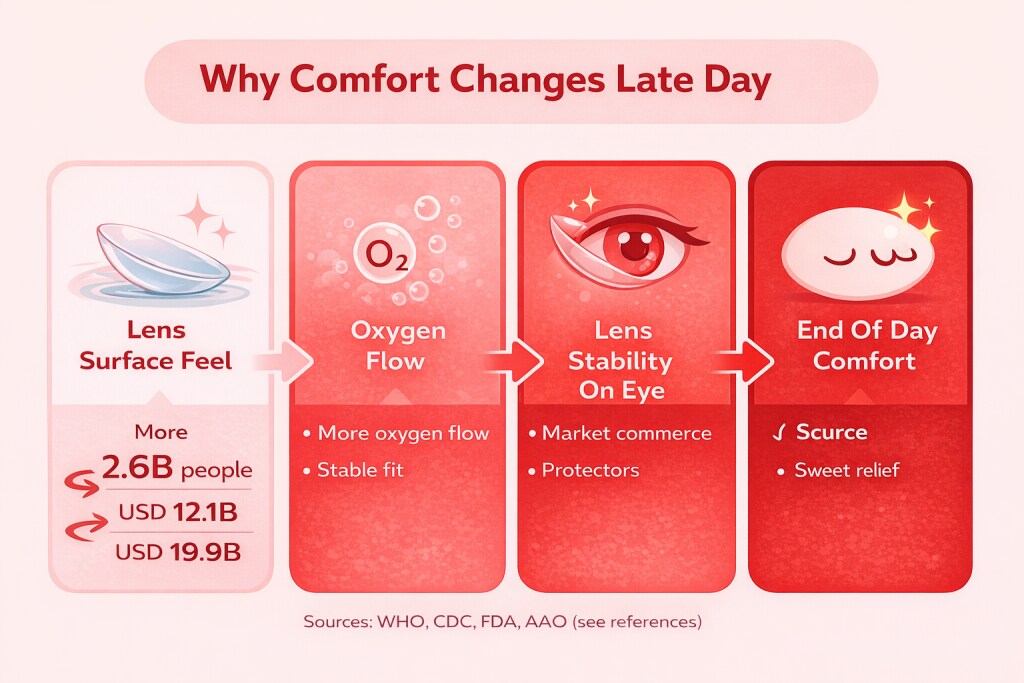
You’ll see more focus on:
- Smoother-feeling lens surfaces that reduce eyelid friction
- Materials that move oxygen better than older hydrogels
- Designs meant to stay stable on the eye and feel less noticeable
If your eyes feel dry or tired late in the day, it’s not always a willpower problem. It can be a lens fit problem, a material mismatch, or a routine issue like overwear.
Why Dry Eye Is a Bigger Topic for Women
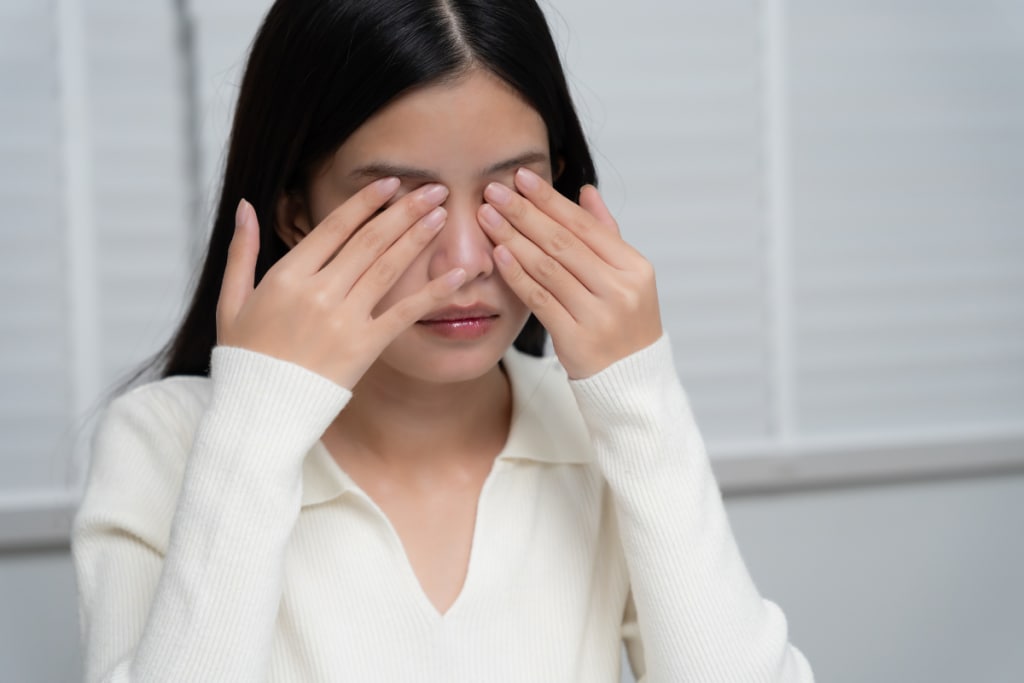
Dry eye is common in general, and it shows up more often in women, especially after menopause. The American Academy of Ophthalmology notes dry eye is more common in women and calls out menopause as a major factor.
Hormones can affect the tear film and the oil glands in the eyelids. That can make contacts feel scratchy, blurry, or uncomfortable even if your prescription is correct. Research also links hormonal shifts to dry eye disease patterns.
If you’re in a life stage with shifting hormones such as pregnancy, postpartum, perimenopause, or menopause, a lens that used to feel fine can start feeling “off.” That’s normal. It’s also fixable with the right exam and a smarter wear plan.
What Is Trending in Cosmetic and Colored Contacts
Colored contacts are still popular in 2026, but the look is changing. Many wearers prefer subtle, natural-looking enhancement rather than dramatic color shifts. That aligns with what shows up on social platforms and what people actually feel comfortable wearing to work or school.
The bigger trend here is not the shade. It’s safety.
In the U.S., decorative and colored contact lenses are regulated medical devices and still require a prescription, even if you do not need vision correction. The FDA has been blunt about this for years.
If you want colored lenses, the “trend” to follow is buying from legitimate sources and getting a proper fit. A cute lens that scratches your cornea is not a vibe.
How Screen Time Is Changing Contact Lens Comfort
More women are doing long stretches of close-up screen work. That can lower blink rate and speed up tear evaporation, which can make contacts feel dry faster.
This is why you see more talk around “screen day comfort,” and why some wearers switch to:
- Daily disposables for a cleaner end-of-day feel
- Different materials if dryness hits hard
- A plan that mixes contacts and glasses depending on the day
A simple habit that still holds up is taking regular breaks. Even mainstream eye-care advice keeps pointing back to looking away from your screen often and letting your eyes reset.
Eye Health Habits That Matter More Than Any Trend
Trends come and go. These habits protect your eyes no matter what you wear.
Here’s one practical checklist you can follow.
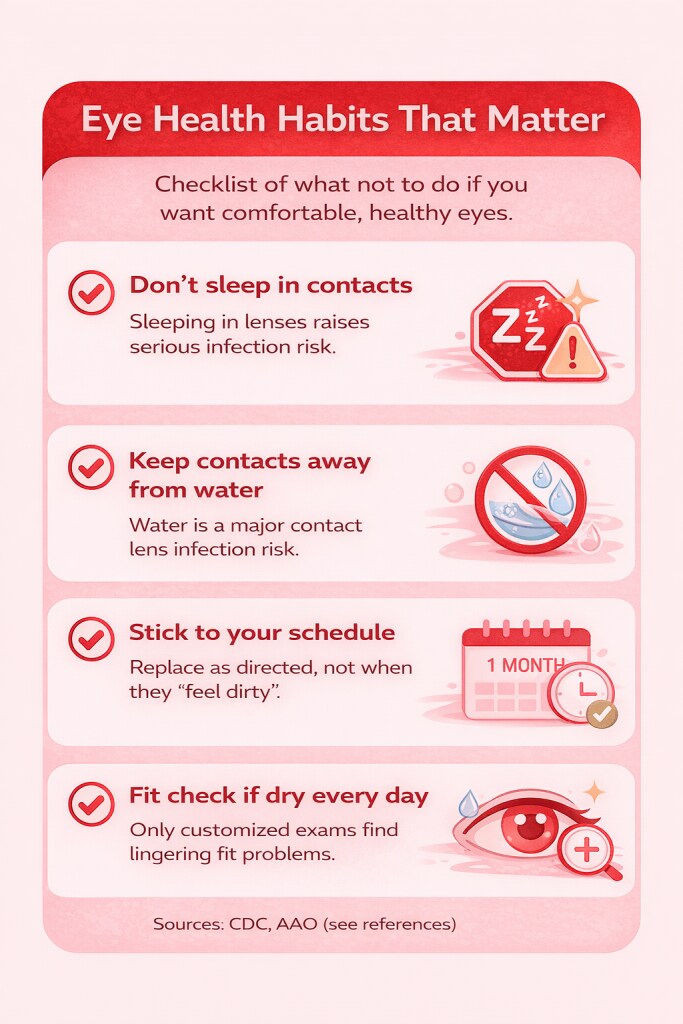
If you do only one thing after reading this, make it this. Treat contact lenses like a medical device, not a convenience accessory.
Frequently Asked Questions About Women’s Contact Lens Trends 2026
1. What are the biggest contact lens trends for women in 2026?
More women are leaning toward daily disposable lenses, with comfort and hygiene leading the decision. There’s also more focus on dry eye support and “screen day” comfort, since long hours of close-up work can make lenses feel tired faster.
2. Are daily contacts safer than monthly contacts?
Daily contacts remove the cleaning and storage step, which can reduce contamination risk for some wearers. Safety still depends on habits like not sleeping in lenses, keeping them away from water, and following replacement rules and wear time limits.
3. Why do contacts feel drier during screen time?
Blink rate often drops during close-up screen work, which speeds tear evaporation. When your tear film breaks up faster, contacts can start feeling dry earlier in the day, especially in air-conditioned or heated rooms.
4. Are colored contacts safe for everyday wear?
Yes, if the lenses are properly fitted and prescribed. The FDA warns that decorative lenses still require a prescription, and buying from unauthorized sellers can raise the risk of eye injury or infection.
5. Why is dry eye more common in women?
Dry eye is more common in women, and menopause is a well-known risk factor. Hormonal changes can affect tear film stability and the eyelid oil glands that help prevent tears from evaporating too quickly.
6. Can I nap in my contacts if it’s only for a short time?
It’s still a high-risk habit. The CDC has reported that sleeping in contact lenses raises the risk of eye infections by several times, even if it feels like “just a quick nap.”
References
Contact Lenses Market Size, Trends and Forecast 2026 to 2036 Future Market Insights
https://www.futuremarketinsights.com/reports/contact-lenses-market
SPECS 2030 World Health Organization
https://www.who.int/initiatives/specs-2030
Daily disposable contact lenses set to power market rebound in 2026 Reuters
https://www.reuters.com/business/daily-disposable-contact-lenses-set-power-market-rebound-2026-2026-02-18/
What Is Dry Eye American Academy of Ophthalmology
https://www.aao.org/eye-health/diseases/what-is-dry-eye
Preventing Eye Infections When Wearing Contacts CDC
https://www.cdc.gov/contact-lenses/prevention/index.html
Corneal Infections Associated with Sleeping in Contact Lenses CDC MMWR
https://www.cdc.gov/mmwr/volumes/67/wr/mm6732a2.htm
Colored and Decorative Contact Lenses A Prescription Is Required FDA
https://www.fda.gov/consumers/consumer-updates/colored-and-decorative-contact-lenses-prescription-must
Decorative Contact Lenses for Halloween and More FDA
https://www.fda.gov/medical-devices/contact-lenses/decorative-contact-lenses-halloween-and-more
Hormones and Dry Eye Disease PMC
https://pmc.ncbi.nlm.nih.gov/articles/PMC10276676/
FDA Clears First Extended Depth of Focus Contact Lens for Presbyopia Business Wire
https://www.businesswire.com/news/home/20251222625759/en/FDA-Clears-First-Extended-Depth-of-Focus-Contact-Lens-for-Presbyopia
Deseyne Daily Disposable Soft Contact Lens for Presbyopia FDA 510k Summary PDF
https://www.accessdata.fda.gov/cdrh_docs/pdf25/K251683.pdf
Related Articles
-
Wearing Contact Lenses While Scuba Diving Or Snorkeling In Hawaii And Florida
-
On Eco-Friendly Contact Lenses: ACUVUE Oasys 1-Day vs Biotrue ONEday
-

How to Choose Colored Contact Lenses that Match Your Skin Tone
-
1-Day Acuvue Moist vs. Dailies Aquacomfort Plus: Which Reigns Supreme?
-
Mila Kunis And Chronic Iritis: When A Red Eye Is More Than Irritation