Spring allergies can make wearing contacts feel like a daily guessing game. One day your lenses feel fine, and the next you are dealing with itchy eyes contacts, watery eyes contacts, or a gritty “something is on my lens” feeling. That usually happens because pollen and other allergens mix with your tears, then cling to the lens surface, which can increase contact lens deposits and make comfort drop faster during pollen season contacts.
So what works better for contacts for spring allergies? Most people end up choosing between daily contacts and monthly contacts, and the right answer depends on how often you wear lenses and how well you can keep up with contact lens cleaning. Below is a quick, practical guide to help you decide, then we will break down the why behind it and what to do on flare up days.
Daily vs Monthly Contacts for Spring Allergies
If your top goal is comfort during allergy season, daily vs monthly contacts for allergies often comes down to one thing: how much buildup you want to manage. Daily disposable contacts reduce the chance allergens and protein deposits keep riding along day after day, while monthly contacts can still work well if you follow a strict routine and your eyes tolerate your contact lens solution.
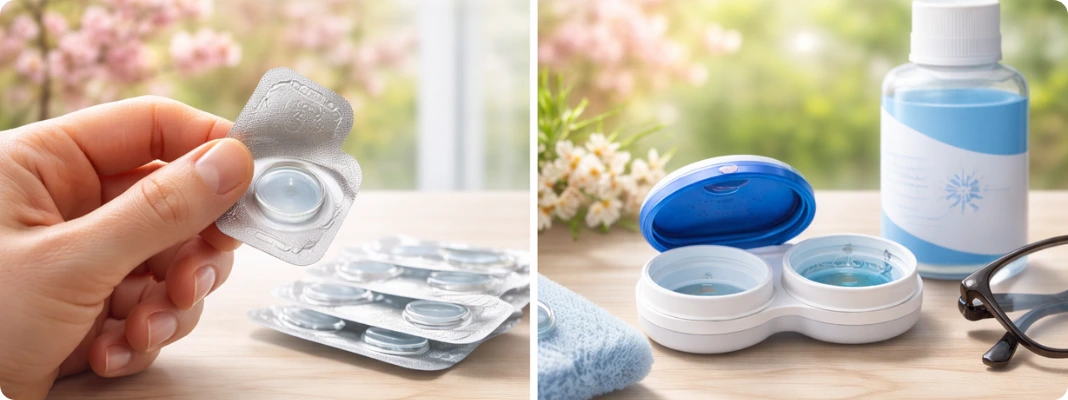
Choose daily disposable contacts if
- You want the simplest routine and often search for best contacts for spring allergies because irritation flares up fast
- You notice buildup, dryness, or “lens film” during allergy season contacts, especially on high pollen days
- You have contacts for sensitive eyes needs and prefer a fresh lens surface every morning with fewer variables
- You wear contacts on and off, so you do not want to manage a case and nightly contact lens cleaning
Daily disposables are often the easiest upgrade for comfort because you start fresh each day and remove the biggest risk factor for allergy season wear: repeat exposure to deposits. If you want a more general comparison beyond allergy season, read daily vs. monthly contact lenses: which type is best for you.
Choose monthly contacts if
- You wear lenses most days and can follow a consistent monthly contacts cleaning routine without shortcuts
- Your eyes tolerate your contact lens solution and you are not dealing with contact lens solution irritation allergies
- You are reliable about replacement dates and not stretching the month
- You keep glasses as a backup for heavy allergy days, and you are willing to switch when symptoms spike
Monthly lenses can still be comfortable for contact lenses for allergies when your hygiene is solid, your solution is a good match, and you are realistic about switching to glasses on rough pollen days.
Why Spring Allergies Make Contacts Feel Worse
If you feel like your lenses turn “high maintenance” the moment spring hits, there is a real reason. Allergy season changes what is floating in the air and how your eyes respond to it, and that combo can reduce contact lens comfort faster than usual.
Pollen and allergens cling to lenses
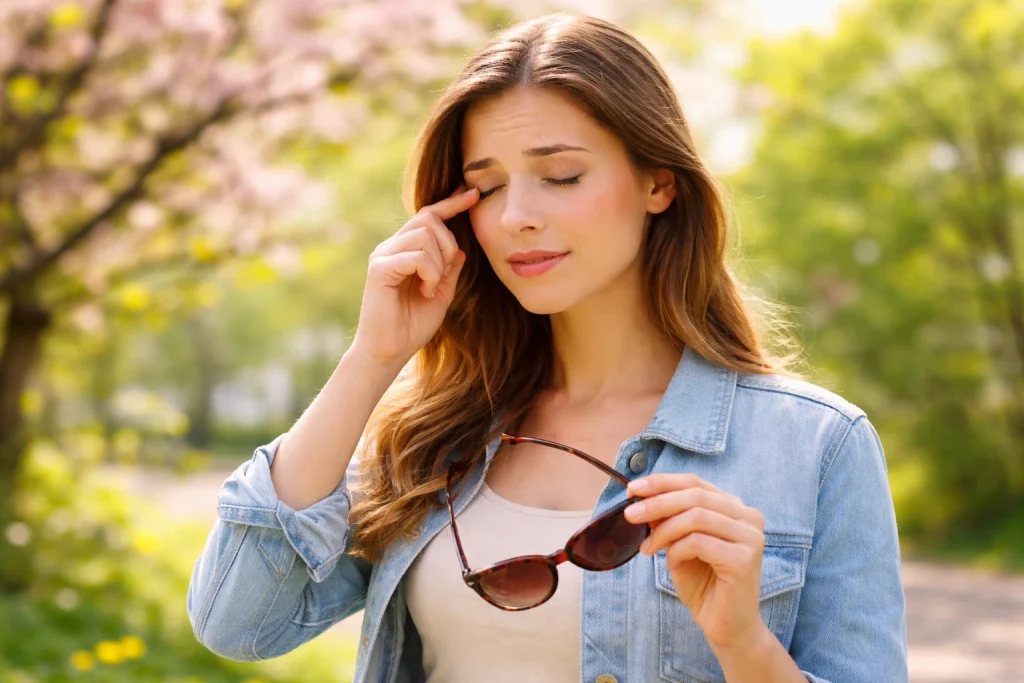
Think of your contact lens like a tiny surface that sits on your tear film all day. During pollen season contacts, pollen, dust, and other allergens can stick to the lens surface and mix with natural protein buildup. That buildup can feel like contact lens deposits, and it often shows up as itchiness, mild blur, or a gritty sensation that makes you want to rub your eyes.
This is one reason daily disposable contacts for allergies are popular. You start with a fresh lens each day, so allergens and deposits do not keep riding along for a week or a month.
One simple way to reduce that gritty, filmy feeling is tightening your routine with contact lenses cleaning tips and common mistakes.
Tear film changes during allergy flare ups
When allergies flare, your eyes may water more, feel dry, or swing between both. That sounds odd, but it is common. Your tears can become less stable, and that can make dry eyes contacts symptoms feel worse even if your eyes look watery.
When the tear film is not stable, lenses can feel more noticeable on the eye. Some people also notice their vision fluctuates more during flare ups because the lens surface is not staying evenly wet.
Eye rubbing and overwearing lenses makes irritation worse
Rubbing is the fastest way to turn a small irritation into a bad day. It can push allergens deeper into the eye, disturb the lens, and increase redness. It also raises the risk of tiny scratches on the eye surface, which makes lenses feel even more uncomfortable.
Overwearing is the next common trap. When your eyes already feel irritated, wearing lenses longer than usual can amplify the problem. On high pollen days, it is often smarter to shorten wear time, take lens breaks, or switch to glasses for a few hours.
Quick reminders that help most people:
- Wash hands before touching lenses, every time
- Avoid rubbing, even if it itches
- If it feels scratchy, remove the lens and inspect it instead of blinking through it
When symptoms may be lens intolerance, not just allergies
Sometimes it is not “just spring.” If your eyes feel irritated even indoors, even on low pollen days, or even right after you put lenses in, it may be lens intolerance or a product mismatch.
Signs it might be more than allergies:
- Burning or stinging that does not improve after removing the lens
- Redness that keeps returning every time you wear lenses
- Increased sensitivity to your contact lens solution or a new contact lens cleaning product
- Discomfort in one eye more than the other
If you suspect this, do not keep swapping products on your own. Your eye doctor can check for dryness, allergies, and fit issues and help you find a better match.
If your eyes feel irritated even on low pollen days, this guide on contacts for sensitive eyes can help you narrow down what to try next.
Daily vs Monthly Contacts: What Actually Changes in Allergy Season
When you compare daily vs monthly contacts for spring, the real difference is how much buildup you have to manage. Dailies reduce the “carryover” of allergens from one day to the next, while monthlies can still work if your routine is consistent and your eyes tolerate your solution well.
| Schedule | Pros | Cons | Best For |
|---|---|---|---|
| Daily disposable contacts | Fresh lenses every day helps reduce contact lens deposits and allergies buildup. No case or nightly cleaning, so fewer chances to irritate the eyes with residue or a dirty case. | Can cost more for full time wear depending on your prescription and how often you wear lenses. | People with contacts for spring allergies who get itchy easily, wear lenses occasionally, or want the simplest routine. |
| Monthly contacts | Can be convenient if you wear lenses most days and are consistent with care. Often fewer boxes to manage, and some wearers like the routine. | More time for allergens and deposits to build up, and comfort can drop if monthly contacts cleaning routine slips. Some people react to solution or case buildup. | People who tolerate their lenses and solution well, follow strict cleaning, and are willing to switch to glasses on heavy allergy days. |
If your main goal is to feel better during allergy season, dailies usually win on convenience and cleanliness. If you prefer monthlies, they can still be a good choice, but only if you treat cleaning and replacement like a schedule you do not break.
Pros and Cons: Daily Disposable vs Monthly Contacts for Allergies
Choosing daily vs monthly contacts for allergies is less about “which is best in general” and more about what keeps you comfortable during real spring days. Here is the honest breakdown, especially for contacts for spring allergies and pollen season contacts.
Daily Disposable Contacts
Pros
- Fresh lens every day means fewer contact lens deposits building up from pollen, dust, and proteins
- No case and no nightly contact lens cleaning, which removes a common trigger for irritation
- Easy on flare up days because you can wear lenses for a few hours and switch to glasses without worrying about storage
- Often a good fit for contacts for sensitive eyes, especially when allergies make you more reactive
Cons
- Cost can be higher if you wear lenses every day, which is why people often compare daily vs monthly contacts cost
- You need to keep enough supply on hand so you do not run out mid week
- If you use drops often, you still need the right drops labeled safe for contacts, because dailies do not automatically fix dryness
Monthly Contacts
Pros
- Can be a good value if you wear lenses most days and follow a solid routine
- Fewer boxes to store and manage compared with daily lenses
- Some wearers prefer the routine and feel of certain monthly contacts, especially when the fit is dialed in
Cons
- More time for allergens and deposits to accumulate, which can increase itchy eyes contacts and irritation during flare ups
- Requires a strict monthly contacts cleaning routine, and comfort often drops fast if you skip steps or stretch the schedule
- Solution sensitivity is real. If you notice burning or dryness after you clean lenses, you may be reacting to your contact lens solution or to buildup in the case
Your case can be a hidden culprit, so it helps to follow a simple routine for how to clean your contact case.
Takeaway: if allergies are your main problem, daily lenses usually win for simplicity and fewer irritants. Monthlies can still work, but only if your cleaning routine is consistent and your solution is a good match.
Cost and Value: Daily vs Monthly Contacts During Spring Allergies
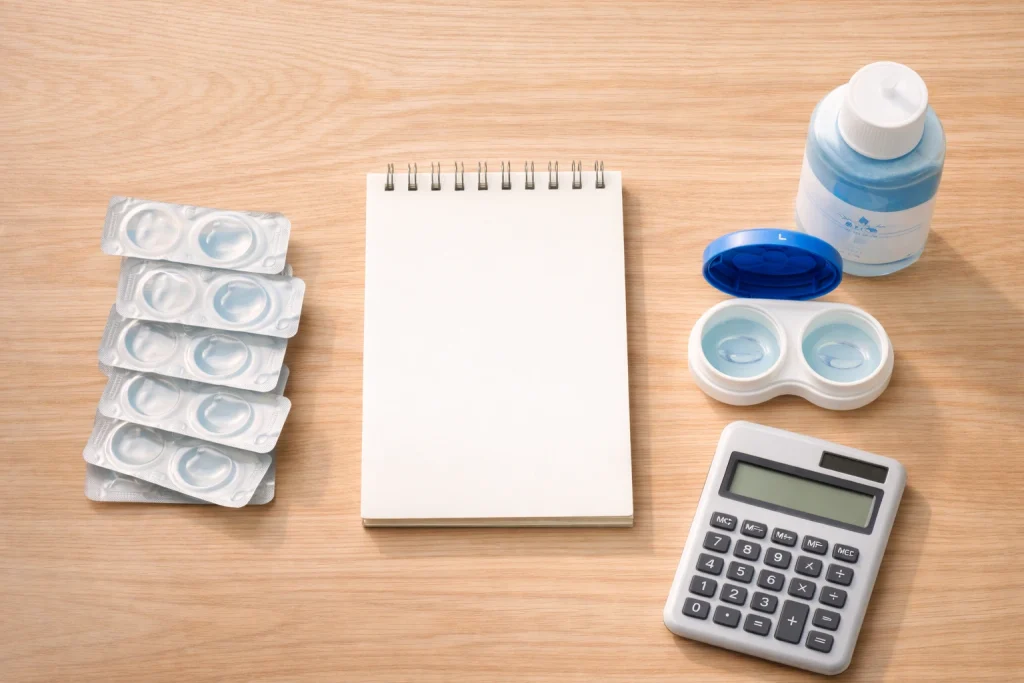
There is no universal “cheaper” option because your cost depends on how often you wear lenses and what supplies you need to stay comfortable. The best value is the schedule you can stick to without discomfort, because discomfort usually leads to wasted lenses, extra drops, and more days switching to glasses.
What affects total cost most
- How often you wear lenses
If you only wear contacts a few days a week, dailies can be surprisingly cost friendly because you only use lenses on the days you wear them. - Monthly supplies
With monthlies, you add ongoing costs like contact lens solution and lens case replacements. Those costs matter more during allergy season when you may clean more often or replace a case sooner. - Comfort and compliance
If monthly lenses feel itchy mid month and you end up tossing them early, the “cheaper per lens” math stops working. Sometimes dailies are a better value simply because you actually wear them comfortably. - Rebates, promos, and pack size
Deals and larger pack sizes can shift the price in either direction, so it helps to compare your real monthly spend rather than the box price alone.
If you are newer to managing supplies, this contact lens care guide for beginners is a helpful checklist for solutions, cases, and habits.
Best Contacts for Spring Allergies: Daily Disposable and Monthly Picks
When spring hits, comfort usually comes down to how much pollen and buildup you are willing to manage. For many people, daily disposable contacts for allergies feel easier because you start fresh each day and avoid extra contact lens deposits. If you prefer monthly contacts, you can still do well in allergy season, but your monthly contacts cleaning routine has to be consistent and your contact lens solution has to agree with your eyes.
Top 3 Daily Contacts for Spring Allergies
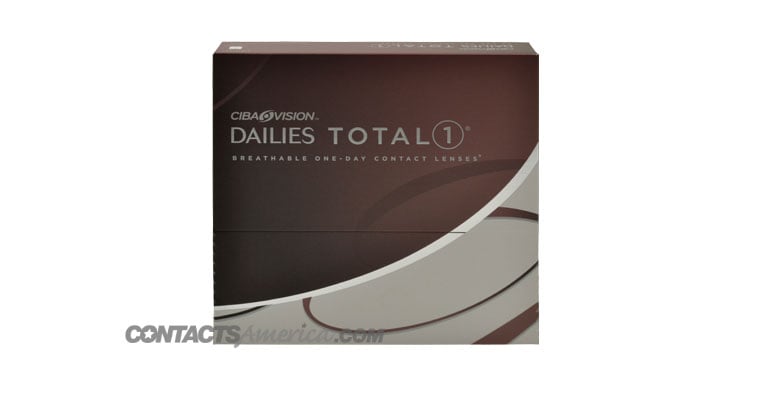
DAILIES TOTAL1 is a strong choice if you want contact lens comfort that stays more consistent on itchy or watery spring days. Because you start with a fresh lens each morning, it can help reduce the carryover of pollen and contact lens deposits that often make contacts for spring allergies feel worse. It is also an easy pick for pollen season contacts since there is no case or nightly cleaning step to manage.
2. ACUVUE OASYS 1-Day with HydraLuxe
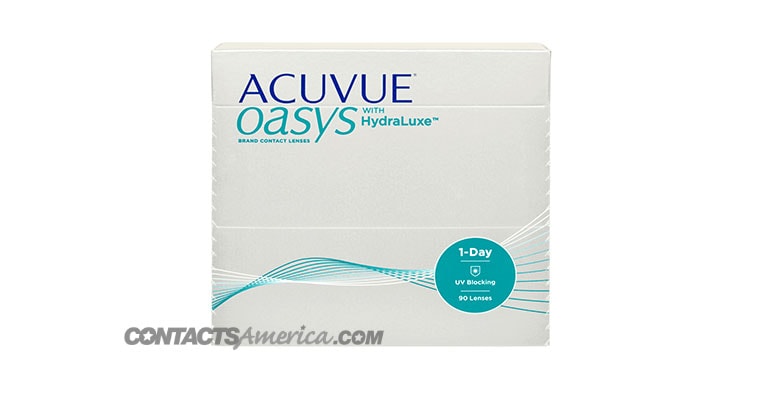
ACUVUE OASYS 1-Day with HydraLuxe is a good daily option if your eyes feel more sensitive during long days, heavy screen time, or dry indoor air. Many wearers prefer breathable daily lenses when allergy season triggers dryness and end of day irritation, especially when they bounce between indoors and outdoors. If you want a daily lens to trial for spring routines, this is a solid comfort focused pick.
3. PRECISION1
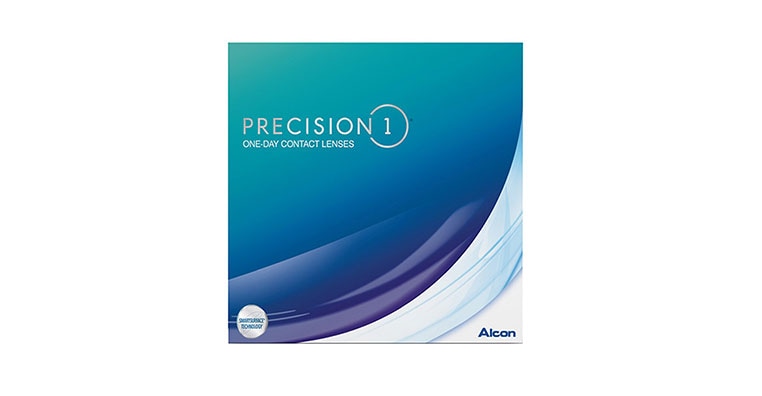
PRECISION1 is a practical choice if you want a straightforward daily lens for busy spring schedules. Daily wear can help limit buildup that contributes to itchy eyes contacts and those gritty lens moments that pop up during allergy season. It is also a smart value move if you only wear contacts some days, since you only open what you use.
Before you pick a lens for spring, it helps to know what to look for in contact lenses for an active spring season like outdoor plans, travel, and longer days.
Top 3 Monthly Contacts for Spring Allergies
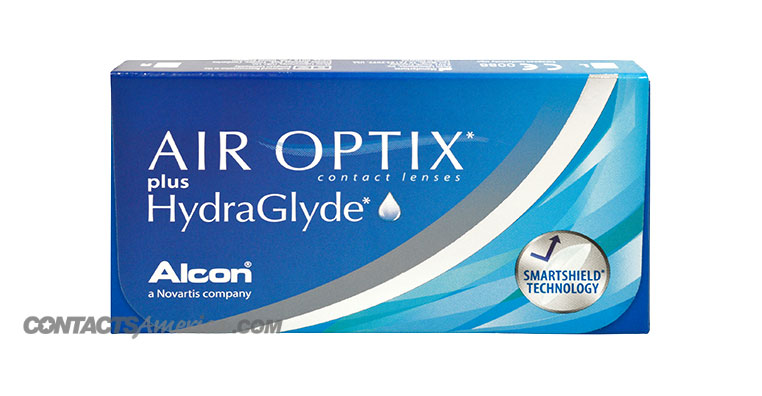
AIR OPTIX plus HydraGlyde is a good option for full time wearers looking for monthly contacts for allergies, as long as they can stay strict with care. Some monthly designs are built to support comfort and deposit management, which matters when spring air is dusty and pollen levels rise. This lens makes the most sense when you never top off solution and you replace lenses on schedule.
2. Biofinity
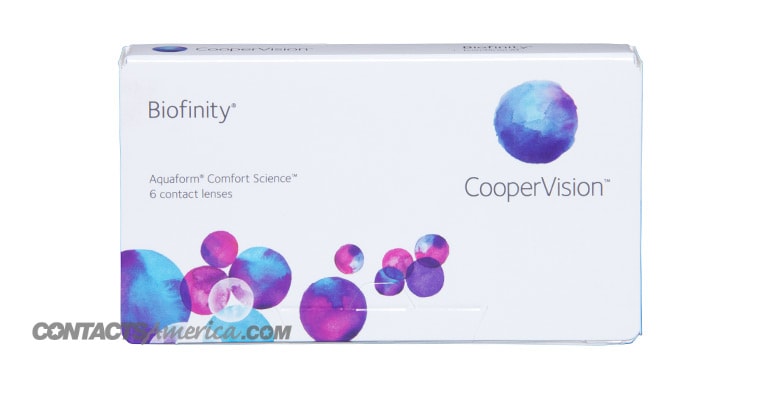
Biofinity can work well in allergy season if your eyes tolerate the lens and you wear contacts most days. Many people like the breathable monthly lens feel, and monthlies can still be comfortable during allergy season contacts when the fit is right. Comfort often drops quickly if cleaning slips, so fresh contact lens solution and a clean case matter more in spring.
3. ACUVUE VITA
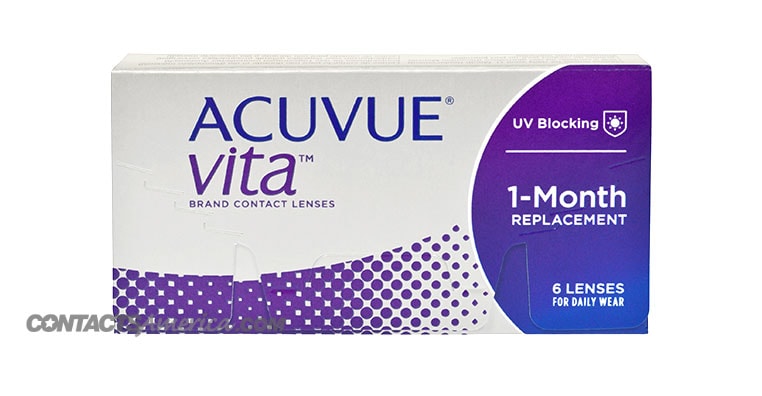
ACUVUE VITA is a solid monthly option for people who prefer a consistent routine and want a stable lens to discuss with their eye doctor. Monthly lenses can still work for contact lenses for allergies when hygiene is strong and replacement is on time. If you notice burning or dryness after cleaning, your solution may be the issue rather than the lens, so it is worth asking about a better match.
Allergy Eye Drops and Contacts: What Helps and What to Avoid
When spring allergies hit, eye drops can be a lifesaver, but only if you use the right type at the right time. The goal is to calm allergy symptoms without making contact lens comfort worse or creating a safety issue.
Drops that are usually contact compatible
These are the options many contact lens wearers use during seasonal allergies contact lenses season, but always check the label and follow your eye doctor’s guidance.
- Rewetting drops labeled for contact lenses
These can help with dryness and that gritty feeling that shows up during allergy season contacts, especially in dry indoor air. - Preservative free lubricating drops
These are often gentler for people with contacts for sensitive eyes, especially if you use drops more than once a day.
If allergies leave your eyes feeling dry or “scratchy” in lenses, this explains whether contacts can cause dry eyes and what to do.
What to avoid while lenses are in:
- Drops that say “remove contacts before use”
- “Redness relief” drops unless your eye doctor specifically recommends them
- Any drop that stings consistently or makes your vision cloudy
If your eyes burn every time you use a certain drop, it may not be compatible with your lenses or your eye surface. That is a common reason people think they are “allergic to contacts” when the real issue is the product mix.
Timing tips for medicated drops and lens wear
If you use allergy drops that treat itching and watery eyes, timing matters because some formulas are not meant to sit on the lens surface.
A simple timing approach that works for many people:
- Use medicated allergy drops before you put lenses in, then wait the amount of time listed on the label before inserting lenses.
- If you need drops during the day, use only drops labeled safe for contact lenses while your lenses are in.
- When in doubt, take lenses out first, use the drop, then reinsert later based on label directions.
This small habit helps reduce contact lens deposits and allergies irritation, especially during high pollen days.
When drops are not enough and you should switch to glasses
Drops help with mild irritation, but they should not be the tool you use to push through a bad flare up.
Switch to glasses if:
- Your eyes are very itchy and you keep wanting to rub
- Your lenses feel gritty or filmy and drops only help for a few minutes
- You have increasing redness, burning, or sensitivity to light
- Your eyes are watering heavily and vision keeps fluctuating
On those days, wearing glasses for a few hours can calm the eye surface so your next lens wear day feels better.
If You Wear Monthly Contacts: How to Reduce Allergen Buildup
Monthly lenses can still work as monthly contacts for allergies, but spring is not the season for shortcuts. The main goal is to reduce contact lens deposits that trap pollen and keep irritation going.

Cleaning routine that matters most
If you wear monthly contacts, use this baseline routine every night:
- Wash and dry hands before touching lenses
- Rub the lens with your contact lens solution as directed on the label, even if the solution is labeled “no rub”
- Rinse with fresh solution if your label recommends it
- Fill the case with fresh solution every time
- Let lenses soak for the full disinfecting time before wearing again
Two habits that cause the most allergy season discomfort:
- Topping off old solution instead of replacing it
- Stretching replacement dates because the lenses “still feel okay”
Both increase buildup and make itchy eyes contacts more likely during pollen season.
Case habits that prevent contamination
Your case can be the hidden reason your eyes feel irritated, especially in spring.
Do this:
- Empty the case every morning
- Rinse with fresh solution, not water
- Let it air dry with caps off on a clean tissue
- Replace the case regularly, and sooner if it looks cloudy, smells, or feels slimy
If you are doing everything right but your eyes still feel irritated, replacing the case is one of the fastest fixes.
When to replace lenses sooner than planned
Even if your replacement schedule says monthly, real life can force earlier replacement.
Replace lenses sooner if:
- You have a strong allergy flare up and lenses feel filmy even after proper cleaning
- Vision feels unstable or the lens feels scratchy after cleaning
- You had a recent cold, eye infection, or you wore lenses while very sick
- You accidentally exposed lenses to water
If spring allergies are hitting hard, some people also switch to daily disposable contacts for a week or two because it reduces the amount of cleaning and deposit management during peak pollen days.
What to Do If Contacts Feel Itchy During Spring Allergies
When your eyes start itching, the instinct is to rub. Try not to. Rubbing can trap allergens under the lens and make itchy eye contacts turn into a full irritation day. Use this quick guide instead so you can decide fast, feel better, and protect your eyes.
| What You Feel | Try Now | Switch To Glasses When |
|---|---|---|
| Mild itchiness or lens awareness | Blink slowly a few times, wash and dry hands, then use contact lens comfort drops labeled safe for contacts | The itch comes back every few minutes or you keep wanting to rub |
| Watery eyes and mild redness | Step away from wind or airflow, use approved drops, and take a short break from screens | Redness spreads, gets worse, or your eye feels hot and irritated |
| Gritty feeling like dust is on the lens | Remove the lens with clean hands, inspect it, and if you wear daily disposable contacts, replace with a fresh pair | The gritty feeling stays after switching lenses or your eye feels scratched |
| Blurry vision that comes and goes | Blink and refocus, then remove and reinsert with clean hands if needed | Vision stays blurry, or you feel pain or increasing light sensitivity |
| Burning or stinging | Remove lenses and rest in glasses to calm the eye surface | Burning is strong, your eye waters nonstop, or you notice discharge |
Quick Rule: if symptoms are building, switching to glasses early is not “giving up.” It is often the fastest way to calm your eyes so you can wear contacts for spring allergies comfortably again tomorrow.
Going Out in Spring: Outdoor Plans, Travel, and Allergy Triggers
Spring plans are fun, but pollen and airflow can be rough on pollen season contacts. A little preparation makes it easier to stay comfortable without constantly touching your eyes.
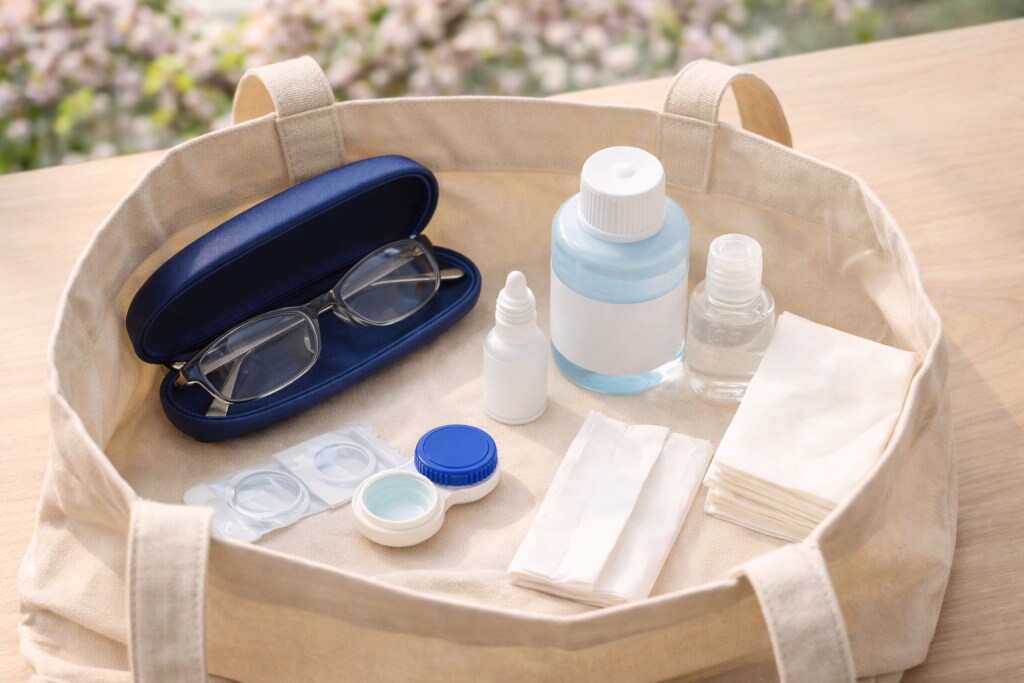
What to pack for allergy days
Keep a small kit in your bag so you are not stuck improvising:
- Backup glasses
- Approved contact lens solution and a clean case if you wear monthly contacts
- Extra pairs if you wear daily contacts
- Drops labeled safe for contacts
- Tissues and hand sanitizer, plus a plan to wash hands before lens handling
If you are comparing daily vs monthly contacts for spring, this is where dailies can feel simpler. They remove the case and cleaning step, which is one less thing to manage on the go.
Outdoor tips to reduce pollen exposure while wearing contacts
- Put lenses in before you head outside so you are not handling them in windy conditions
- Wear sunglasses to block wind and reduce pollen hitting the eye surface
- Avoid rubbing your eyes. If you need relief, step indoors and use approved drops
- After being outside for a long time, consider switching to glasses for a few hours to let your eyes reset
Simple hygiene reminders when you are away from home
- Do not adjust lenses with dirty hands, especially after food, sunscreen, or shared surfaces
- Never rinse lenses or cases with tap water
- If you wear monthlies, stick to your contact lens cleaning routine even when you are tired or traveling
- If your eyes feel irritated at an event, switching to glasses is safer than trying to troubleshoot in a bathroom
Spring allergies are unpredictable, but your routine does not have to be. If you build a small backup plan into your day, contact lenses for allergies become much easier to manage even on high pollen days.
If symptoms feel more intense than typical allergies, review the warning signs in contact lens use so you know when to stop wearing lenses and get checked.
Daily vs Monthly Contacts for Spring Allergies: Buildup and Routine
If you are deciding between daily vs monthly contacts for spring allergies, it usually comes down to buildup and routine. Dailies tend to feel easier in pollen season because you start fresh and avoid the case and solution variables, while monthlies can still work if your cleaning is consistent and your solution is a good match. The simplest strategy is also the most effective: keep glasses as a backup and switch early on rough allergy days so your eyes stay calm.
Want more comfortable lenses for allergy season? Shop for our daily or monthly contacts that keep your eyes fresh and stays ahead of pollen buildup.
Daily vs Monthly Contacts for Spring Allergies FAQs
1. Are daily contacts better for spring allergies?
For many people, yes. Daily disposable contacts can feel easier during allergy season because you start with a fresh lens each day, which helps reduce contact lens deposits that trap pollen. If your eyes flare up fast, dailies are often the simplest comfort move.
2. Can I wear contacts with seasonal allergies?
Usually, yes, but comfort depends on how intense your symptoms are and how well you manage exposure. On heavy pollen days, glasses breaks can help your eyes calm down. If you have pain, worsening redness, light sensitivity, or discharge, stop lens wear and get advice from an eye doctor.
3. Do monthly contacts collect more pollen than daily lenses?
They can, simply because they are worn and stored repeatedly. Over time, allergens and deposits can build up, especially if contact lens cleaning slips or you top off solution. If you wear monthly contacts in spring, strict cleaning and on time replacement matter.
4. Should I switch from monthly to daily contacts during allergy season?
If you are uncomfortable every spring, switching to daily contacts for part of the season can be a smart trial. It removes the case and solution variables and often improves contact lens comfort. Your eye doctor can help confirm if daily toric or daily options fit your prescription.
5. What eye drops are safe to use with contacts during spring allergies?
Use drops labeled safe for contact lenses, like contact compatible rewetting drops, and follow the label directions. Many medicated allergy drops require you to remove lenses first and wait before reinserting, so timing matters. If drops sting every time, you may need a different option or a lens change.
6. Can contact lens solution make allergy symptoms worse?
Yes, sometimes. Some people react to certain preservatives or formulas, which can feel like contact lens solution irritation allergies. If your eyes burn or feel dry right after inserting cleaned lenses, ask your eye doctor about switching solution or switching to dailies.
7. Can I reuse daily contacts if I put them in solution?
No. Daily disposable contacts are designed for single day wear and are not meant to be cleaned, stored, or reused. Reusing them can increase irritation and infection risk.
8. What are the best contacts for pollen season?
Many people do best with daily disposable contacts for allergies because they reduce buildup and simplify hygiene. If you prefer monthlies, choose a lens you tolerate well and stay strict with cleaning and replacement. The best choice is the one that stays comfortable and clear in your routine.
Disclaimer: This content is for general informational purposes only and is not a substitute for professional advice, diagnosis, or treatment.
References
About Contact Lens Types. Centers for Disease Control and Prevention (CDC). https://www.cdc.gov/contact-lenses/about/about-contact-lens-types.html. Date Accessed: March 2, 2026.
About Cleaning, Disinfecting, and Storing Contact Lenses. Centers for Disease Control and Prevention (CDC). https://www.cdc.gov/contact-lenses/about/about-cleaning-disinfecting-and-storing-contact-lenses.html. Date Accessed: March 2, 2026.
Contacts (Contact Lenses): Types and How They Work. Cleveland Clinic. https://my.clevelandclinic.org/health/articles/10737-contacts. Date Accessed: March 2, 2026.
Allergic Conjunctivitis: Review of Current Types, Treatments, and Trends. Fiza Tariq (Life, MDPI / PubMed Central). https://pmc.ncbi.nlm.nih.gov/articles/PMC11204416/. Date Accessed: March 2, 2026.
Effect of antihistamine-releasing contact lenses on ocular symptoms and treatment behavior in patients with seasonal allergic conjunctivitis: A retrospective study. Kenta Fujio et al. (Heliyon / PubMed). https://pubmed.ncbi.nlm.nih.gov/39027577/. Date Accessed: March 2, 2026.
ACUVUE® THERAVISION™ WITH KETOTIFEN (etafilcon A drug-eluting contact lens with ketotifen) — Prescribing Information/Labeling. U.S. Food and Drug Administration (FDA). https://www.accessdata.fda.gov/drugsatfda_docs/nda/2022/022388Orig1s000lbl.pdf. Date Accessed: March 2, 2026.
Acanthamoeba Keratitis Risk Factors for Daily Wear Contact Lens Users: A Case-Control Study. Nicole Carnt et al. (Ophthalmology / PubMed). https://pubmed.ncbi.nlm.nih.gov/35952937/. Date Accessed: March 2, 2026.Evaluation of Pollen Adhesion to Verofilcon-A Soft Contact Lenses. Tatsuya Mimura et al. (The Open Ophthalmology Journal). https://openophthalmologyjournal.com/VOLUME/15/PAGE/305/. Date Accessed: March 2, 2026.
Related Articles
-

Acuvue Oasys for Astigmatism vs Ultra for Astigmatism: Which Is Better?
-
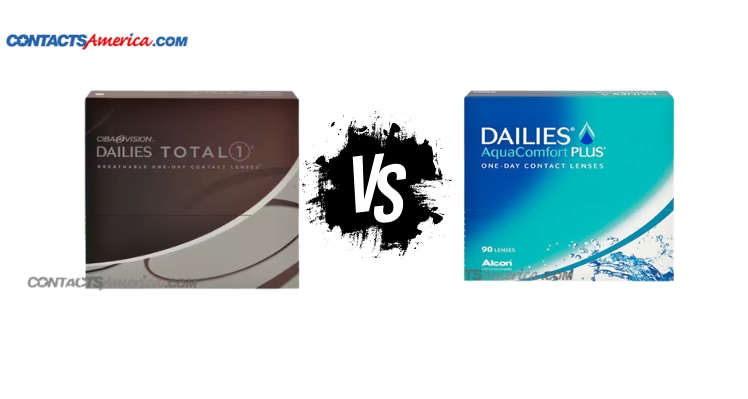
Dailies Total 1 Vs. Dailies AquaComfort Plus: Features, Comfort, and Value
-

PureVision MultiFocal vs PureVision 2 MultiFocal: Which is Better?
-
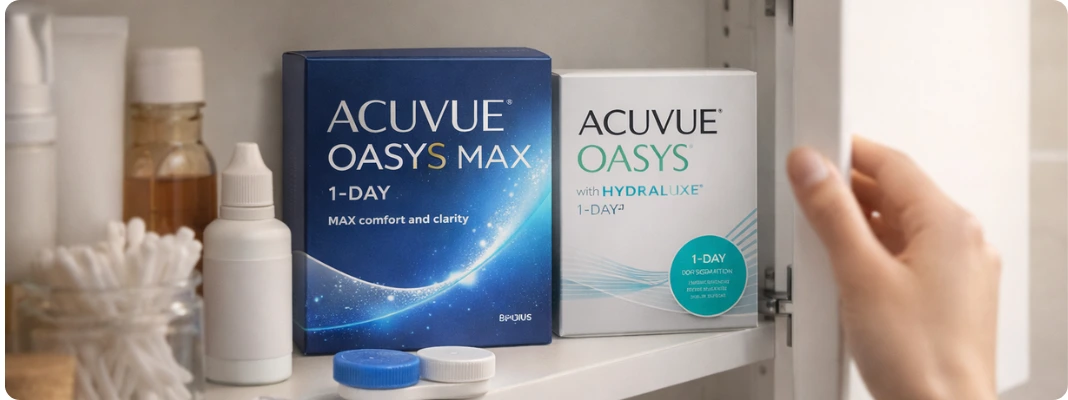
ACUVUE OASYS MAX vs HYDRALUXE: Better Daily Contacts for Comfort and Clarity
-
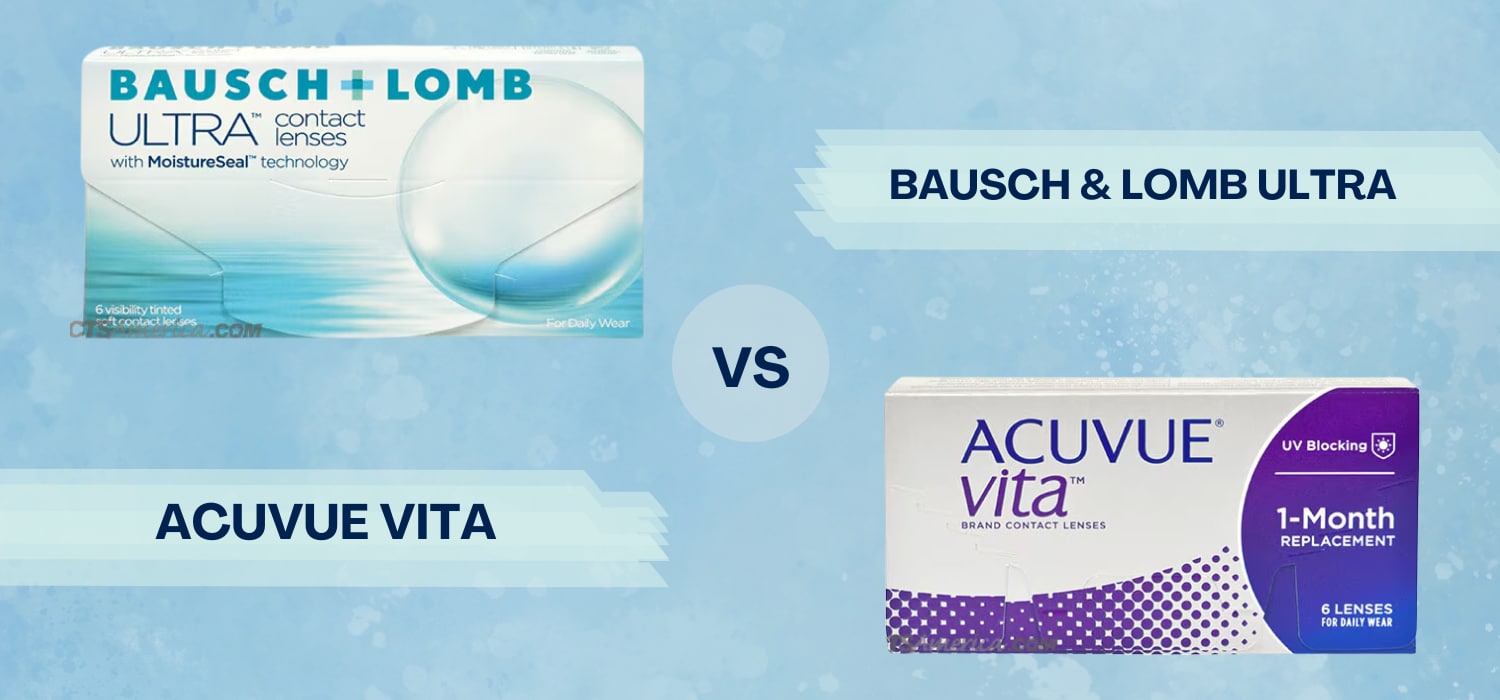
Bausch & Lomb ULTRA vs Acuvue Vita: The Best Contact Lens for Your Lifestyle