A huge number of us regularly head out on beach getaways or call tropical shorelines home. Florida alone welcomes well over 135 million visitors a year. Hawaii greets nearly 10 million travelers eager for palm trees and warm ocean air.
But packing your bags for paradise brings up a super practical question if you’re a contact lens wearer. How does all that lush coastal humidity affect contact lenses? The balmy beach breezes, sizzling sunshine, ocean spray, constant hopping into chilled air-conditioned rooms, and the environment around your eyes are in continuous motion.
Understanding how moisture, sweat, sand, and indoor A/C interact with your lenses is the secret to keeping your eyes feeling happy, refreshed, and vacation-ready.
Does High Humidity Help Keep Contact Lenses Moist?
Yes, high humidity can be a little hero for your eyes. Because humid air slows down how fast your tears evaporate, your contacts might feel surprisingly fresh and moist while you’re out enjoying the ocean breeze.
Notice that we said “can.” The moisture in the warm coastal air doesn’t directly rehydrate your lenses. You see, these humid paradises come with their own unique mix of elements. Salty ocean spray, sweat, sunscreen, and coastal winds all easily find their way into your eyes and cause a little irritation.
The real surprise happens when you step indoors. Slipping away from the outdoors into a blasting air-conditioned interior space dries out your lenses in a flash.
How Coastal Humidity Can Affect Contact Lens Comfort
That refreshing coastal air helps keep dryness at bay. Yet, a full day of sunshine, sweat, and sightseeing can still test your eye.

Lenses can feel more comfortable outdoors.
Humid air slows down tear evaporation. Your contacts will feel noticeably softer and more soothing. Just remember that coastal moisture isn’t a complete cure-all. Your contact lens materials, fit, how long you wear them, and even your own natural tear production still play a bigger role in keeping your eyes cool and fresh.
Sweat, facial oils, and sunscreen can reach the eyes.
The warm, tropical temperature during summer months makes you sweat more profusely. That moisture can easily carry sunscreen, makeup, salts, and facial oils right into your eyes. When these mix with your contacts, they can coat the lens surface, leaving you with stinging, smudges, or blurry vision.
Heat and long wear can still cause irritation.
Humidity won’t completely offset the effects of hot temperatures, dehydration, or wearing your lenses well past sunset. After hours out in the sun, contacts can start to feel sticky or heavy. A few contact-lens-safe rewetting drops can bring instant relief, but if your eyes are still protesting, give them a break and pop on your favorite sunglasses or frames.
Why Contact Lenses May Still Feel Dry Near the Coast
The coastal breeze feels lush and humid, but it doesn’t guarantee all-day smooth sailing for your eyes. Between air-conditioned retreats, sudden ocean gusts, and bright sunshine, your eyes go through a lot, here’s how the coastal environment impacts your contact lens comfort throughout the day.

Air Conditioning
Basking in the cool air-conditioning of your hotel lobby, room, restaurant, or rental car feels amazing after a sweltering day out on the beach, esplanade, or city sidewalks. With a caveat. The dry, cool air strips moisture from the room, which increases tear evaporation and leaves your contacts feeling tight, scratchy, or stuck to your eyes. Your eyes feel dry and irritated.
Keeping a small bottle of lens-friendly rewetting eye drops on hand works wonders. If your eyes stay grumpy, give them a break. Take out your lenses and wear your eyeglasses.
Coastal Wind and Salt Spray
A lively sea breeze is great for sailing, but it can blow sand and dust right into your face while whipping moisture away from your eyes. Ocean mist also leaves tiny salt particles on your lenses, triggering that dreaded gritty, stinging feeling and cloudy vision prevalent in dry eyes.
Oversized or wraparound sunglasses are your best friend here. They protect your eyes and block the UV rays while acting as a stylish windbreaker.
Sun, Heat, and Dehydration
Sunny days mean you’re losing fluids much faster through sweat. When your body gets dehydrated, your eyes produce fewer tears, leaving your contacts feeling dry, gummy, and tired.
Staying hydrated is the key to good moisture retention. Keep a water bottle handy while soaking up the sun, cool off in the shade periodically, and don’t push your wearing time past what your eye doctor recommends.
Pollen, Sand, and Other Irritants
From swirling beach sand, city-borne dust, to coastal flora pollen, fine particles love to hitch a ride on the breeze. If an irritant gets trapped under your lens, it causes instant itching, watering, and redness.
Fight the urge to rub your eyes. Instead, wash your hands thoroughly, pop the lens out, and rinse it well before putting it back in.
Activities That Can Affect Lens Wear in Coastal Areas
Living or vacationing by the shore is pure bliss. But all that sunshine, sand, and splash can really abuse your delicate contact lenses. A little smart prep goes a long way in keeping your eyes feeling fresh, clear, and irritation-free while you enjoy your time.

- Swimming in the ocean, pool, or water park
Water from any source, whether it’s the sea, a resort pool, or even tap water, harbors tiny microbes and chemicals that can get trapped behind your lenses and cause infections.
The safest bet is to take your contacts out before diving in. To protect your eye health, never use non-sterile water to rinse or store your contacts. - Spending long periods at the beach
A full day of beach bumming means dealing with fine sand, melting sunscreen, sweat, and wind, all of which can leave your lenses feeling gritty or smudged.
Throw on a pair of sunglasses to shield your eyes. Fight the urge to rub them if sand gets in. Always stash your eyeglasses and a backup set of lenses in your beach bag. - Boating or participating in water sports
Zipping across the water brings strong breezes and salt spray that can dry out your lenses and make your vision foggy or stinging.
Wraparound sunglasses work great for cruising, but if you’re diving into high-splash activities like jet skiing or wakeboarding, tight-fitting water goggles are your best defense. - Attending outdoor festivals
Celebrating under the hot sun for hours. Staring at the giant screens during concerts. Smoke from sizzling barbecues. All these can dehydrate and wear out your eyes and dry out your contacts.
Keep a water bottle close by, take frequent breaks, and don’t hesitate to take your lenses out if they start feeling dry or sticky.
Are Daily Disposable Lenses Better for Coastal Travel
Daily disposable lenses can be an absolute game-changer for a beach getaway. You start every morning with a cool, fresh, crystal-clear pair. You won’t have to worry about yesterday’s sand, sunscreen, or ocean spray building up on your lenses. You can skip the hassle of packing cleaning solutions or scrubbing lens cases at night
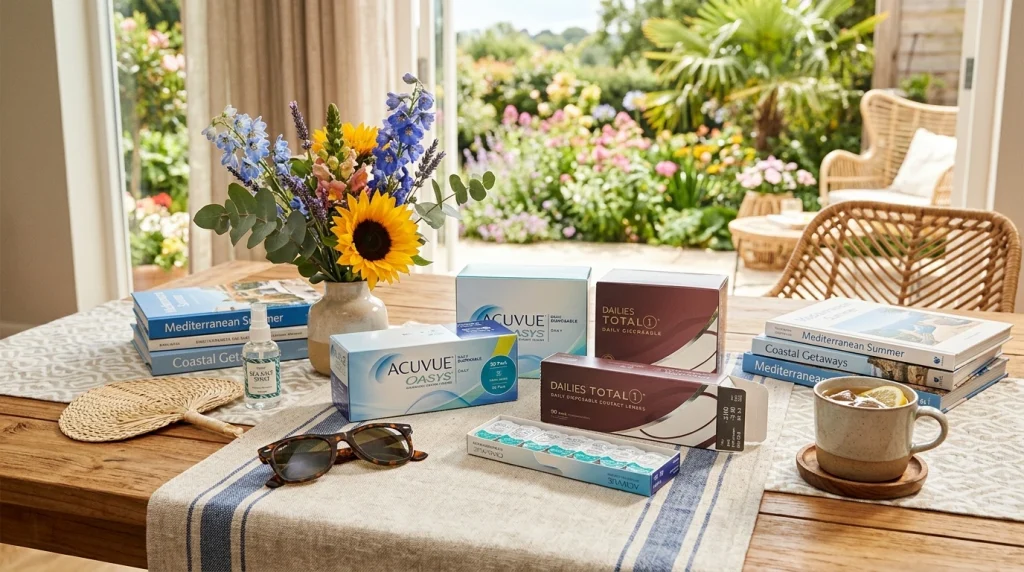
Don’t treat them as a cure-all, however. There’s no one-size-fits-all for every traveler. Your overall eye comfort still hinges on the lens material, proper fit, your eye health, and the environment itself.
Well-cared-for reusable lenses can work just as well, especially if you clean and store them properly and diligently at night. It’s always a great idea to chat with your eye doctor to see which option best suits your vacation vibes.
The Secret to Stress-Free Seaside Sightseeing
Between whipping ocean winds, sizzling heat, salty mist, sneak-attack sand, and frosty indoor A/C, your eyes encounter a lot of plot twists throughout a single seaside day. Being aware of how these quick environmental shifts affect your lenses makes it super easy to stay ahead of irritation and know exactly when it’s time to give your eyes a little breather.
Sticking to your wearing schedule, keeping all forms of water far away from your lenses, stashing a backup pair of glasses in your beach bag, and listening to your eyes when they ask for a break will ensure clear, stress-free vision. Simple habits are what truly keep your eyes happy so you can focus on making memories.
Disclaimer: This content is for general informational purposes only and is not a substitute for professional advice, diagnosis, or treatment.
Frequently Asked Questions
-
No. Humidity and other weather conditions don’t change the prescription strength you need for your contact lenses. Environmental conditions can temporarily affect how clearly you see when your tear film becomes unstable, though.
-
No, it’s best not to leave packaged lenses, contact lens solution, or a lens case inside a hot vehicle for extended periods. Cars can become much hotter than the outdoor temperature, and excessive heat can expose lens-care products to conditions outside their recommended storage range. Store them according to the temperature instructions on the packaging.
-
No. Contact lenses don’t fog from humid air the way eyeglasses can because they sit directly on the tear film rather than several millimeters in front of your eyes. You can still experience blurry or hazy vision when sweat, oils, deposits, or an unstable tear film affects the lens surface.
-
There’s usually no reason to change brands solely because you’re visiting a humid destination. A lens that already fits well and feels comfortable can remain a suitable choice during your trip. Anyone considering a different lens material or replacement schedule should make the switch with approval from an eye care professional.
-
Humidity can affect overall comfort regardless of the type of contacts you wear. Toric and multifocal lenses have additional design features that help correct astigmatism or presbyopia, but humid weather doesn’t automatically make one type perform better than another.
References
Governor Ron DeSantis Announces Another Record-Breaking Year for Florida Tourism: Florida Welcomes 143.3 Million Visitors in 2025. VISIT FLORIDA. https://imap.visitflorida.org/about-us/media/news-releases/article-details/?releaseId=21303. Published Date (February-20-2026). Date Accessed: August 7, 2026.
DBEDT News Release: Visitor Industry Continued Improvement in December 2024. State of Hawaiʻi Department of Business, Economic Development and Tourism. https://governor.hawaii.gov/newsroom/dbedt-news-release-visitor-industry-continued-improvement-in-december-2024/. Published Date (January-30-2025). Date Accessed: August 7, 2026.
Healthy Habits: Keeping Water Away from Contact Lenses. Centers for Disease Control and Prevention. https://www.cdc.gov/contact-lenses/about/healthy-habits-keeping-water-away-from-contact-lenses.html. Published Date (May-27-2025). Date Accessed: August 7, 2026.
Contact Lens Wear Affects Tear Film Evaporation. Peter B. Morgan, Philip E. Efron, and colleagues/Ophthalmic and Physiological Optics. https://pubmed.ncbi.nlm.nih.gov/18997542/. Published Date (November-01-2008; exact day not listed). Date Accessed: August 7, 2026.
Contact Lens Care. U.S. Food and Drug Administration. https://www.fda.gov/consumers/womens-health-topics/contact-lens-care. Published Date (January-19-2018). Date Accessed: August 7, 2026.
Related Articles
-

Mastering US CDL Vision Requirements for Your DOT Physical
-

All You Need to Know About RGP Contact Lenses: Are They Right for You?
-

Wearing Contact Lenses in Winter? Here’s What You Need to Know
-

COVID-19 Quarantine Caused Nearsightedness in Children, Studies Suggest
-

US Truck Drivers’ Guide to the Best Contact Lenses for Night Driving