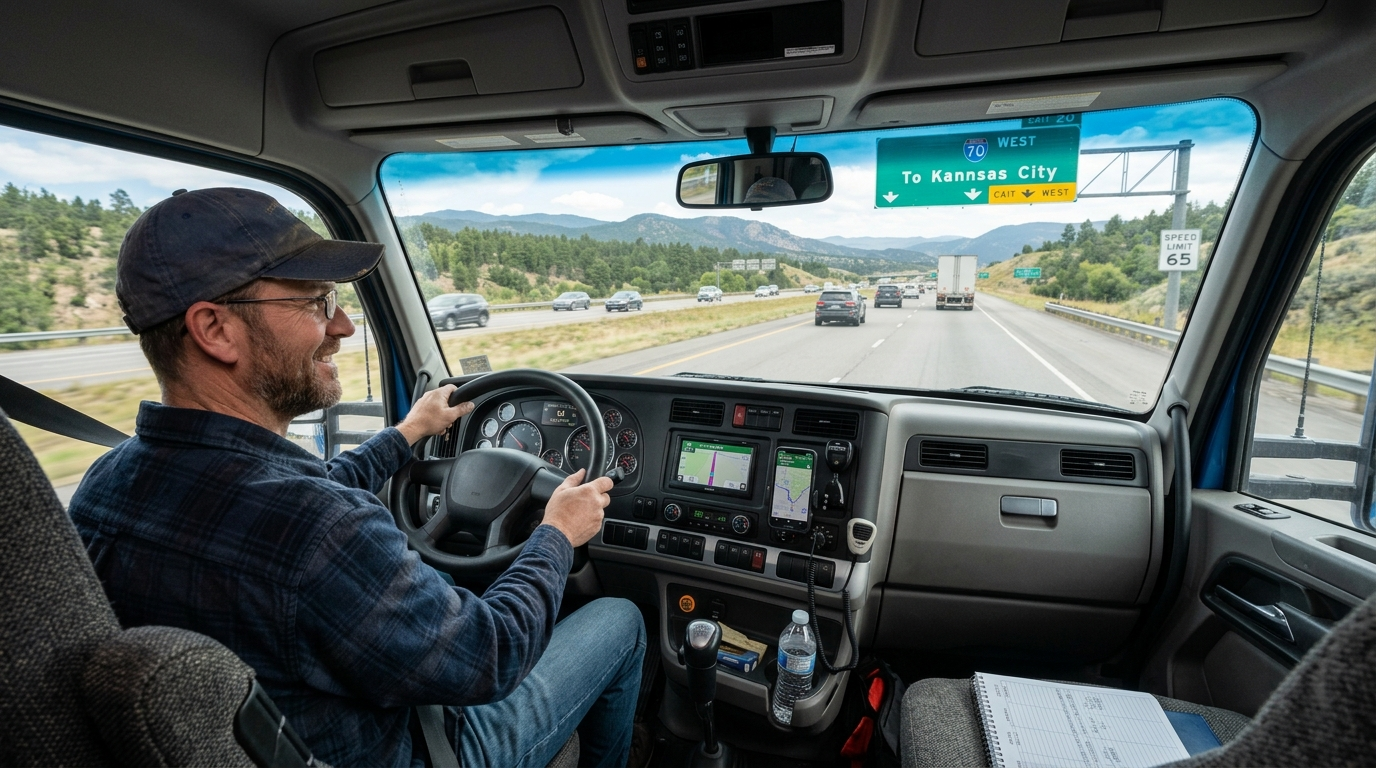
Commercial driving offers one of the most reliable career paths in the U.S. According to the Bureau of Labor Statistics, heavy and tractor-trailer truck drivers held 2.24 million jobs in 2024, with employment projected to grow 4% through 2034. That expansion creates roughly 237,600 annual job openings for an occupation that earned a median annual wage of $57,440 in May 2024.
Earning your commercial driver’s license (CDL) takes real preparation: prospective drivers must earn a Commercial Learner’s Permit (CLP), hold it for at least 14 days, complete Entry-Level Driver Training (ELDT), and pass a comprehensive skills test covering vehicle inspections, basic maneuvers, and road driving.
Clear vision is a non-negotiable part of passing your Department of Transportation (DOT) physical, especially for non-excepted interstate drivers. Getting familiar with federal eye standards ahead of time helps you walk into your medical exam with confidence, correct sharp-focus issues beforehand, and explore alternative qualification routes if your natural eyesight falls outside standard criteria.
What Are the Vision Requirements for a CDL in the US?
Drivers of Type A, B, and C commercial vehicles need sharp vision to spot road signs, traffic signals, surrounding vehicles, pedestrians, and sudden hazards, all from behind the wheel of a delivery van, school bus, or a massive rig. To make sure you’re fit for the road, the Federal Motor Carrier Safety Administration (FMCSA) sets specific vision standards every driver must meet during their DOT medical exam.

- Distance Vision
You must have at least 20/40 vision in each eye, evaluated individually. Don’t worry if your natural eyesight falls short. You can wear glasses or contact lenses to hit this requirement. - Binocular Vision
When using both eyes at the same time, your combined distant vision must also be at least 20/40. If you need glasses or contacts to reach this mark, your examiner will simply note the corrective lens requirement on your medical card. - Peripheral Vision
Your field of vision must be at least 70 degrees in the horizontal meridian for each eye. Good side vision is essential for spotting vehicles, cyclists, or pedestrians moving into your lane outside your direct line of sight. - Color Perception
You must be able to recognize standard traffic signal colors, specifically red, green, and yellow. You don’t need perfect color vision, just the reliable ability to distinguish these key colors while driving. - Understanding the Medical Qualification Rule
These standards are outlined under FMCSA 49 CFR 391.41. If you don’t pass in one eye, don’t lose hope. It isn’t an automatic end to your driving career. The FMCSA offers an Alternative Vision Standard that lets drivers with vision loss in one eye qualify through an eye exam with an ophthalmologist or optometrist, alongside a specialized medical evaluation.
How Is Your Vision Tested for a CDL?
If you’re taking a DOT physical, your vision screening will cover three main areas: how clearly you see at a distance, how well you notice things in your side vision, and whether you can identify critical traffic light colors.
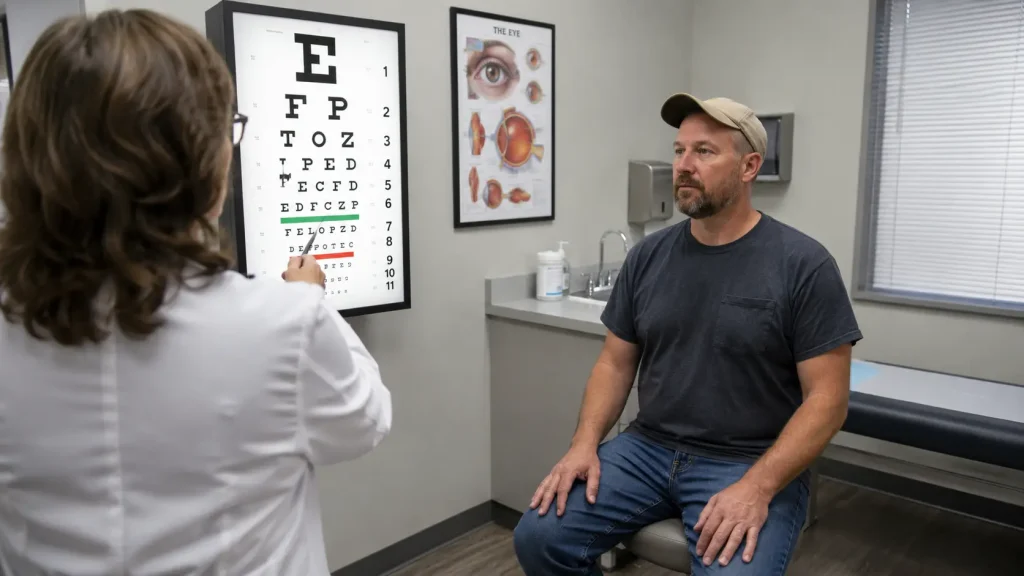
Distance Vision Testing
The examiner measures how sharp your distant vision is using either a traditional Snellen eye chart or an automated machine like the Titmus Vision Tester. To pass the standard requirement, you must have a standard rating of at least 20/40 in one and both eyes together.
Individual and Combined Eye Checks
Your official report, Form MCSA-5875, has separate sections for your right eye, left eye, and both eyes combined. If you wear glasses or contacts to hit the 20/40 standard, the examiner only needs to record your corrected vision. Uncorrected numbers aren’t listed.
Side (Peripheral) Vision Testing
To check if you have at least 70 degrees of horizontal field of vision in each eye, the examiner might use a machine or perform a quick confrontation test. During this manual check, you’ll look straight ahead while covering one eye, noting when you see the examiner’s fingers move into your side view.
Color Vision Evaluation
You should recognize and distinguish between standard red, green, and amber signal colors. Examiners check this using standard color-plate tests or a simple test using the three signal colors. Good news: having mild color deficiency won’t hold you back. As long as you can reliably distinguish these three primary traffic colors, you’re good to go.
Documenting Corrective Lenses
If you rely on glasses or contact lenses to see clearly, that requirement will be formally noted on both your examination report (Form MCSA-5875) and your final Medical Examiner’s Certificate (Form MCSA-5876). Make sure to keep your specs or contacts on you whenever you drive.
Specialist Evaluations and Alternative Standards
If your vision is tricky or you don’t meet the standard in one eye, you may be referred to an optometrist or ophthalmologist for a deeper look. If you’re applying under the FMCSA Alternative Vision Standard, the specialist will document their findings on Form MCSA-5871. Just remember that while the eye specialist does the evaluation, your certified Medical Examiner makes the final call on your overall qualification.
What Is the Alternative Vision Standard?
Failed your standard vision check? Don’t worry, it doesn’t automatically close the door on your commercial driving career. Thanks to the Federal Motor Carrier Safety Administration (FMCSA) Alternative Vision Standard, drivers with reduced vision or a limited field of vision in one eye can still get certified as long as they meet specific safety criteria and pass a two-step evaluation process.
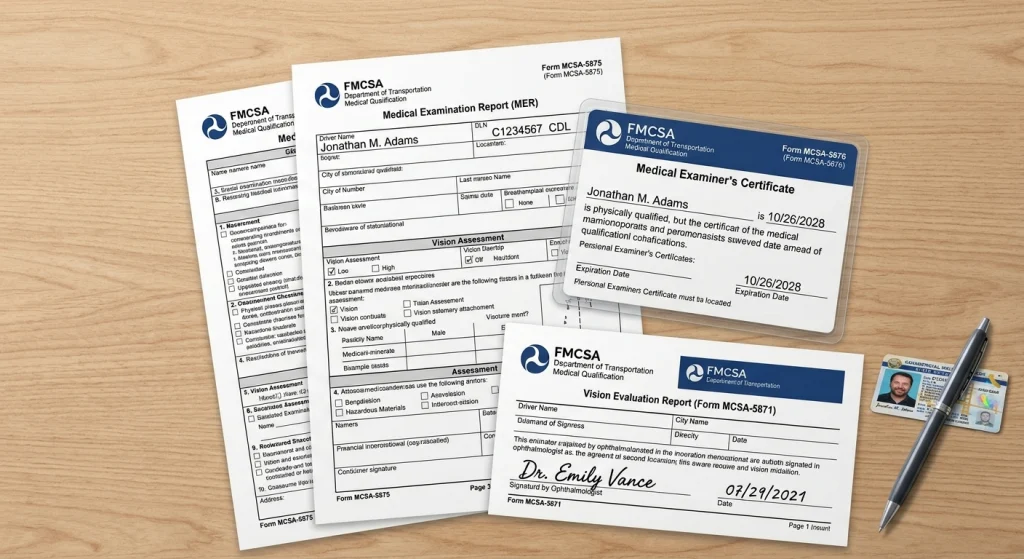
If your “worse eye” falls short of standard distant acuity or peripheral vision rules, this alternative path is built for you. You can still qualify to drive as long as you meet all other FMCSA physical standards and complete the required eye and medical exams.
Step 1: Get evaluated by an eye specialist.
Before booking your standard DOT physical, visit a licensed ophthalmologist or optometrist. They will assess your visual acuity, field of vision, overall eye health, and the exact nature of your vision impairment.
Step 2: Have your eye doctor complete Form MCSA-5871.
Your eye specialist will document their test results on the official Vision Evaluation Report (Form MCSA-5871), sign it, and hand it to you. You’ll bring this completed paperwork to your DOT physical.
Step 3: Complete your DOT exam.
The eye specialist evaluates your eyes, but the certified Medical Examiner makes the final call on your overall qualification. They will review your Form MCSA-5871, conduct your physical, and determine if you meet federal standards. Note that drivers under the alternative vision standard must renew their medical exam at least once every year.
- Watch the 45-day deadline.
Timing is critical here. Your DOT physical must begin within 45 calendar days of the date your eye specialist signed Form MCSA-5871. If you wait past 45 days, you’ll have to return to your eye doctor for a brand-new evaluation. - Important vision requirements for your “better eye.”
To use this standard, your stronger eye must be sharp and healthy. It must have distant vision of at least 20/40 (naturally or with glasses/contacts), a horizontal side vision of at least 70 degrees, and the full ability to distinguish red, green, and amber (yellow) traffic signals. - Your vision must be stable.
Examiners can’t qualify you if your vision deficiency is actively changing or progressive. Furthermore, enough time must have passed since the vision change occurred so your brain and body have fully adapted and compensated for it. - First-time qualification road test
If this is your first time qualifying under the alternative standard, you’ll likely need to pass a practical road test after receiving your medical clearance before taking the wheel commercially. However, you might skip this test if you can prove you’ve successfully operated a commercial vehicle with that vision condition for the past three years.
When qualification is truly not possible
While this pathway opens doors for many, some conditions, unfortunately, can still result in a disqualification. You won’t qualify for a CDL if your better eye falls below 20/40, if you can’t distinguish traffic colors, if your eye condition is unstable, or if you haven’t had time to adjust to your vision change.
How Can You Prepare for the CDL Vision Test?
Taking a few proactive steps before your appointment saves you time, money, and headaches at the clinic. Preparing ahead of time ensures you won’t be caught off guard during your DOT physical.
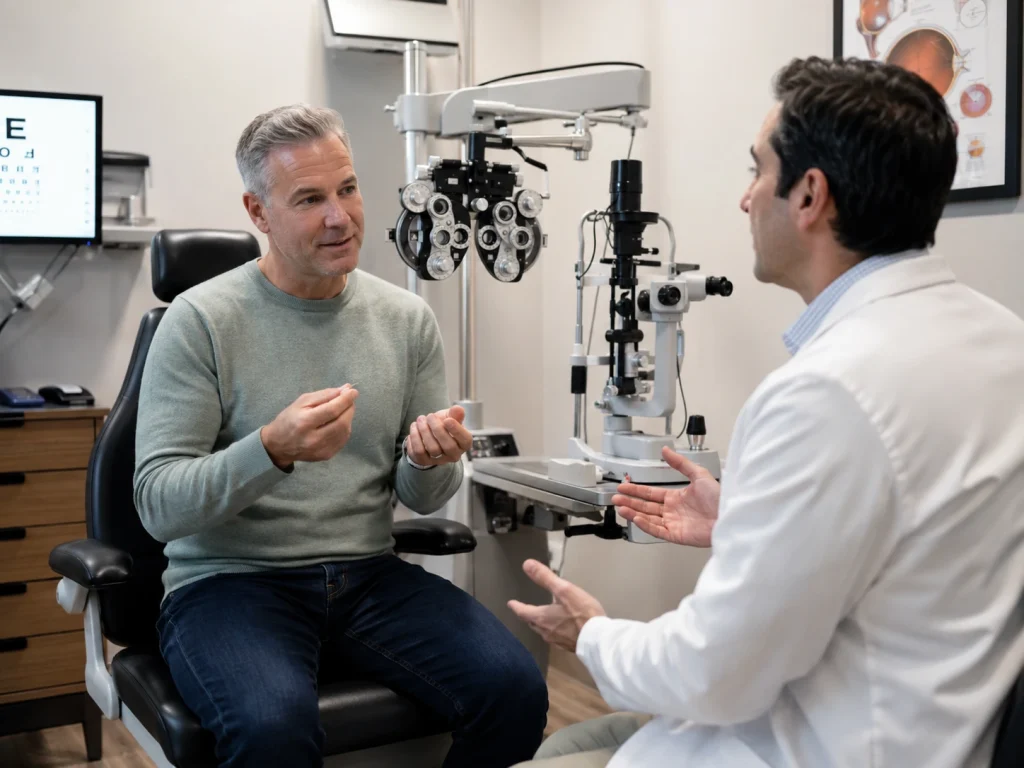
Get a routine eye exam first.
If it’s been a while since your last checkup or you’ve noticed your vision getting a bit blurry, schedule an appointment with an eye doctor before your DOT physical. Finding out your eyesight has changed during the physical can cause unnecessary delays. Having your vision fixed beforehand keeps your certification on track.
Bring your current glasses or contacts.
Federal rules fully allow you to use corrective lenses to meet the 20/40 requirement. Wear or bring the prescription specs or contact lenses you use for distance vision so the examiner can test you with them on. Just remember, if you pass while wearing them, your medical card will state that you must wear corrective lenses whenever you drive commercial vehicles.
Update your prescription.
Struggling to read the bottom lines on the chart doesn’t mean you’re disqualified. It just means you have an outdated prescription. A quick trip to the optometrist for new lenses can easily get your distance vision back up to the federal standard.
Pack a backup pair.
Accidents happen. Bringing a spare pair of glasses or extra contact lenses to your exam ensures you aren’t stuck if your primary pair breaks, gets lost, or causes irritation on test day.
Be honest about your eye history.
Be prepared to discuss any past eye surgeries, injuries, or chronic conditions (like glaucoma or cataract treatments) with your examiner. You’ll record your medical history on Form MCSA-5875. Being upfront helps the examiner accurately evaluate your fitness for the road.
Get Form MCSA-5871 signed early (Alternative Standard).
If you already know you need to qualify under the Alternative Vision Standard, visit your eye specialist first to complete the Vision Evaluation Report (Form MCSA-5871). Bring the signed form straight to your DOT examiner. Remember, your physical must start within 45 days of the date your eye doctor signs it.
Double-check your state’s CDL rules.
While the FMCSA sets federal medical standards for interstate driving, your local DMV or state licensing agency issues your actual CDL. Always check your state’s specific guidelines to ensure you have any extra paperwork or local vision forms they might require.
Ready for the Road Ahead
Meeting CDL vision requirements is an important part of qualifying to drive commercial vehicles safely and legally in the United States. Knowing the federal standards for visual acuity, peripheral vision, color recognition, and corrective lenses can help applicants prepare for the DOT medical exam and avoid preventable delays.
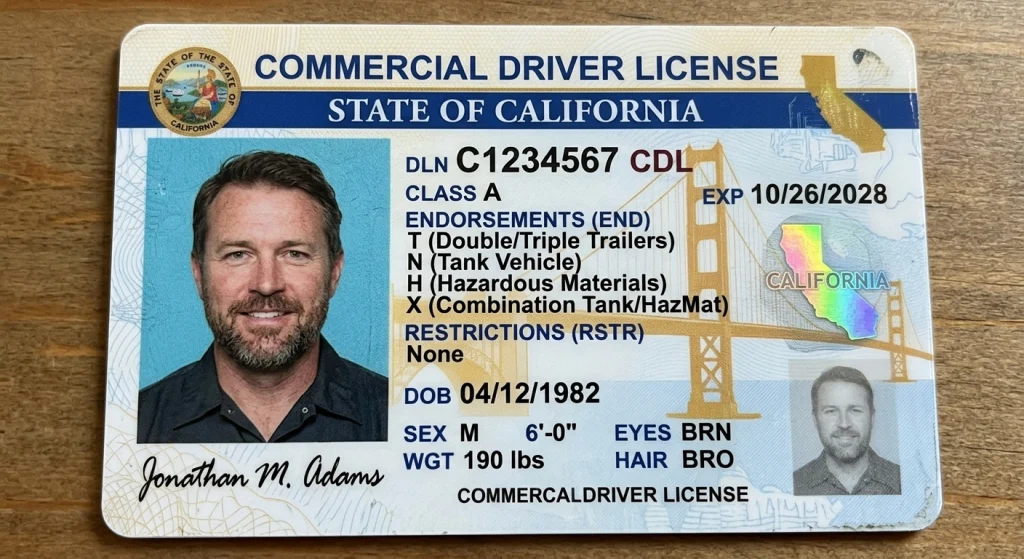
Drivers who don’t meet the standard requirements in both eyes still have options in some cases, including FMCSA’s alternative vision standard. Getting an eye exam early, keeping prescriptions current, and bringing the correct documentation can make the qualification process much easier to navigate.
Disclaimer: This content is for general informational purposes only and is not a substitute for professional advice, diagnosis, or treatment.
Frequently Asked Questions
-
Drivers who meet the standard federal medical requirements receive a Medical Examiner’s Certificate valid for up to 24 months. A Medical Examiner can issue a certificate for a shorter period when a medical condition needs closer monitoring.
-
Yes. Federal regulations establish minimum qualification standards, but motor carriers can adopt medical requirements that are stricter than the federal minimums. An employer cannot, however, use standards that are less restrictive than applicable federal requirements.
-
FMCSA’s federal minimum vision standard specifically addresses distant visual acuity, horizontal field of vision, and recognition of red, green, and amber traffic signal colors. It doesn’t establish a separate numerical minimum for near vision or depth perception as part of the standard vision criteria, although the Medical Examiner still evaluates whether the driver is medically qualified to operate a commercial vehicle safely.
-
A state-issued medical variance or waiver generally applies only to intrastate driving within that state. Drivers operating in interstate commerce must meet the applicable federal qualification requirements. FMCSA notes that federal exemptions don’t provide relief from individual states’ intrastate medical requirements either.
-
An expired medical certification can affect a driver’s commercial driving privileges. When a state records a CDL holder as medically not-certified, it must notify the driver and begin procedures to downgrade the CDL unless the driver provides valid medical certification, an applicable variance, or changes to an eligible excepted operating category.
References
Qualifications of Drivers; Vision Standard. Federal Motor Carrier Safety Administration, U.S. Department of Transportation. https://www.federalregister.gov/documents/2022/01/21/2022-01021/qualifications-of-drivers-vision-standard. January-21-2022. Date accessed. August 14, 2026.
Vision Evaluation Report, Form MCSA-5871. Federal Motor Carrier Safety Administration. https://www.fmcsa.dot.gov/regulations/medical/vision-evaluation-report-form-mcsa-5871. April-01-2025. Date accessed. August 14, 2026.
Examining FMCSA Vision Standard for CMV Drivers and Waiver Program. Federal Motor Carrier Safety Administration. https://www.fmcsa.dot.gov/research-and-analysis/examining-fmcsa-vision-standard-cmv-drivers-and-waiver-program. October-15-2025. Date accessed. August 14, 2026.
How Do I Get a Commercial Driver’s License? Federal Motor Carrier Safety Administration. https://www.fmcsa.dot.gov/registration/commercial-drivers-license/how-do-i-get-commercial-drivers-license. December-08-2025. Date accessed. August 14, 2026.
Heavy and Tractor-trailer Truck Drivers. U.S. Bureau of Labor Statistics. https://www.bls.gov/ooh/transportation-and-material-moving/heavy-and-tractor-trailer-truck-drivers.htm. August-28-2025. Date accessed. August 14, 2026.
General Vision Exemption Package. Federal Motor Carrier Safety Administration. https://www.fmcsa.dot.gov/medical/driver-medical-requirements/general-vision-exemption-package. March-09-2022. Date accessed. August 14, 2026.
Related Articles
-

Wearing Contact Lenses in Winter? Here’s What You Need to Know
-

Can Wearing Contacts Give You Dry Eyes and What Should Be Done If So?
-

Eco Friendly Contact Lenses for a Greener Earth
-

Are Contact Lens Prescriptions the Same as Glasses?
-

US Truck Drivers’ Guide to the Best Contact Lenses for Night Driving