Eye fatigue, also known as eye strain or asthenopia, occurs when your eyes become tired or uncomfortable after prolonged visual activity. Spending hours looking at screens, reading, driving, or concentrating on tasks that require sustained focus can contribute to this condition.
Eye fatigue is often temporary and improves with rest. However, frequent or persistent discomfort may point to an underlying vision problem, such as an uncorrected refractive error or dry eyes, that requires attention from an eye care professional.
What Causes Eye Fatigue and How Can You Relieve It?
What Are the Common Symptoms of Eye Fatigue?
Eye fatigue can cause several symptoms that affect how your eyes feel and how clearly you see. The discomfort may start as a mild sensation of tiredness but become more noticeable the longer you concentrate on a screen, book, or other visually demanding task. Symptoms can affect one or both eyes and may continue for a short period after the activity ends.
Common symptoms of eye fatigue include:
- Tired or heavy eyes. Your eyes may feel exhausted, especially after hours of reading, computer work, or other activities that require sustained concentration.
- Burning or irritated eyes. A stinging or burning sensation may develop when you spend extended periods focusing on a task, particularly if you blink less frequently.
- Dry or watery eyes. Reduced blinking can cause tears to evaporate more quickly, leaving your eyes feeling dry or gritty. In some cases, irritation can trigger excessive tearing.
- Blurred vision. Objects or text may temporarily appear less clear, especially when shifting your gaze between nearby and distant objects.
- Headaches. Prolonged visual concentration can contribute to headaches, particularly around the forehead, temples, or eyes.
- Difficulty focusing. You may have trouble keeping text or objects clear, switching focus between distances, or maintaining concentration during detailed work.
Symptoms often become more noticeable during prolonged close-up activities. Reading small text, working on a computer, or looking at a smartphone requires sustained focusing effort. Screen use can also reduce blinking frequency, contributing to dryness and irritation. Poor lighting, glare, and viewing objects at uncomfortable distances may add to the discomfort.
For most people, eye fatigue improves after taking a break and allowing the eyes to rest. If symptoms occur frequently, persist despite rest, or interfere with everyday activities, an eye examination can help determine whether an underlying vision or eye health problem is contributing to the discomfort.
What Causes Eye Fatigue?
Eye fatigue develops when your eyes work for extended periods without enough rest. Activities that require sustained visual concentration can place additional demands on the muscles responsible for focusing and coordinating eye movements. Environmental conditions, vision problems, and certain daily habits can also contribute to eye discomfort.
Common Causes of Eye Fatigue
| Cause | How It Contributes to Eye Fatigue |
|---|---|
| Prolonged Screen Time | Spending hours using computers, smartphones, or tablets requires continuous visual focus. Small text, screen glare, and frequent changes in viewing distance can increase eye strain, particularly during long periods without breaks. |
| Reduced Blinking | People tend to blink less frequently when concentrating on digital screens. This allows the tear film to evaporate more quickly, contributing to dryness, irritation, and a burning sensation. |
| Poor Lighting | Reading or working in lighting that is too dim or excessively bright can make visual tasks uncomfortable. Strong contrasts between a screen and its surroundings may also contribute to eye strain. |
| Glare and Reflections | Bright overhead lights, sunlight, and reflections on screens can make text and objects harder to see comfortably. Your eyes may need to work harder to maintain clear vision under these conditions. |
| Extended Reading or Close-Up Work | Reading, writing, sewing, and other detailed tasks require sustained near focusing. Long periods without breaks can make it harder to maintain comfortable, clear vision. |
| Uncorrected Vision Problems | Nearsightedness, farsightedness, astigmatism, and age-related focusing changes can contribute to eye fatigue when they aren’t properly corrected. An outdated eyeglass or contact lens prescription may also cause unnecessary visual strain. |
Contact lens wearers may notice additional discomfort when their lenses become dry during prolonged screen use. Reduced blinking can affect tear film stability and lens surface moisture, leading to irritation, fluctuating vision, or a gritty sensation. Wearing contacts longer than prescribed or using lenses that don’t fit properly may also contribute to discomfort.
Eye fatigue often results from a combination of factors rather than a single cause. Identifying the activities and conditions associated with your symptoms can help you make practical adjustments, while an eye examination can determine whether your prescription or eye health needs attention.
How Can You Prevent and Relieve Eye Fatigue?
Preventing eye fatigue often involves making small adjustments to your daily activities and giving your eyes regular opportunities to rest. Whether you’re working on a computer, reading, or wearing contact lenses throughout the day, managing your visual habits can help reduce discomfort and maintain clearer, more comfortable vision.
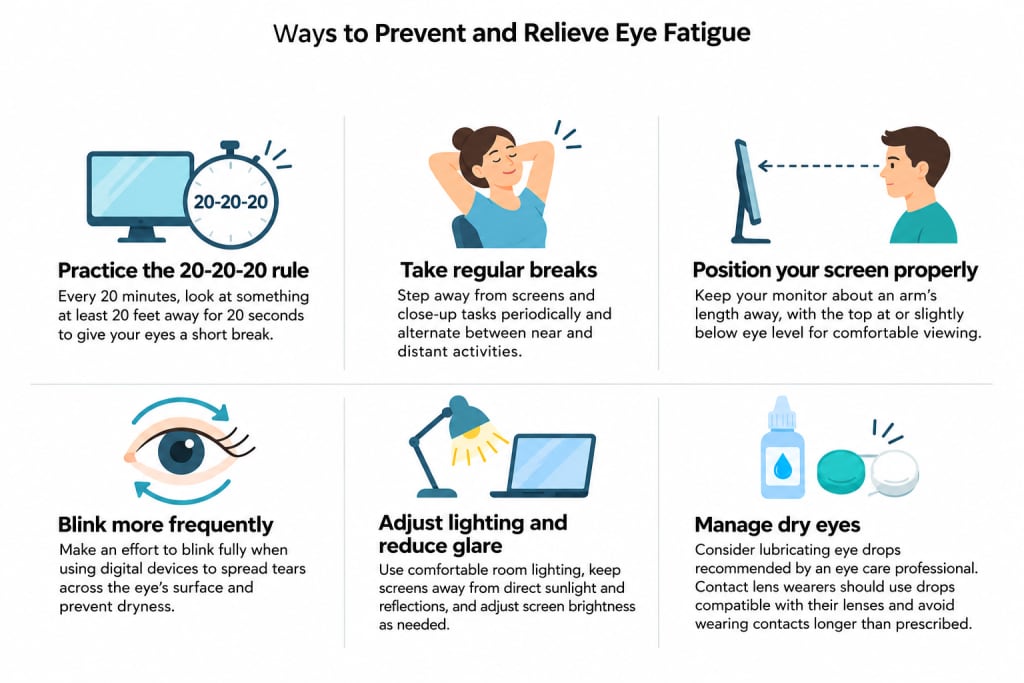
Eye fatigue often improves after resting your eyes or changing the conditions that contribute to discomfort. However, symptoms that persist despite these adjustments, return frequently, or interfere with daily activities warrant an eye examination. An eye care professional can check for uncorrected vision problems, dry eye disease, or other conditions that may require treatment.
Sudden vision changes, significant eye pain, or severe redness should receive prompt medical attention rather than being treated as ordinary eye fatigue.
When Should You See an Eye Doctor for Eye Fatigue?
Eye fatigue often develops after prolonged screen use, reading, or other activities that require sustained visual focus. Taking regular breaks, adjusting screen positioning and lighting, and keeping your eyes properly lubricated can help reduce discomfort. Most symptoms improve with rest and changes to daily visual habits.
However, eye fatigue that occurs frequently, worsens over time, or doesn’t improve with rest may indicate an underlying vision problem. Schedule an eye examination if you continue to have headaches, difficulty focusing, or blurred vision. Sudden vision loss, severe eye pain, or significant changes in vision require prompt medical attention. An eye care professional can assess your symptoms, check your prescription, and recommend appropriate treatment to help keep your eyes comfortable.
Related Articles
-

Dorm Room Contact Lens Care: Small-Space Hygiene Checklist
-

Understanding 20/40 Vision: What Does It Mean for Your Eyesight?
-

Why Do Contact Lenses Sometimes Move, Fold, or Pop Out?
-

Elton John And Vision Loss: The Eye Infection That Kept Him From Watching The Devil Wears Prada Musical
-
The “Your Eyes but Better” Trend in Colored Contact Lenses