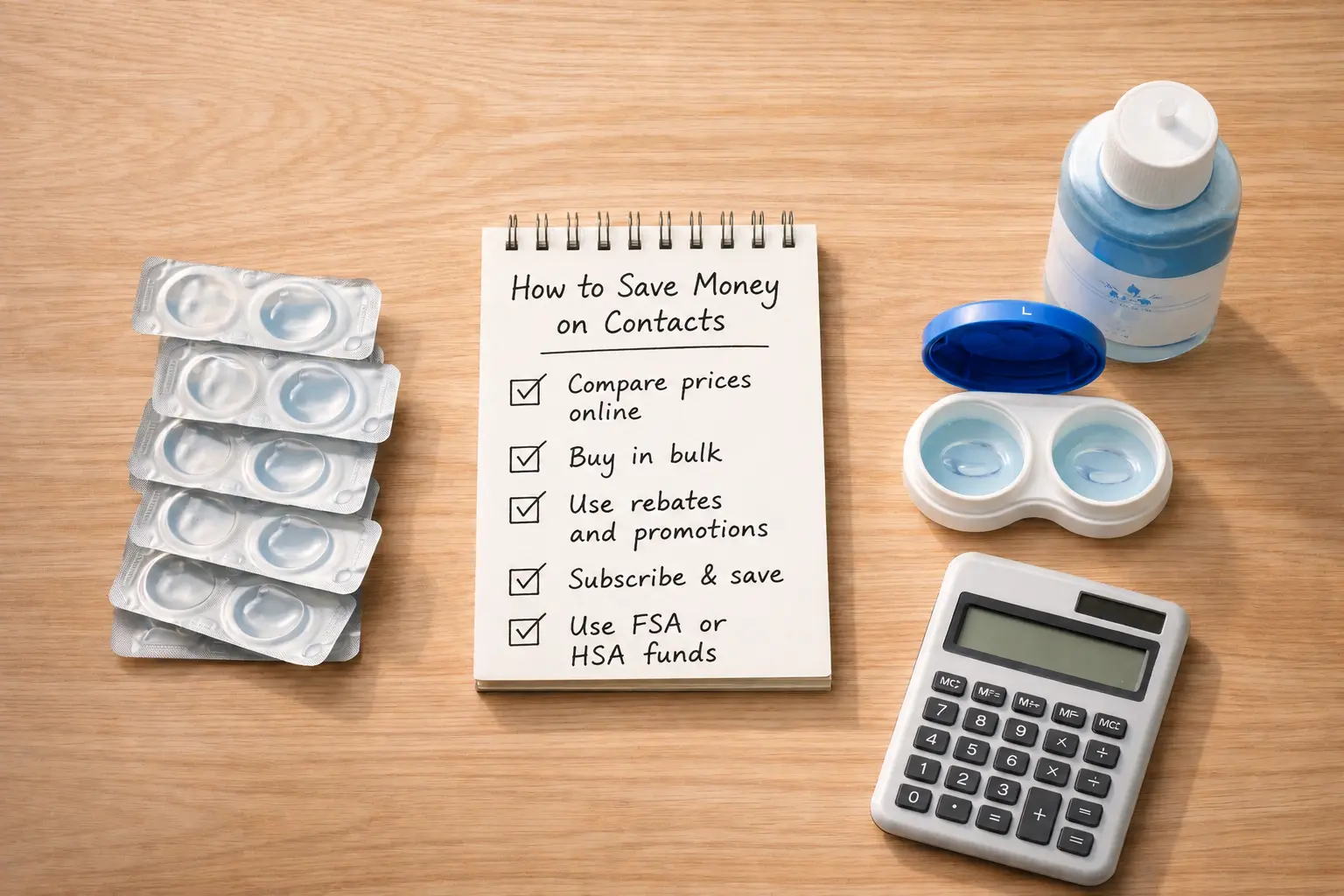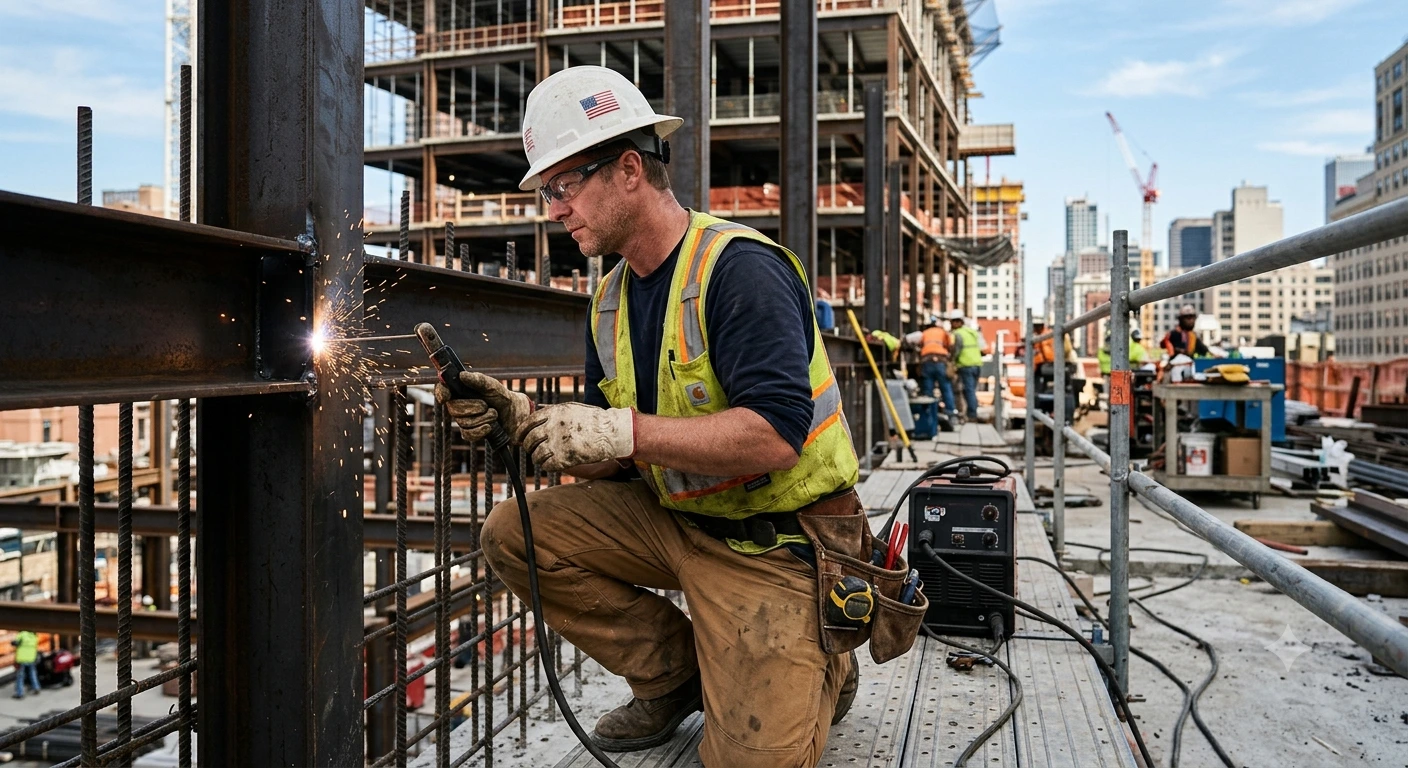
About 45 million people in the United States wear contacts, while the U.S. construction sector employs approximately 8.3 million workers as of June 2026.
For those workers, eye safety is a daily concern. The Bureau of Labor Statistics recorded 2,120 eye injuries and illnesses among construction workers in 2020 that caused at least one missed workday. Construction laborers accounted for 31.1% of those cases and electricians for 22.6%.
Contact lenses provide clear, unobstructed vision while you’re working, but they don’t protect against the hazards of the job. This makes proper eye protection and safe lens care essential throughout every shift.
Eye Hazards Contact Lens Wearers Face in Construction
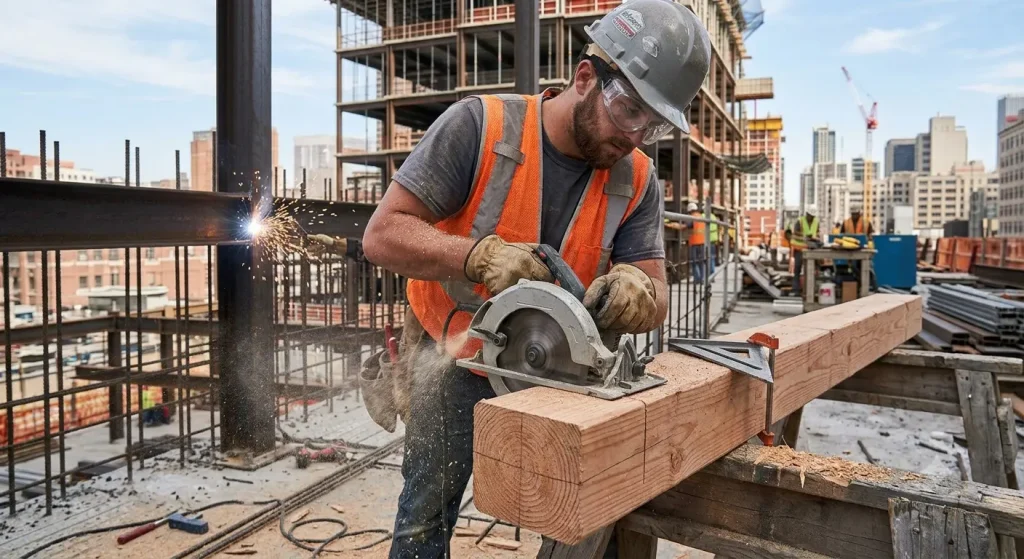
Working in construction sites expose workers to dust, debris, chemicals, extreme temperatures, and other potential hazards. Contact lenses help you see clearly on the job, but they don’t protect your eyes from injury.
Mechanical Hazards
Cutting, drilling, grinding, sanding, and demolition send wood chips, concrete dust, metal fragments, and other debris into the air, causing eye injuries. If those particles get behind a contact lens, they can get painful, blur your vision, or worse, cause corneal abrasions. Wear impact-rated safety glasses with side protection. Use properly fitted goggles when working in dusty places.
Chemical Exposure
Wet cement, cleaning agents, solvents, coatings, fuels, adhesives, chemical dust, gases, and vapors can irritate or injure the eyes. Hard or soft contact lenses don’t create a protective barrier for your eyes. Contaminated hands can transfer chemicals directly onto a lens when you wear or remove it. For protection, safety goggles and a face shield should be worn.
Extreme Heat and Temperature
Welding sparks, molten material, hot debris, radiant heat, cold wind, dry air, and abnormal temperatures create problems if you’re wearing contact lenses. Remove or adjust a lens before or after you’ve stepped away from the hazard area. Don’t forget to wash and dry your hands before touching your lens.
Radiation and Intense Light
Welding, cutting, brazing, and certain laser operations expose workers to harmful UV, infrared, or intense visible light, compromising their eye health. Even tinted or UV-blocking contacts are inadequate for protection. You need protective, filtered goggles.
What OSHA and NIOSH Say About Wearing Contact Lenses at Work
There are no provisions within either the Occupational Safety and Health Administration (OSHA) or the National Institute for Occupational Safety and Health (NIOSH) regulations prohibiting people from wearing contact lenses in construction work environments. Their regulations focus on identifying the hazards, providing the right protective equipment, and setting clear rules for tasks where wearing contacts could create an additional concern.
US Workplace Eye Protection Requirements
OSHA requires construction employers, whether wearing contacts or not, to provide appropriate PPEs whenever a job or project exposes workers to flying debris, chemicals, heat, harmful light, or other hazards.
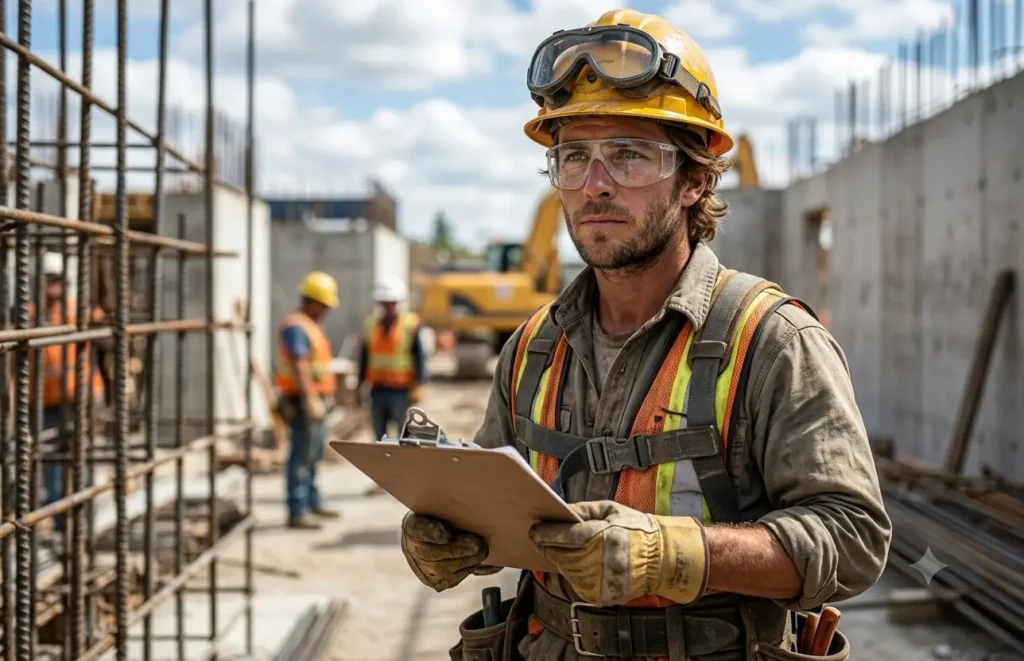
- Safety glasses with side protection
Impact-rated safety glasses are commonly used for tasks that expose your eyes to particles, splinters, and debris. OSHA requires side protection when flying objects are a hazard, so regular eyeglasses or safety glasses without adequate side coverage may be insufficient. Heavier work such as drilling, grinding, chipping, masonry, sanding, and operating power tools call for safety glasses with side shields or another level of protection the employer prescribes. - Properly fitted goggles for dust and chemicals
Safety goggles provide more coverage around the eyes than standard safety glasses. For chemical splashes, droplets, or sprays, OSHA guidance recommends indirectly vented chemical goggles; irritating mists require unvented goggles or respiratory protection covering the entire face. - Face shields worn over primary eye protection
A face shield protects your face from flying debris, hot sparks, molten material, or chemical splashes. It’s used as an additional layer of eye protection, worn over safety glasses or goggles. - Correct filter shades for welding and cutting
Welding helmets and safety goggles must have filter lenses with a dark tint. The required tint varies based on the welding process, electrode size, material thickness, and task. Note that a darker lens isn’t automatically better if it prevents you from seeing the work safely. Contact lenses, tinted contacts, and ordinary sunglasses don’t replace approved welding filters. - Laser eyewear matched to the hazard
People working with construction lasers should wear safety goggles designed for the laser’s specific wavelength and energy level. The goggles should also be properly labeled so workers can match them with the laser hazard. - PPE that fits the individual worker
OSHA requires specific and well-fitting construction PPE issued to each person working on the task. Eye protection should fit snugly without interfering with the worker’s movement, contact lenses, respirator, hard hat, hearing protection, or other required gear. - Clean, undamaged, and job-appropriate equipment
Protective eyewear must be adequate for the particular hazard, durable, cleanable, and properly maintained. Eyewear with scratched lenses, cracked frames, loose side shields, worn straps, and chemical residue should be disposed of and replaced.
Safe Contact Lens Practices During a Construction Shift
Wearing contact lenses at industrial or construction sites requires more than your normal morning routine. Dust, dirty hands, chemicals, wind, and long hours can cause all kinds of problems, so contact lens wearers working in construction should follow a few extra safety steps on every shift to prevent eye injuries.
What to Do in Case of Exposure
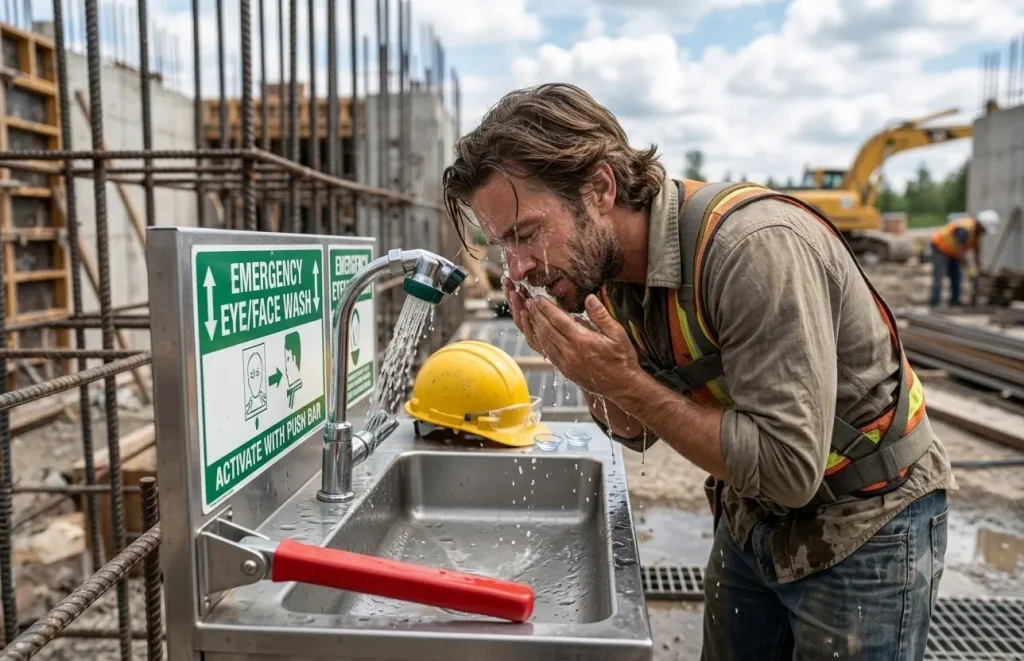
Your eyes are delicate organs. Exposure to the hazards of construction and industrial environments can turn seemingly minor issues into serious threats that compromise eye health. Stop working immediately, move away from the site, and follow your company’s emergency procedures.
- Start flushing the eye right away.
Go directly to the nearest eyewash station, and rinse your eyes with plenty of clean water. Hold your eyelids open and move your eye around to ensure the water reaches as much of the sclera. NIOSH advises immediate irrigation for chemicals that can seriously damage the eye. OSHA also requires job sites to install suitable flushing facilities within the work area. - Don’t delay rinsing to remove your contact lenses.
Begin flushing while the contacts are still in your eyes. Delaying irrigation gives the chemical time to wreak havoc on your eye. Don’t waste time looking for a mirror, contact lens solution, or a clean place to remove them first. Sloshing water may loosen or wash out the lens on its own. - Remove the contacts only when it can be done safely.
After flushing, remove the lenses if they come out easily and you can do so without causing more injury. Keep rinsing before, during, and after removal. Never force out a lens that appears stuck. - Flush for the amount of time required by the chemical.
The standard is 15 minutes of rinsing, but if the substance is particularly corrosive, you might need to rinse your eyes even longer. Check the product label or Safety Data Sheet and follow the site’s emergency plan. - Use the designated jobsite eyewash.
Don’t rely on a small water bottle when an emergency eyewash is available. OSHA requires suitable flushing facilities to be located within the work area for immediate use. You should know where the eyewash is stored. - Report the incident immediately.
Tell your supervisor or the designated safety officer what happened, what substance or material was involved, and whether you’re wearing contacts. Reporting the accident helps the employer identify the product, review its Safety Data Sheet, arrange medical care, and document the incident under company procedures. - Get prompt medical attention.
Seek emergency care immediately. NIOSH recommends immediate medical attention for chemicals it classifies as requiring immediate irrigation. - Don’t wear contact lenses right away.
Use backup prescription glasses, and wait until an ECP says it’s safe to wear contacts again. If you wore reusable lenses during the incident, dispose of them.
Can You Wear Contact Lenses In Construction Sites?
Yes, but they should never take the place of proper eye and face protection. Safety glasses, goggles, face shields, welding helmets, and other required PPE remain essential in construction and industrial sites.
Following OSHA requirements, NIOSH recommendations, guidelines for contact lenses, and specific safety regulations your employer sets remains the safest approach. A few consistent precautions helps protect both your vision and your ability to work safely throughout the shift.
Frequently Asked Questions
-
Daily disposables may be more convenient because you start each day with a fresh pair and don’t need to clean or store them after the shift. However, the best lens depends on your prescription, eye health, work environment, and ECP’s recommendation.
-
Yes, prescription safety glasses are a practical alternative for dusty, windy, or especially demanding assignments. They must be rated for the job’s hazards. Ordinary prescription eyeglasses aren’t automatically considered protective eyewear.
-
Contact lens wearers should generally visit their ECP once a year or according to the provider’s recommended schedule. Regular exams ensure your prescription, lens fit, and eye health remain suitable for wearing contacts during long or physically demanding shifts.
-
Contact lenses can be worn with a respirator. Complete the required medical evaluation and fit testing, and follow your employer’s respiratory-protection protocols.
-
Contacts themselves don’t fog, but safety eyewear and face shields can. Use properly fitted, safety standard-approved eyewear with appropriate ventilation or an anti-fog treatment.
References
Updating OSHA Standards Based on National Consensus Standards; Eye and Face Protection. Occupational Safety and Health Administration. https://www.osha.gov/laws-regs/federalregister/2016-03-25-0. Published Date (March-25-2016). Date Accessed, July 21, 2026.
Personal Protective Equipment in Construction. Occupational Safety and Health Administration. https://www.osha.gov/laws-regs/federalregister/2024-12-12. Published Date (December-12-2024). Date Accessed, July 21, 2026.
Wearing of Contact Lenses While Welding. Occupational Safety and Health Administration. https://www.osha.gov/laws-regs/standardinterpretations/1982-10-22. Published Date (October-22-1982). Date Accessed, July 21, 2026.
Workers Suffered 18,510 Eye-Related Injuries and Illnesses in 2020. U.S. Bureau of Labor Statistics. https://www.bls.gov/opub/ted/2023/workers-suffered-18510-eye-related-injuries-and-illnesses-in-2020.htm. Published Date (March-31-2023). Date Accessed, July 21, 2026.
Current Intelligence Bulletin 59: Contact Lens Use in a Chemical Environment. National Institute for Occupational Safety and Health. https://www.cdc.gov/niosh/publications/numbered/2005-139.html. Published Date (June-01-2005). Date Accessed, July 21, 2026.