You’ve got plans. You’re getting ready, putting on makeup, heading out, and you’re probably going to be out longer than usual. The last thing you want is for your contacts to start feeling dry, scratchy, or blurry halfway through.
And when you’re on a date, it’s not always easy to step away and deal with your lenses. So before you head out, let’s talk about the 10 common contact lens care mistakes you should avoid (plus quick fixes) so your eyes stay comfortable all night.
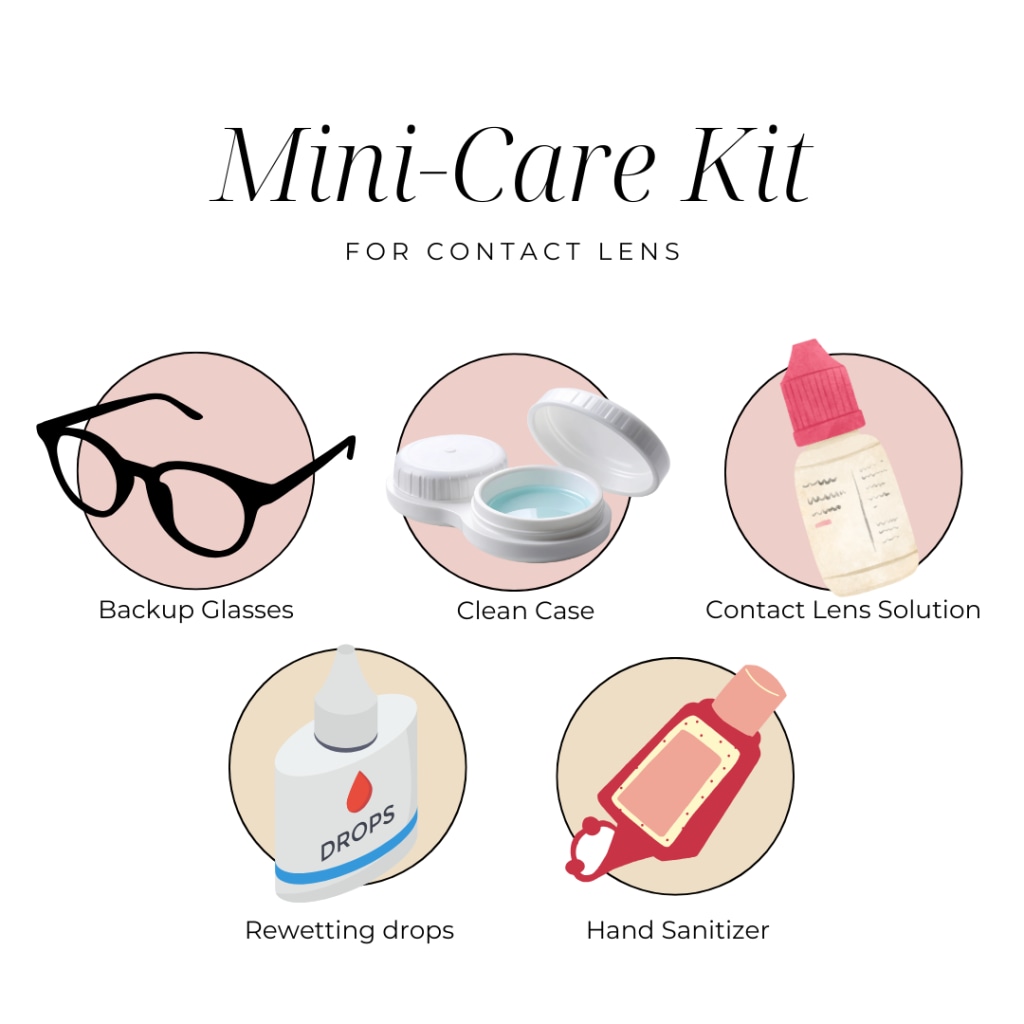
The Date-Night-Ready Mini Care Kit
Before you grab your bag and head out, consider bringing a few things, so you can handle dryness or any unexpected lens issues without worries.
10 Contact Lens Care Mistakes That Can Wreck Date Night
Now here’s the part that usually causes problems once you’re already out and you don’t have the time (or privacy) to fix them for long.
Putting Your Contacts After Makeup
Makeup particles tend to get onto the lens or under your eyelid which can irritate your eye and make your vision look smeared.
The right way to do this is to put your contacts in first, then do your makeup. And at the end of the night, take your contacts off before using makeup remover around your eyes.
Using Tap Water in a “Quick Emergency”
Let’s say mid-date, your lens feels dirty or flipped. You try to rinse it, and now it stings or feels gritty the moment it goes back in.
When this happens, never make a quick fix with tap water (or any other type of water) because they are not sterile. This will raise your risk of serious eye infections, including Acanthamoeba keratitis.
Only use approved contact lens solutions. If you can’t clean the lens safely, skip it and switch to glasses for the rest of the night.
“Topping Off” Solution in the Case
Mixing new solution with old solution doesn’t properly disinfect. Old liquid can carry germs and residue back onto the lens.
Just dump the old solution completely. Rinse the case with fresh solution, then refill with fresh solution before storing your lenses.
Wearing Lenses Longer Than You Planned
Longer wear time can dry out the lens and irritate the eye surface. That discomfort can build fast in dry air, with screens, or late nights. This is also why we advise against “stretching out” your lenses.
If you know you’re likely to be out longer than usual, plan for it. Set a discreet phone reminder and bring glasses so you can switch when your eyes start feeling tired.
Napping or Sleeping in Your Contacts
You might end up dozing off during a movie or on the ride home on your Valentine’s date. Normally, it’s fine. But if you have contacts on? It’s not advised.
Sleeping in contacts (unless your eye doctor specifically prescribed it) can reduce oxygen to your eyes and raise the chance of irritation and infection. If there’s any chance you’ll fall asleep, take them out first.
Letting Your Contacts Come Anywhere Near Water
Again, water isn’t sterile. So, when your plans involve coming into contact with water, always take them out. If your lenses got wet, the safer move is to remove them and switch to glasses. (If you wear dailies, throw that pair away.)
Using the Wrong Eye Drops Or Using “Redness Relief” Drops to Push Through
It’s easy to assume any eye drop is fine, but not all eye drops for contacts are safe or helpful. Even using redness relief is not a good idea since it just covers up the problem instead of fixing it.
Stick to contact-lens-safe rewetting drops (the label will say it’s safe for use with contacts). If your eyes are consistently dry, it’s also worth asking your eye doctor which drops or contact lenses for dry eyes are best for you.
Rubbing Your Eyes or Adjusting Your Lens With Unwashed Hands
Hands pick up germs and residue fast. And if it comes in contact with your lens, it increases irritation or infection risk.
If you need to adjust your lens, wash your hands first. If washing isn’t possible at the moment, use contact-lens-safe drops, blink a few times, and wait until you can properly clean your hands to handle the lens.
Reusing a Contact Lens Case
Lens cases can build up residue and germs over time, even if they look clean. If the case is contaminated, it can undo the care you’re trying to do with the solution.
After you put your lenses in, empty the case, rinse it with fresh contact lens solution, and let it air-dry with the caps off. Replace your case regularly (a good rule is at least every three months, or sooner if it’s cracked or grimy).
Ignoring the Symptoms Because You Don’t Want to Ruin the Night
Some symptoms are a sign your eye needs a break or that something more serious is going on. Leaving lenses in when your eye is clearly irritated can make things worse.
Give yourself permission to take the lens out and switch to glasses instead. If symptoms don’t improve after removal, reach out to an eye doctor.
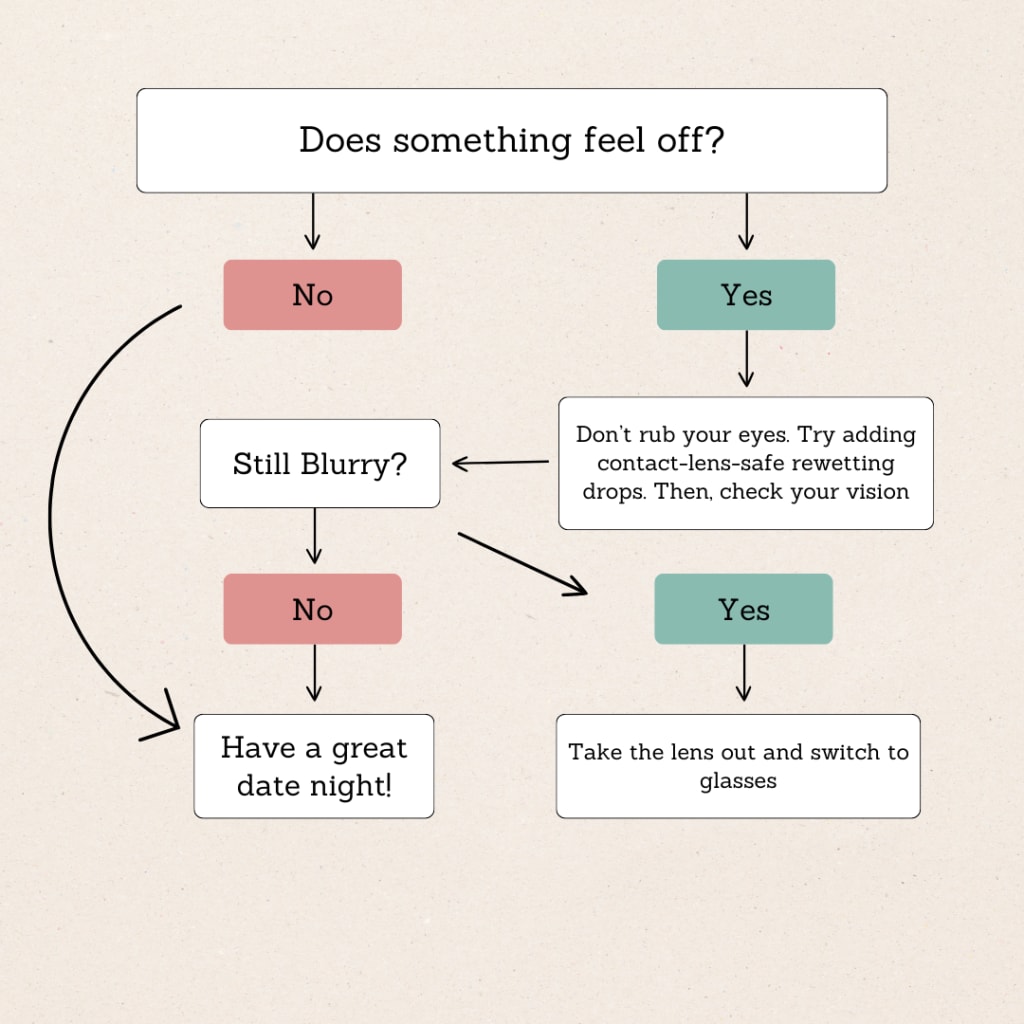
What Happens If Your Eyes Feel Off Mid-Date
If your eyes are starting to feel off, use our quick rescue guide to know what to do fast and when it’s time to take your lenses out.
Protect Your Eyes, Enjoy the Night
Your eyes will usually let you know early when something isn’t right. Pay attention to those first signs and you can fix these issues before they turn into a bigger problem.
Keep your routine simple, bring a backup option, and don’t try to “tough it out” if your lenses feel uncomfortable, so you can stay comfortable and enjoy the rest of your night.
Need to restock? Shop daily disposable contact lenses and keep an extra pair ready for plans that run long.
Contact Lens Care Mistakes That Ruin Valentine’s Date Night FAQs
Can you swim with contacts?
How long can you wear contacts?
Does contact solution expire?
Can you use contact solution as eye drops?
How do you clean a contact lens case?
Do you put contacts in before or after makeup?
What should you do if you get red eye from contacts?
References
Preventing Eye Infections When Wearing Contacts. Centers for Disease Control and Prevention (CDC). https://www.cdc.gov/contact-lenses/prevention/index.html. May 27, 2025.
Healthy Habits: Keeping Water Away from Contact Lenses. Centers for Disease Control and Prevention (CDC). https://www.cdc.gov/contact-lenses/about/healthy-habits-keeping-water-away-from-contact-lenses.html. May 27, 2025.
Contact Lens Solutions and Products. U.S. Food & Drug Administration (FDA). https://www.fda.gov/medical-devices/contact-lenses/contact-lens-solutions-and-products. N.d.
How to Take Care of Contact Lenses. American Academy of Ophthalmology (AAO). https://www.aao.org/eye-health/glasses-contacts/contact-lens-care. April. 22, 2022.
Contact Lens Care. American Optometric Association (AOA). https://www.aoa.org/healthy-eyes/vision-and-vision-correction/contact-lens-care. n.d.
Related Articles
-

Here Are the Best Colored Contact Lenses to Wear for the Holidays
-

Are Contact Lens Prescriptions the Same as Glasses?
-
Does Dim Light Cause Child Myopia? What Every Parent Needs to Know
-
How Americans Can Save Money On Contact Lenses
-
On Eco-Friendly Contact Lenses: ACUVUE Oasys 1-Day vs Biotrue ONEday