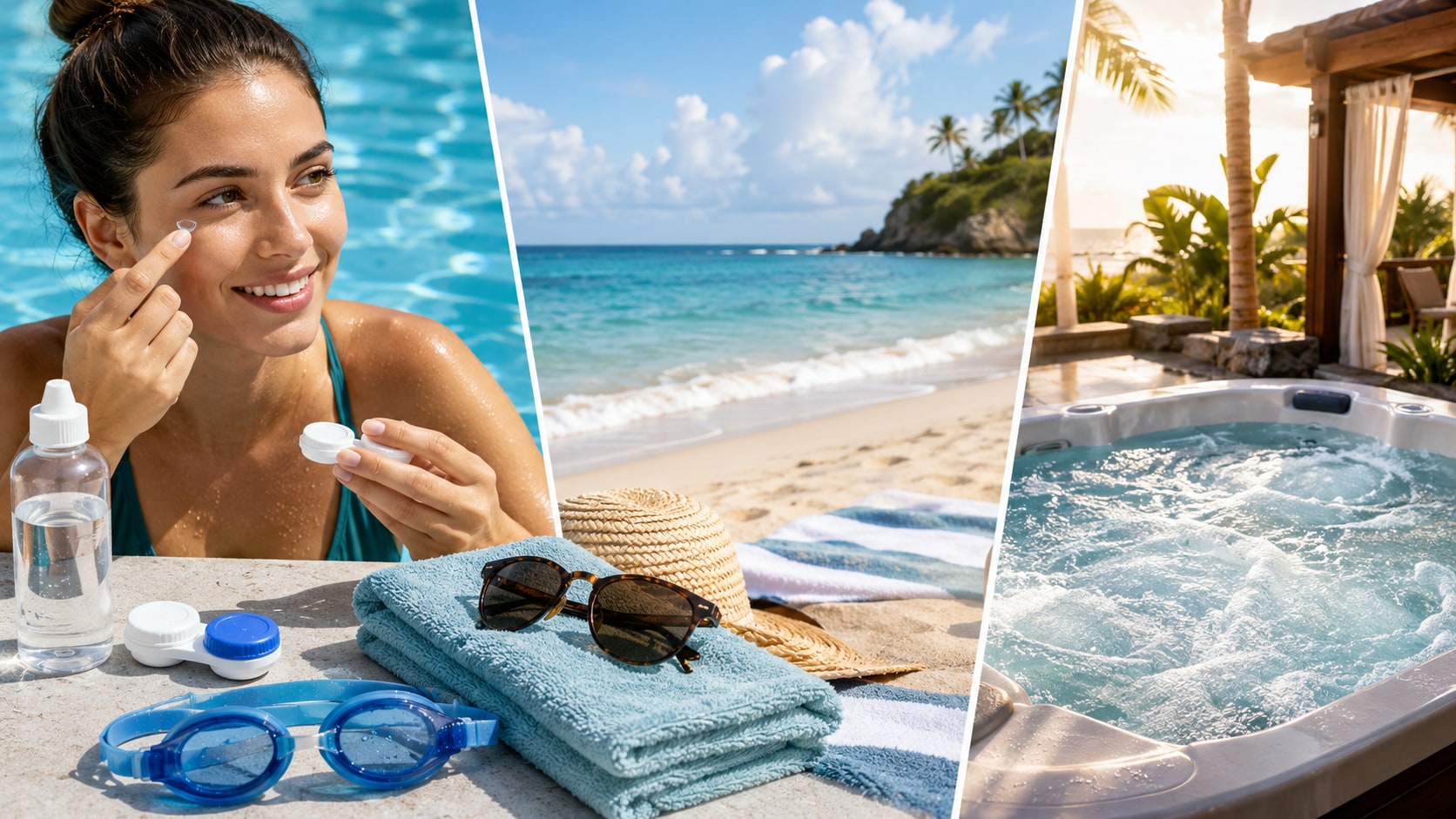
Swimming with contact lenses may seem convenient during pool days, beach trips, and summer getaways. It can feel easier than switching to glasses, especially when you want clear vision outdoors. Still, water and contact lenses are not a safe mix.
The Centers for Disease Control and Prevention (CDC) says contact lens wearers should remove their lenses before water activities, including swimming and showering. The U.S. Food and Drug Administration (FDA) also warns that swimming in contacts can raise the risk of eye infection from bacteria in pool water, hot tubs, lakes, and the ocean.
For pool days, beach trips, and hot tub plans, a safer routine starts with knowing when to take your lenses out and what to do if they accidentally get wet.
Why Water and Contact Lenses Don’t Mix
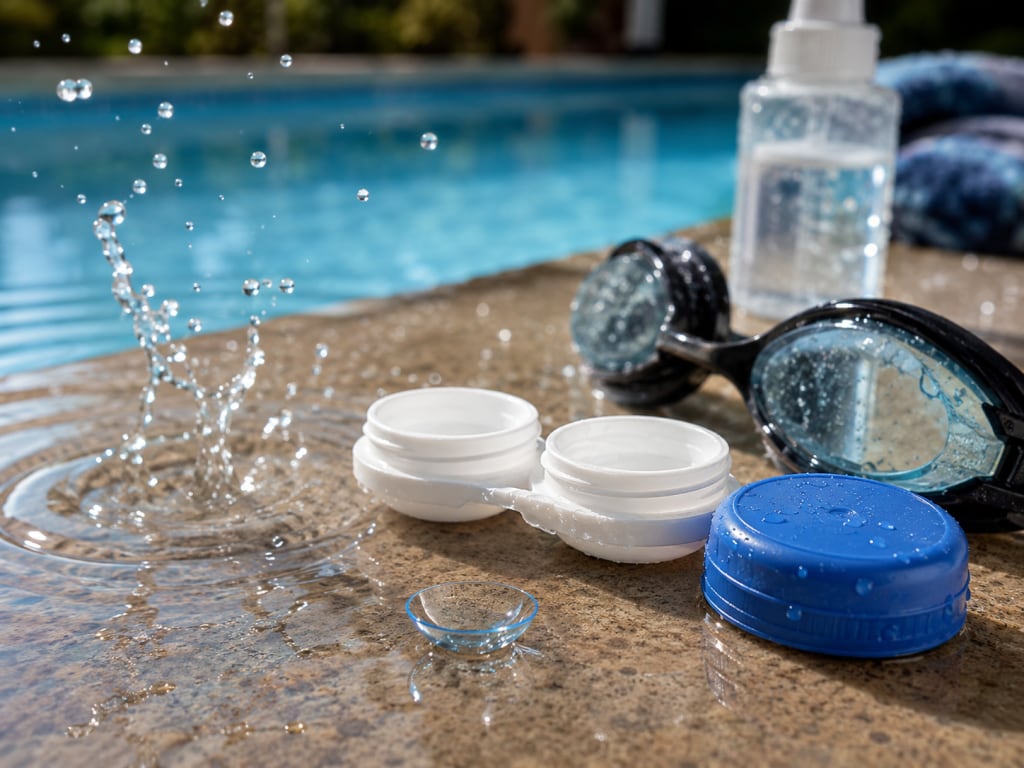
Water can carry bacteria, parasites, and other microorganisms. These can be found in pools, lakes, oceans, hot tubs, and even tap water. Once water touches your lenses, germs may get trapped between the lens and the surface of your eye.
Soft contact lenses can also absorb water. The CDC notes that water can cause soft lenses to change shape, swell, and stick to the eye. That can cause discomfort and may scratch the cornea, the clear front surface of the eye.
One infection linked to water exposure is Acanthamoeba keratitis. Acanthamoeba is a microscopic organism that can cause a rare but serious eye infection. The CDC says the condition is most common among contact lens wearers, and risk may increase when lenses are worn while swimming, showering, or using a hot tub.
Quick Safety Table for Summer Water Activities
| Water Activity | Should You Wear Contacts? | Safer Option |
|---|---|---|
| ▶Swimming in a pool | ✗ No | Prescription swim goggles |
|
Chlorine reduces some germs but does not remove every risk. Wear prescription swim goggles instead of contacts. |
||
| ▶Swimming at the beach | ✗ No | Prescription swim goggles or glasses before and after swimming |
|
Waves can splash into your eyes even if you are not fully swimming, so lenses are safer left out. |
||
| ▶Swimming in a lake | ✗ No | Prescription swim goggles |
|
Lake water is not sterile and can carry bacteria and parasites that get trapped against the eye. |
||
| ▶Sitting near the pool | ✓ Usually okay | Sunglasses and clean hands before lens handling |
|
Fine if lenses stay completely dry. Wash and dry your hands before touching your eyes or lenses. |
||
| ▶Using a hot tub | ✗ No | Remove lenses before getting in |
|
Warm water raises the risk of Acanthamoeba exposure. Remove lenses before getting in, every time. |
||
| ▶Water sports | ? Ask your doctor | Sport-specific protective eyewear or prescription goggles |
|
Risk varies by sport and water exposure. Your eye doctor can recommend the safest option for your activity. |
||
Pool Safety Rules for Contact Lens Wearers
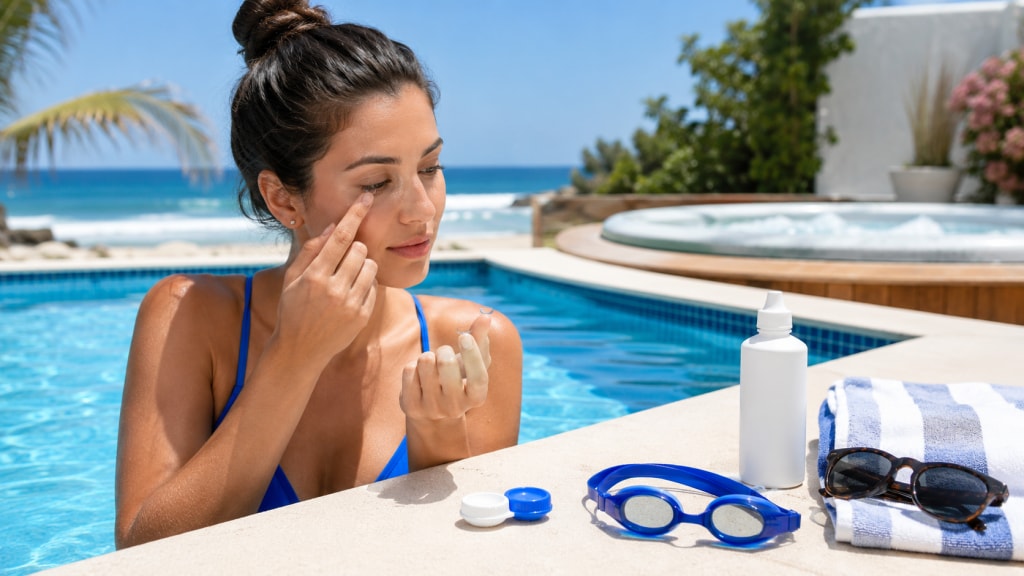
Pool water may look clean, yet it is not sterile. Chlorine can reduce some germs, but it does not remove every risk for contact lens wearers.
The FDA advises against swimming while wearing contacts due to the risk of eye infection from bacteria in swimming pools, hot tubs, lakes, and ocean water.
Before You Swim
- Remove your contact lenses before entering the pool.
- Wear prescription swim goggles if you need clear vision in the water.
- Bring backup glasses or prescription sunglasses.
- Keep reusable lenses in a clean case with fresh contact lens solution.
- Never store lenses in pool water, tap water, or bottled water.
If Pool Water Gets in Your Eyes
Leave the water and wash your hands before touching your lenses. Dry your hands with a clean towel, then remove the lenses. Throw away daily disposable lenses. Clean and disinfect reusable lenses with fresh solution before wearing them again.
Beach, Ocean, and Lake Safety Rules
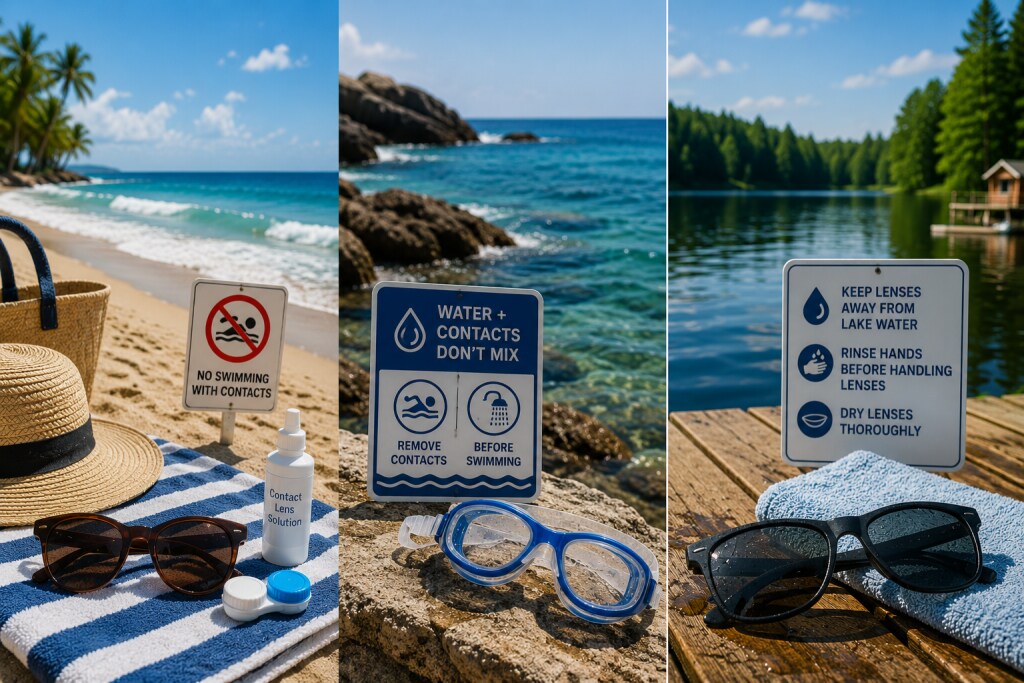
Beach days come with more than water exposure. Sand, wind, sunscreen, sweat, and salt water can all irritate the eyes. Contact lenses may feel dry, gritty, or uncomfortable faster in these conditions.
Ocean and lake water are not sterile. Waves can splash water into your eyes even if you are not fully swimming. For that reason, it is safer to remove your lenses before going into the water.
Beach-Day Contact Lens Tips
- Wear sunglasses to help shield your eyes from sun, wind, and blowing sand.
- Pack backup glasses in case your lenses become uncomfortable.
- Handle lenses only with clean, dry hands.
- Keep sunscreen away from your eyelids and lens case.
- Use contact lens-safe rewetting drops if your eye doctor recommends them.
- Switch to glasses if your eyes feel irritated.
UV-blocking contact lenseentire eyes may help reduce UV exposure to the covered part of the eye, but they do not cover the full eye area. Sunglasses are still important for outdoor eye protection.
Hot Tub Safety Rules
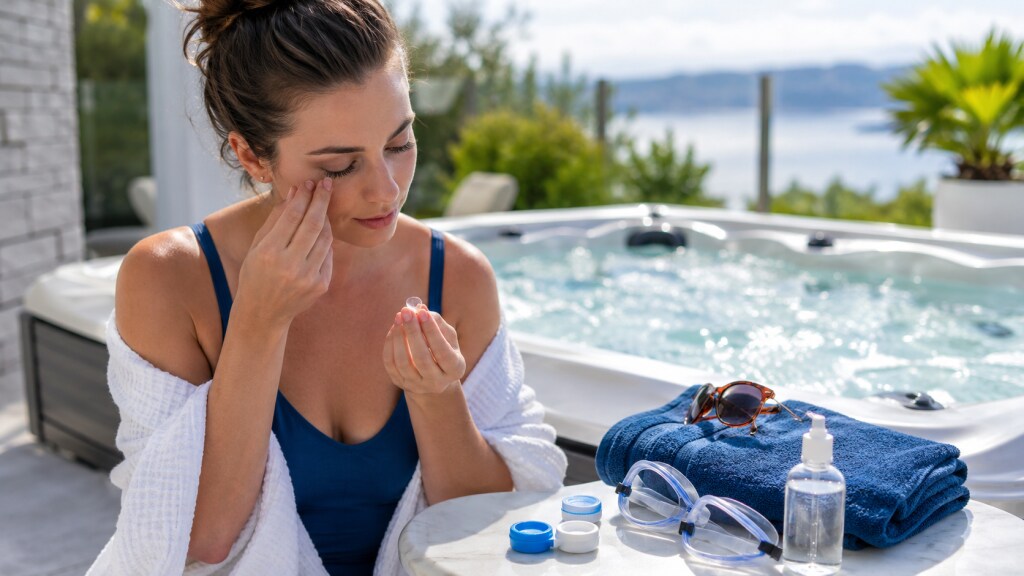
Hot tubs are especially risky for contact lens wearers. Warm water can expose your lenses and eyes to microorganisms. Steam and heat may also make lenses feel dry, tight, or sticky.
The CDC lists hot tub use while wearing contacts as one of the behaviors that may increase the risk of Acanthamoeba entering the eye.
Hot Tub Do’s and Don’ts
| Do | Don’t |
|---|---|
| ▶✓ Remove contacts before getting in | ✗ Wear contacts in the hot tub |
|
Warm hot tub water raises the risk of Acanthamoeba exposure. Take lenses out before getting in, every time. |
|
| ▶✓ Use glasses before and after | ✗ Rinse lenses with tap water |
|
Tap water is not sterile. Rinsing lenses with it can expose them to the same germs found in pools and hot tubs. |
|
| ▶✓ Wash and dry hands before lens handling | ✗ Reuse daily disposable lenses |
|
Daily disposables are made for one-time use. If they’ve gotten wet or been worn once, throw them away instead of reusing them. |
|
| ▶✓ Call your eye doctor for pain or redness | ✗ Ignore light sensitivity or blurry vision |
|
Pain, redness, light sensitivity, or blurry vision can be early signs of infection. Don’t wait these out, check with your eye doctor. |
|
What to Do If Your Contact Lenses Get Wet
A splash, wave, or quick swim can happen before you remember your lenses are in. The safest next step depends on the type of contacts you wear.
If You Wear Daily Disposable Contacts
Daily disposable lenses are made for one-time use. If they get wet, do not try to save them.
- Wash and dry your hands.
- Remove the lenses.
- Throw them away.
- Use a fresh pair only if your eyes feel normal.
- Switch to glasses if your eyes feel red, sore, or irritated.
If You Wear Reusable Contacts
Reusable lenses need proper cleaning and disinfection before they go back on your eyes.
- Wash and dry your hands before removal.
- Take the lenses out as soon as possible.
- Clean and disinfect them with fresh contact lens solution.
- Let them disinfect overnight.
- Do not rinse them with tap water, bottled water, or homemade saline.
The FDA warns that contact lenses should not be exposed to any water, including tap, bottled, distilled, lake, or ocean water.
Are Daily Contacts Better for Beach or Pool Days?
Daily disposable contacts can be convenient for summer plans. You can start with a fresh pair and throw them away at the end of the day. That can make travel, beach outings, and busy weekends easier.
They are still not safe for swimming. A daily disposable lens can still trap water and germs against the eye. If a daily lens gets wet, remove it and throw it away.
For swimming, prescription swim goggles are the safer option. The CDC suggests prescription goggles for people who need vision correction during swimming or other water activities.
Safer Ways to See Clearly Around Water
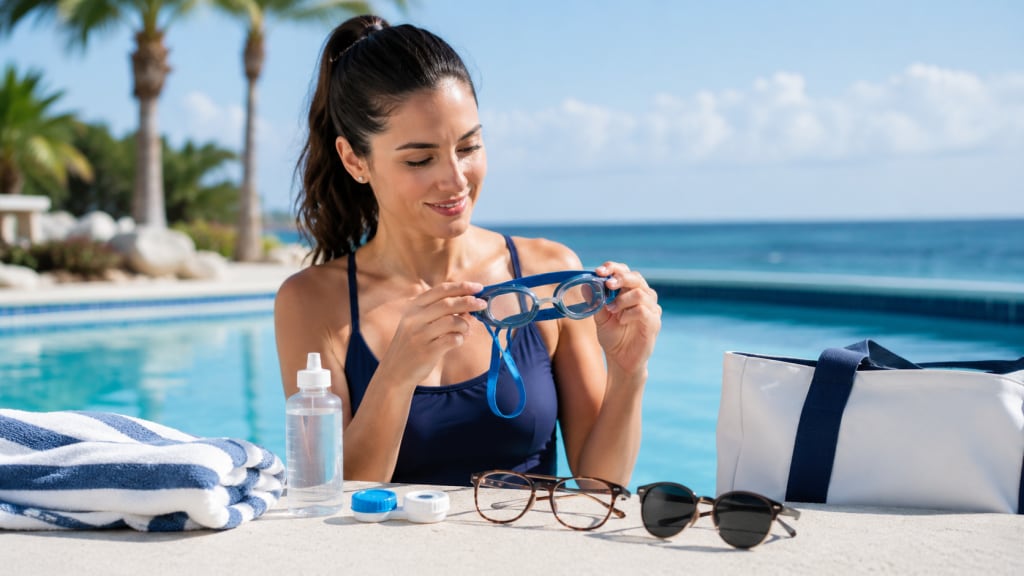
You do not have to choose between blurry vision and unsafe contact lens habits. A little planning can make beach and pool days easier.
Good options include:
- Prescription swim goggles for swimming, pool workouts, and water sports.
- Prescription sunglasses for beach walks, driving, and outdoor events.
- Backup glasses for before and after swimming.
- Fresh daily disposable lenses for dry, non-swimming parts of the day.
- A small contact lens kit with solution, a clean case, rewetting drops, and clean tissues.
If you swim often, ask your eye doctor which vision option fits your prescription and activity level.
Symptoms After Swimming That Need Attention
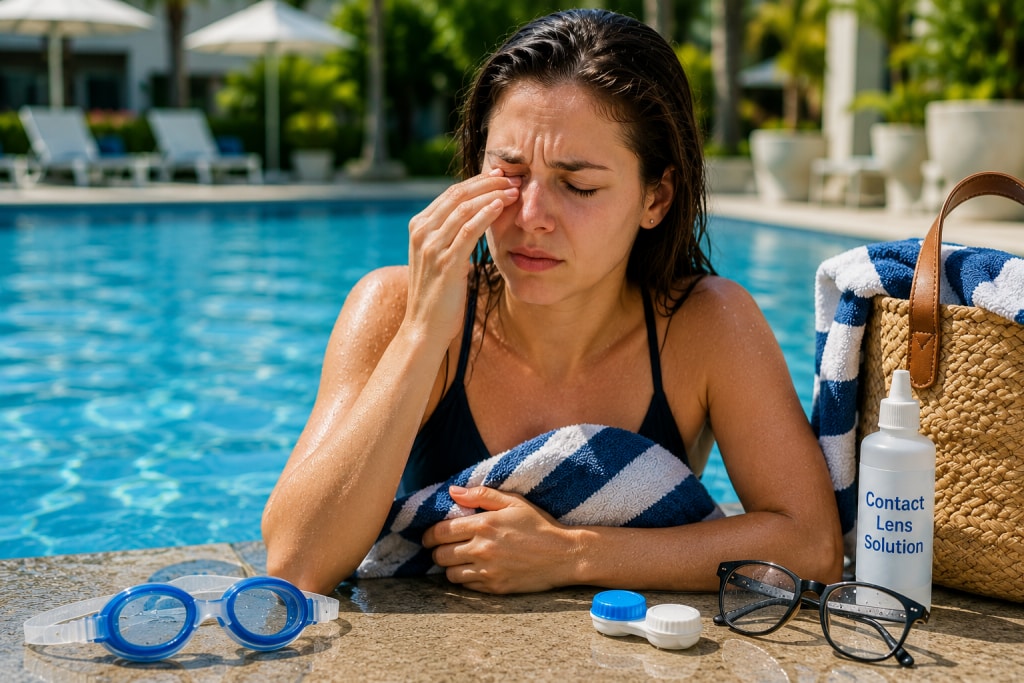
Some eye irritation after swimming may be caused by chlorine, saltwater, sunscreen, or wind. Contact lens wearers should be more careful when symptoms continue or feel unusual.
Call your eye doctor if you notice:
- Eye pain
- Redness that does not improve
- Blurry vision
- Light sensitivity
- Excessive tearing
- Swelling
- Discharge
- A gritty feeling that does not go away
The CDC lists eye pain, redness, blurred vision, light sensitivity, a feeling that something is in the eye, and excessive tearing as possible symptoms of Acanthamoeba keratitis.
Do not put your lenses back in while your eyes still feel irritated. Use glasses until your eye doctor says it is safe to wear contacts again.
What to Pack for Pool and Beach Days
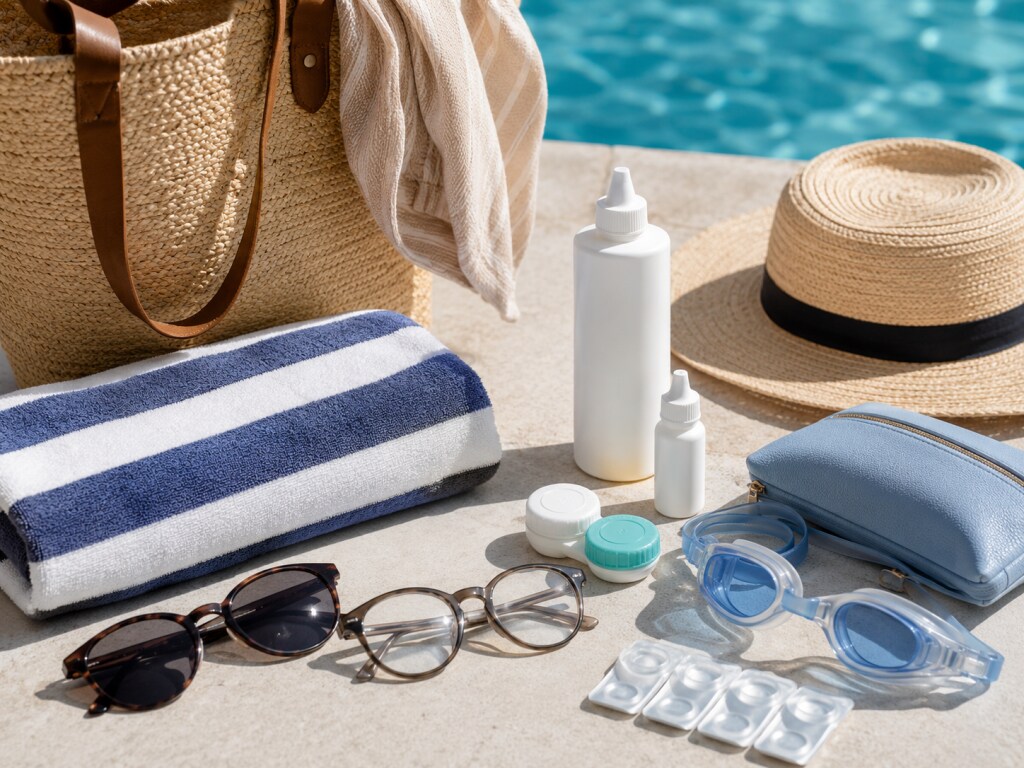
A small eye care kit can help you avoid risky lens habits when you are away from home.
Pack these items:
- Backup glasses
- Prescription sunglasses
- Extra contact lenses
- Fresh contact lens solution
- Clean lens case
- Contact lens-safe rewetting drops
- Tissues or a clean towel for drying hands
- Prescription swim goggles if you plan to swim
The FDA recommends replacing your contact lens storage case every three months or as directed by your eye care professional.
Takeaway
Swimming with contact lenses is not recommended. Pool, ocean, lake, and hot tub water can expose your lenses to germs that may cause irritation, infection, or corneal problems.
Remove your lenses before swimming, use prescription swim goggles if you need clear vision in the water, and keep backup glasses nearby. If your contacts get wet, throw away daily disposable lenses or properly disinfect reusable lenses before wearing them again. Pain, redness, blurry vision, or light sensitivity after water exposure should be checked by an eye doctor.
References
Acanthamoeba Keratitis. Centers for Disease Control and Prevention. Published June 20, 2025. Accessed July 7, 2026.
Contact Lens Risks. U.S. Food and Drug Administration. Published September 4, 2018. Accessed July 7, 2026.
Everyday Eye Care: Contact Lenses. U.S. Food and Drug Administration. Updated December 4, 2023. Accessed July 7, 2026.
Healthy Habits: Keeping Water Away From Contact Lenses. Centers for Disease Control and Prevention. Published May 27, 2025. Accessed July 7, 2026.
Related Articles
-

Healthy Vision Month Checklist For Contact Lens Wearers
-
Understanding Contact Lens Prescription: Glossary, Tips, and Recommendations
-
Eyeing the Options: Focus Dailies or Dailies Aquacomfort Plus?
-

Autumn-Ready Eyes: 5 Best Contact Lenses for the Fall Season
-

Are Contact Lens Prescriptions the Same as Glasses?