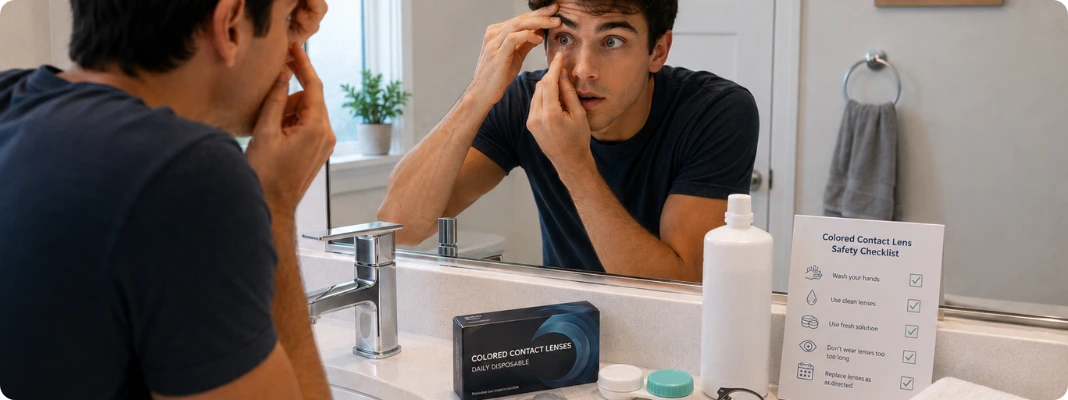
You have your first pair of colored contacts, the mirror is ready, and the lens is sitting on your fingertip. Then the questions start: Is it right-side up? Will it hurt? What if you blink too soon? That first try can feel intimidating, but once you know the safe steps, putting in colored contacts becomes much easier.
Colored contacts can change your look in a subtle or dramatic way, but they are still contact lenses, not ordinary beauty products. They sit directly on your eyes, so safe wear starts with a valid contact lens prescription, clean hands, proper lens care, and knowing when to remove them.
In the United States, the Food and Drug Administration classifies all contact lenses, including cosmetic contacts and decorative contacts, as medical devices that should be prescribed by a doctor.
Quick Answer: How Do Beginners Wear Colored Contacts Safely?
Before you wear colored contacts for the first time, focus on safety before style. A good routine starts with the right prescription, clean handling, proper lens care, and knowing when your eyes need a break.
Follow these beginner-safe steps before putting colored contacts on your eyes:
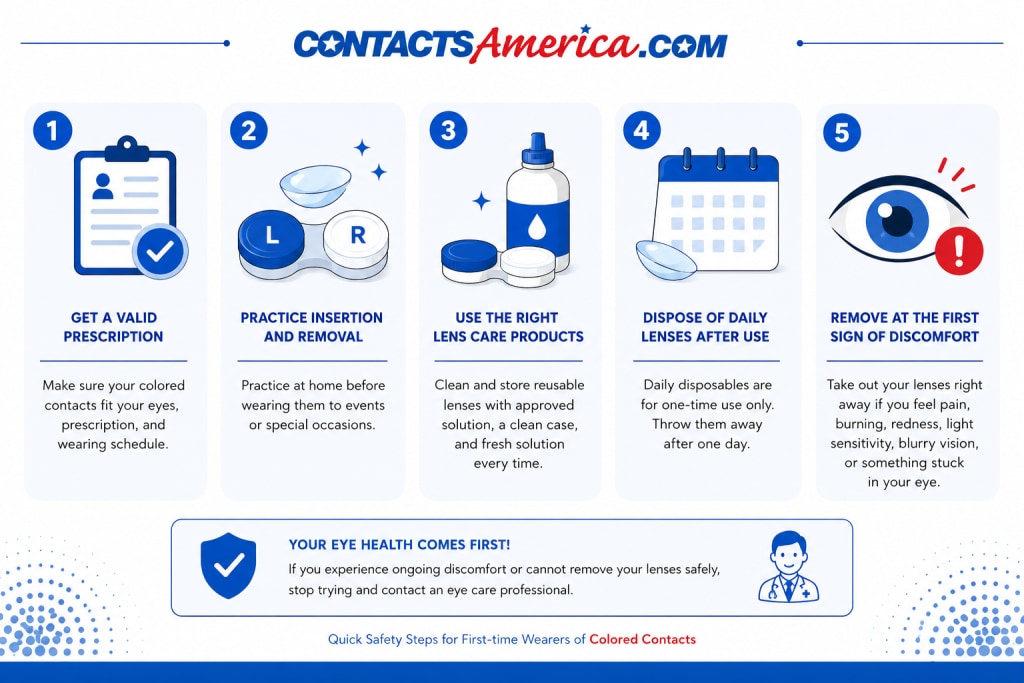
This is also why sellers ask that you need a valid prescription to buy contacts in the US, even if you are only wearing them for style. If symptoms continue after removing the lens, switch to glasses and contact your eye care professional.
Are Colored Contacts Safe for Beginners?
Colored contacts can be safe for beginners when they are prescribed, properly fitted, and worn according to your eye doctor’s instructions. Prescription colored contacts are checked for your eye shape, lens size, prescription needs, and comfort before you wear them. A proper fit helps the lens sit correctly, move naturally when you blink, and avoid scratching or irritating your eye.
If you are wondering, “Are colored contacts safe?” the answer depends on whether they were prescribed for you and bought from a reputable seller. Non-prescription colored contacts, costume lenses, and decorative contact lenses sold without a prescription can be risky because they may not fit your eyes, meet safety standards, or stay sterile. In the United States, colored contacts are considered medical devices, so even lenses used only for style or costume wear require a valid contact lens prescription.
There is no safe “one-size-fits-all” contact lens because every eye has its own curve, diameter, tear film, and wearing needs. A poor-fitting lens can slide too much, feel tight, blur your vision, reduce comfort, or increase the risk of scratches, ulcers, and infection. Beginners should buy colored contacts only from sellers that require a prescription and should avoid street vendors, beauty shops, costume stores, and websites that promise colored lenses without one.
If you want a quick safety refresher, this guide on safe colored contact lens use covers the biggest risks beginners should avoid.
Types of Colored Contacts Beginners Should Know
Before choosing a color, it helps to understand how different colored contact lenses change the look of your eyes.
Visibility Tint Lenses
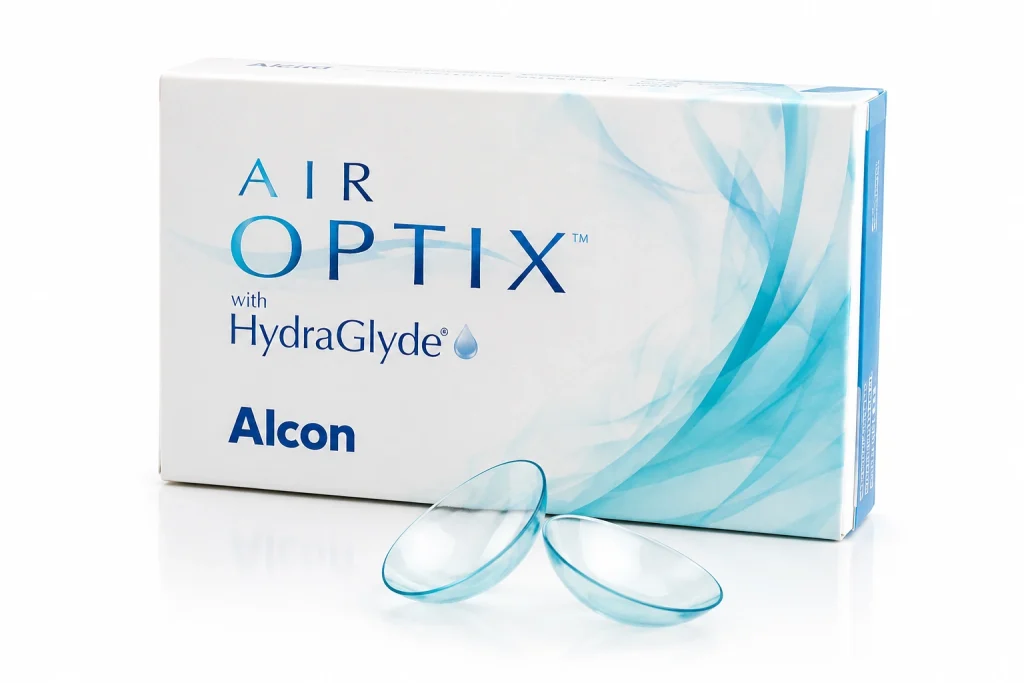
Visibility tint lenses have a very light blue or green tint that makes the lens easier to see when you are handling it. They are helpful for beginners because they can make putting in colored contacts and finding a dropped lens a little easier. They usually do not make a noticeable change to your eye color.
Enhancement Tint Lenses
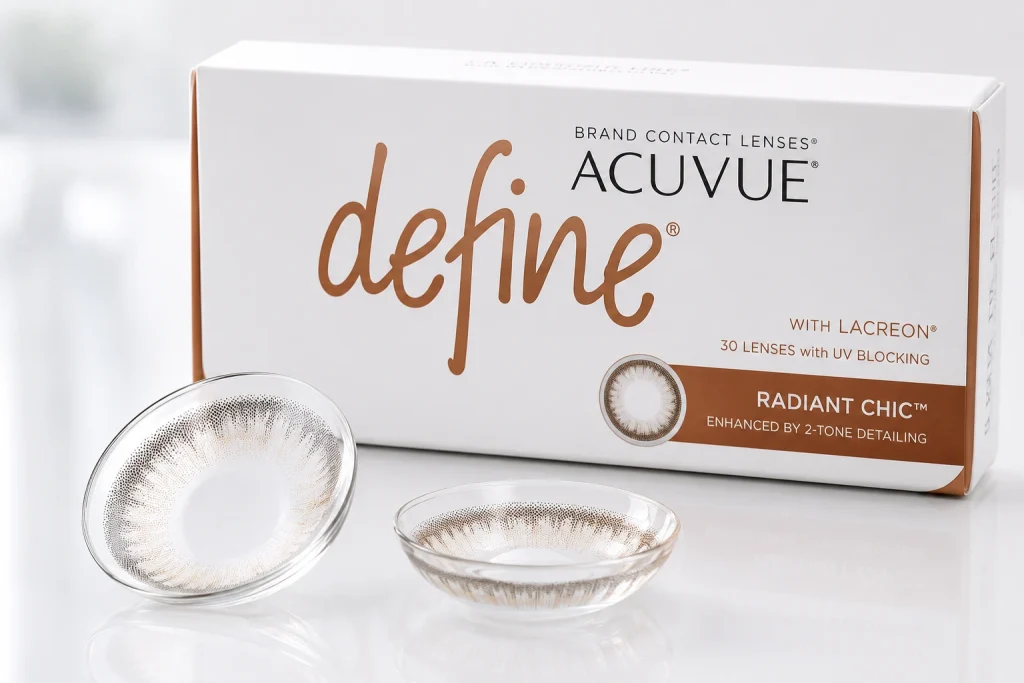
Enhancement tint lenses are made to deepen or brighten your natural eye color instead of covering it completely. They often work best for lighter eyes because the tint blends with your existing iris color. If you want natural looking colored contacts and only a soft change, this type may feel less dramatic than opaque lenses.
Opaque Tint Lenses
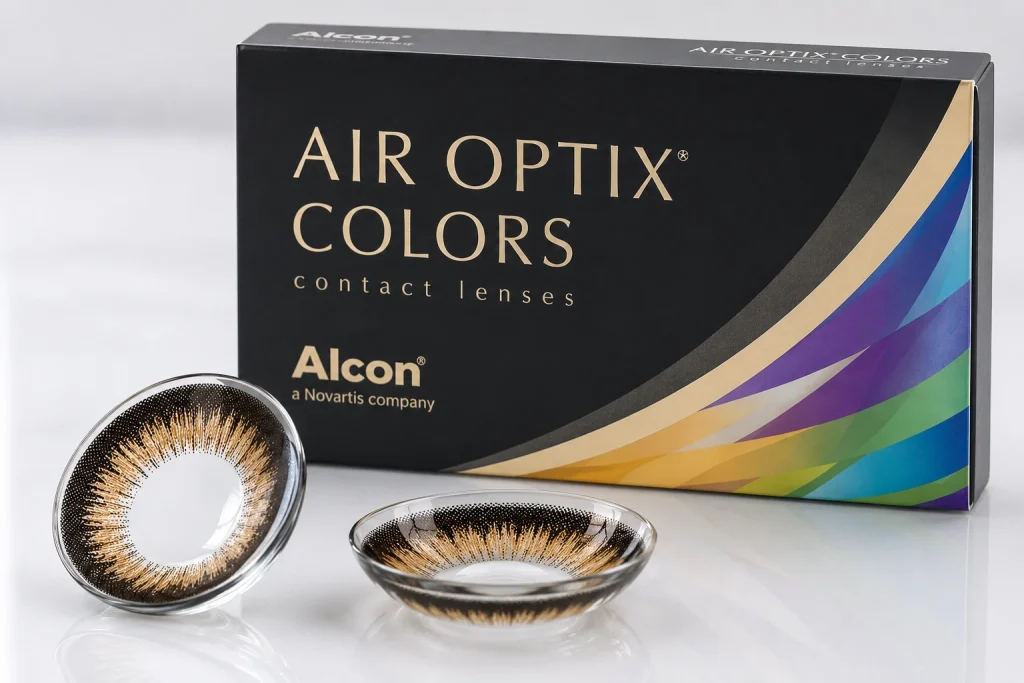
Opaque tint lenses are designed to cover more of your natural iris color. These are often better for colored contacts for dark eyes or colored contacts for brown eyes because they can create a more visible color change. If you want blue, gray, green, hazel, or honey tones to show more clearly on naturally dark eyes, opaque lenses are usually the stronger option.
Prescription vs. Plano Colored Contacts
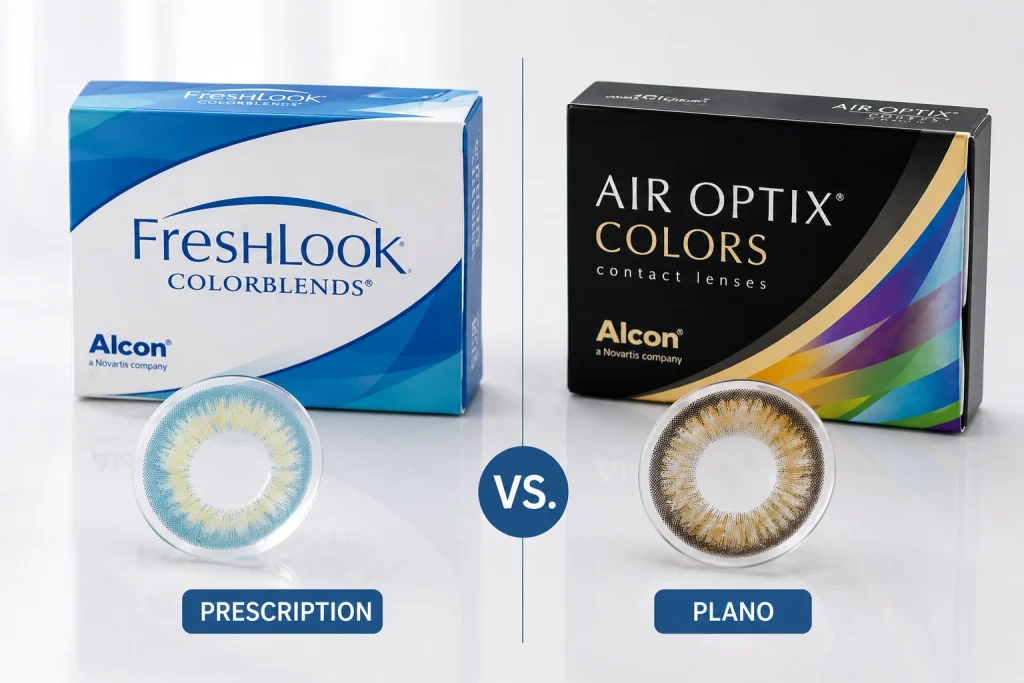
Prescription colored contacts correct vision and change eye color at the same time. Plano colored contacts do not correct vision, but they still sit directly on your eye and still require a proper contact lens prescription and fitting. Even if your vision is 20/20, plano color contacts are still medical devices, not casual accessories.
Daily, Biweekly, and Monthly Colored Contacts
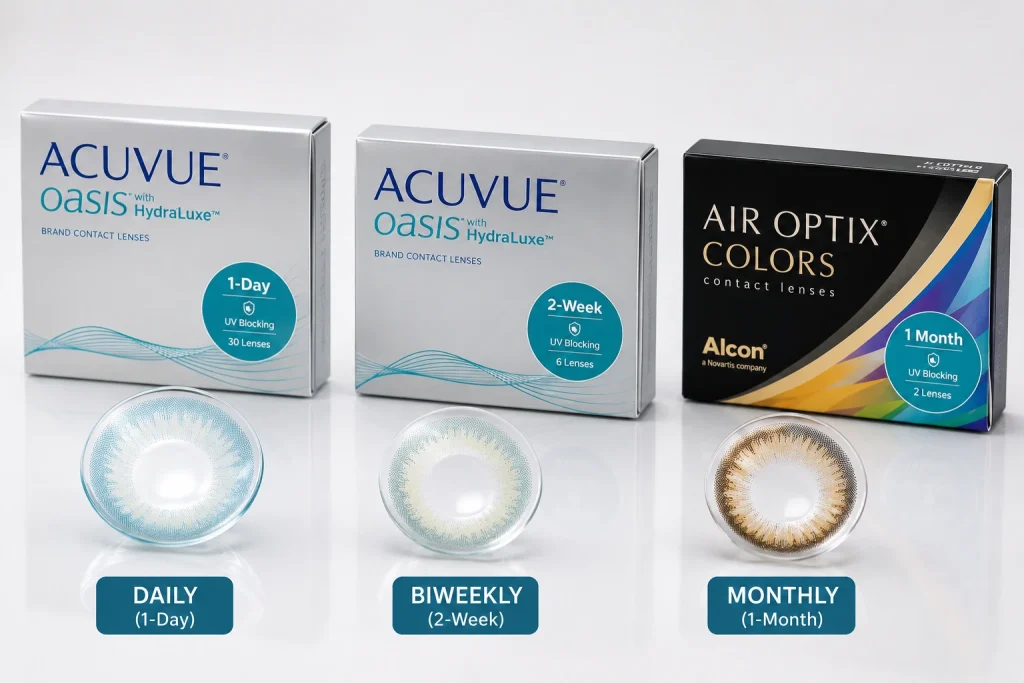
Colored contacts also differ by replacement schedule. Daily lenses are worn once and thrown away, which can be easier for occasional use, events, or first-time wearers who do not want to clean and store lenses. Biweekly and monthly colored contacts can be worn for a longer replacement cycle, but they need proper cleaning, fresh contact lens solution, a clean case, and careful storage after every wear.
If you’re still deciding what kind of colored lenses fit your routine, this roundup of colored contact lenses tips and recommendations can help you compare options.
How to Choose Colored Contacts for Your Eye Color and Style
Choosing colored contacts is not only about picking a shade you like. The best pair should match your eye color, your comfort needs, your prescription, and the kind of look you want to create.
Best colored contacts for dark eyes
If you have dark brown or very deep eyes, opaque tints usually give the most noticeable color change. These lenses are designed to cover more of your natural iris color, so shades like honey, hazel, brown, gray, and green can show up more clearly. For a softer everyday look, choose warm tones close to your natural eye color instead of jumping straight to very bright blue, violet, or costume-style shades.
Best colored contacts for light eyes
If you have light eyes, enhancement tints can add depth without making the change look too strong. These lenses can make blue, green, gray, or hazel eyes look brighter while still keeping a natural finish. If you want a stronger color change, opaque tints can work too, but check how the shade blends with your natural iris pattern before choosing.
Natural-looking vs. dramatic colored contacts
The final look depends on more than color. Iris pattern, limbal ring, opacity, diameter, and contrast all affect whether your lenses look soft and realistic or bold and noticeable. For natural looking colored contacts, choose shades that blend with your natural eye color and avoid lenses with a very sharp outer ring unless you want a more dramatic effect.
Match your lens color with skin tone, hair color, and makeup
Warm skin tones often pair well with honey, hazel, warm brown, or soft green lenses. Cooler skin tones may look good with gray, blue, violet, or cooler brown shades. Your hair color and makeup style also matter, so choose a lens color that fits your everyday look instead of a shade that only works with one outfit or one makeup style.
Choose comfort and fit before color
The prettiest lens is not worth wearing if it feels painful, shifts too much, dries out quickly, or makes your eyes red. Before choosing by color alone, make sure the lens matches your prescription, eye measurements, replacement schedule, and wearing needs. If a lens looks good but feels wrong, remove it and ask your eye care professional for a safer option.
Not sure which shades will look most natural on you? Use this guide on how to choose colored contacts that match your skin tone.
Before You Put in Colored Contacts: Beginner Prep Checklist
A smooth first try starts with clean hands, good lighting, and a careful lens check before the lens touches your eye.
1. Wash and dry your hands
Always wash your hands with soap and water before touching colored contact lenses. Dry them with a clean, lint-free towel so water, soap residue, lotion, oil, or tiny fibers do not get on the lens. Clean hands lower the chance of transferring dirt, makeup, or germs to your eye.
2. Use a clean, dry workspace
Choose a clean counter, a mirror, good lighting, and a dry towel before you start. The towel can help catch the lens if you drop it, and good lighting makes it easier to see whether the lens is clean and right-side out. Avoid inserting lenses over a sink with an open drain because a dropped lens can disappear quickly.
3. Check the lens packaging and expiration date
Do not use colored contacts if the packaging is damaged, leaking, opened, expired, cloudy, or dried out. The lens should look soft, moist, and fully hydrated in sterile solution. If anything looks unusual, throw the lens away or ask your eye care professional before using it.
4. Inspect the lens before insertion
Place the lens on your clean fingertip and check it closely before putting it on your eye. Look for tears, chips, scratches, folds, lint, makeup, or tiny particles stuck to the surface. If the lens is torn, dry, or dirty, do not put it on your eye because it can scratch or irritate the surface of your eye.
5. Make sure the lens is not inside out
Before putting in colored contacts, check the lens shape on the tip of your index finger. If it looks like a smooth bowl with the edges pointing upward, it is usually right-side out. If the edges flare outward like a rim, the lens may be inside out and can feel uncomfortable or blurry when placed on your eye.
If prescription terms like base curve and diameter feel confusing, this contact lens prescription glossary makes the label details easier to understand.
How to Put in Colored Contacts Step by Step
Putting in colored contacts gets easier with practice, but the first few tries should be slow, clean, and gentle.
Step 1: Place the lens on your fingertip
Place the lens on the tip of your clean, dry index finger. The lens should look like a small bowl, with the edges pointing upward. If it folds, sticks flat to your finger, or looks dusty, rinse it with the proper contact lens solution before trying again.
Step 2: Hold your eyelids open
Use one hand to hold your upper eyelid so you do not blink too soon. With the other hand, gently pull down your lower eyelid. Keeping both lids steady gives you more space to place the lens on your eye without rushing.
Step 3: Look straight ahead or slightly upward
Look straight into the mirror or slightly upward, whichever feels more comfortable. A steady gaze can help reduce blinking and make the lens easier to place. Try not to look away quickly because sudden eye movement can make the lens fold or miss the eye surface.
Step 4: Place the lens gently on your eye
Bring the lens toward your eye slowly and place it gently on the surface of your eye. Do not press hard, poke, or jab your eye. If the lens does not transfer from your finger, pause, check that your finger is not too wet, and try again calmly.
Step 5: Release your eyelids slowly and blink
Once the lens is on your eye, release your lower lid first, then your upper lid. Close your eye gently for a second, then blink a few times. Blinking helps the lens settle and center naturally.
Step 6: Check your comfort and vision
The lens should feel comfortable after a few blinks. If it feels sharp, painful, gritty, or blurry, remove it, rinse it with proper solution, and inspect it for dirt, tears, or folds. Only try again if the lens looks clean, moist, and undamaged.
If this is your first time wearing any contacts, this first-time contact lens user guide walks you through what to expect and what you’ll want nearby.
What If the Lens Will Not Go In?
If your colored contact lens will not go in, check these common beginner issues first:
- Your finger may be too wet. Too much solution on your finger can make the lens stick to your skin instead of moving onto your eye. Your finger should be clean and mostly dry, while the lens should stay moist.
- You may be blinking too early. Blinking is normal when you are still learning how to put in colored contacts. Hold your upper and lower lids steady, move slowly, and pause for a minute if your eyelids keep closing.
- The lens may be inside out. A correct lens should look like a smooth bowl, while an inside-out lens usually has edges that flare outward. Flip it only with clean fingers, then rinse it with contact lens solution before trying again.
- The lens may be too dry or damaged. Do not use a lens that looks torn, folded, scratched, cracked, cloudy, or dried out. A damaged lens can irritate or scratch your eye, even if the color still looks fine.
- Your eye may need a break. If your eye feels watery, red, tired, or irritated, stop trying and switch to glasses for a while. Trying over and over can make your eye more sensitive and make insertion harder.
If the lens still will not go in comfortably, give your eyes a break and try again later with clean hands, fresh solution, and better lighting.
How to Remove Colored Contacts Safely
Removing colored contacts can feel more intimidating than putting them in, but it becomes easier when you slow down and use a gentle routine.
1. Wash and dry your hands again.

Wash your hands with soap and water before removing the lens, even if you already washed them before insertion. Dry your hands with a clean, lint-free towel so the lens is easier to grip and no fibers transfer to your eye. Many beginners rush this step at the end of the day, but clean hands matter every time you touch your contact lenses.
2. Look up and pull down your lower eyelid.
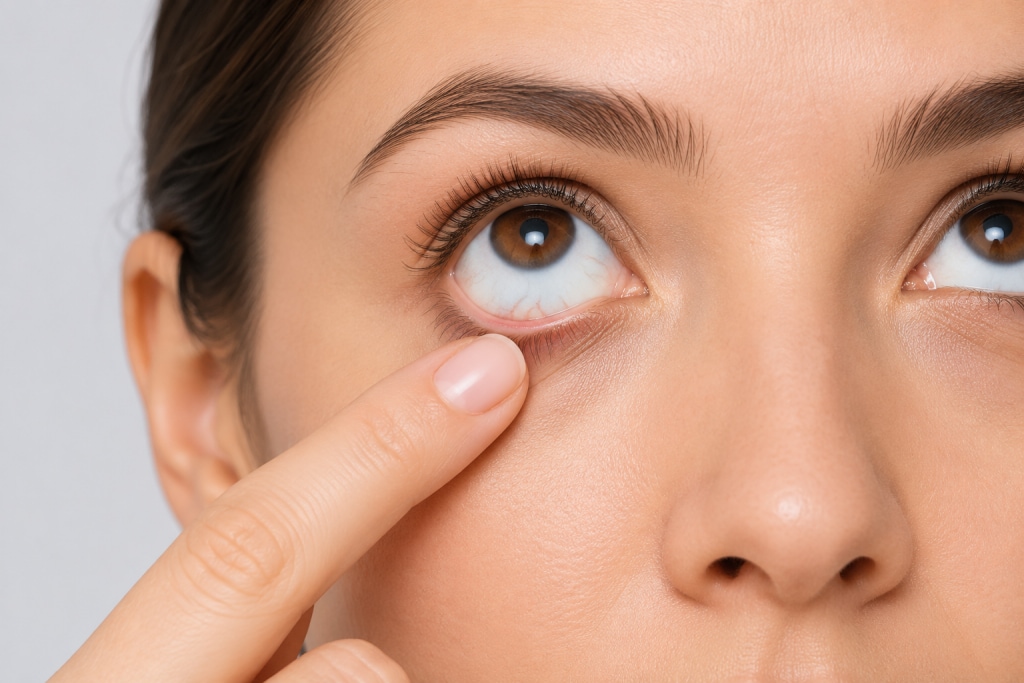
Look slightly upward and gently pull down your lower eyelid with one finger. This gives you more space to reach the lower part of your eye without touching your lashes too much. Keep your face relaxed and try not to squeeze your eyelids shut.
3. Slide the lens to the white part of your eye.
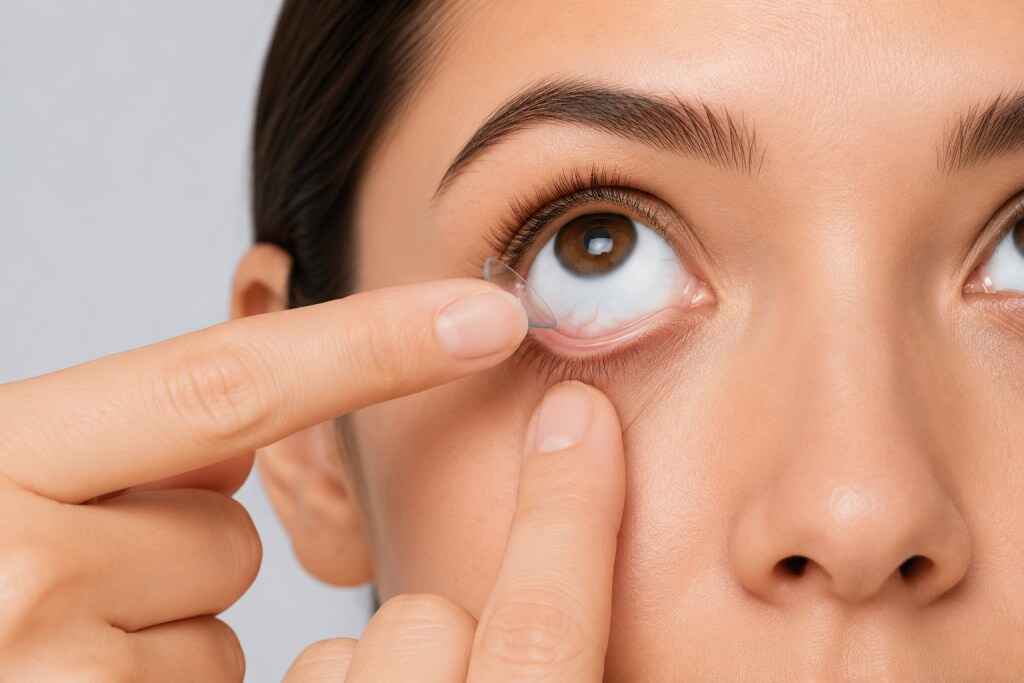
Use the soft pad of your finger to slide the lens down to the white part of your eye. This can make removal feel less scary because you are not pinching the lens directly over the center of your eye. Move slowly and stop if the lens feels painful or stuck.
4. Pinch the lens gently.
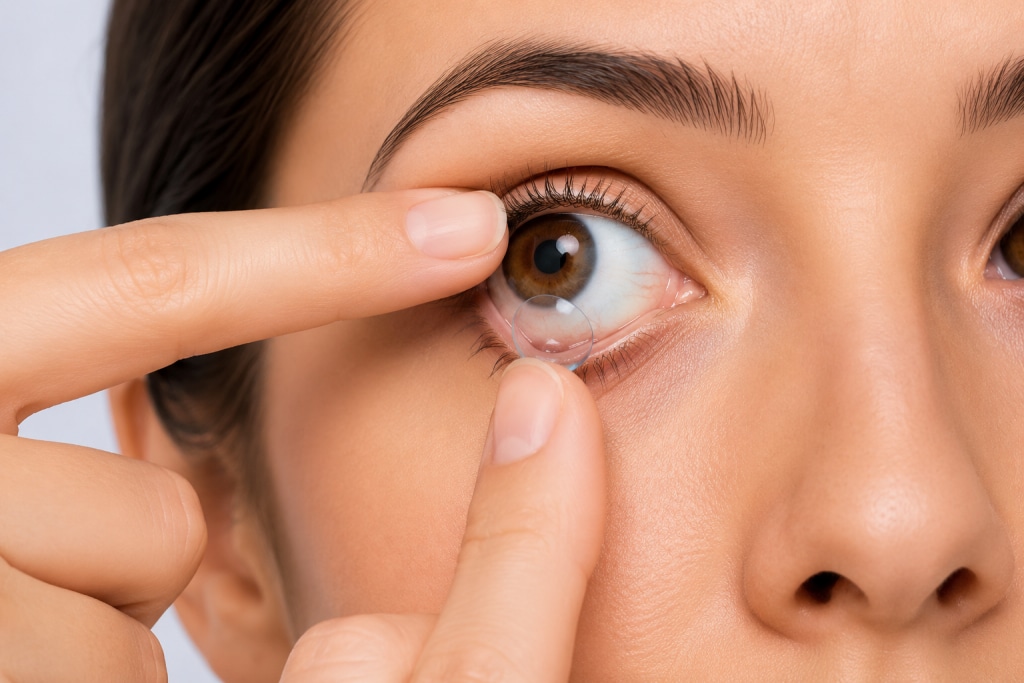
Once the lens is on the white part of your eye, use the soft pads of your thumb and index finger to gently pinch it and lift it away. Do not use your nails because they can tear the lens or scratch your eye. If you have long nails, be extra careful and use only the fleshy part of your fingertips.
5. What to do if the lens feels stuck.

If the lens feels stuck, do not panic, rub your eye, or dig at the lens. Add contact-safe rewetting drops, blink several times, and wait a few moments before trying again. If the lens will not move, your eye hurts, or you cannot remove it safely, stop trying and call an eye care professional.
For a more detailed walkthrough (especially if removal makes you nervous), bookmark the ultimate guide to safe contact lens removal.
How to Clean and Store Colored Contacts
Colored contacts need the same careful cleaning and storage routine as clear contacts because they sit directly on your eyes.
Daily disposable colored contacts
Daily disposable colored contacts should be thrown away after one use. Do not clean them, store them, or wear them again the next day. Reusing daily lenses can increase the chance of irritation, buildup, and infection.
Reusable colored contacts
Reusable colored contact lenses need fresh disinfecting solution and a clean lens case after every wear. Place each lens on the correct side of the case and fully cover it with fresh solution. Never reuse yesterday’s solution or “top off” old solution because it may no longer disinfect the lenses properly.
Never use water, saliva, or homemade solution
Do not clean, rinse, or store colored contacts in tap water, bottled water, saliva, or homemade solution. Water and saliva can carry microorganisms that do not belong on your lenses or in your eyes. Use only the lens care products recommended by your eye care professional and listed for your lens type.
Replace your lens case regularly
Your lens case can collect germs and residue over time, even if it looks clean. Replace it as directed by your eye care professional or the product instructions, and sooner if it looks cloudy, cracked, dirty, or damaged. Let the case air-dry between uses and keep it away from sinks, showers, and bathroom splash zones.
Follow the replacement schedule
Daily, biweekly, monthly, and other replacement schedules are not interchangeable. A daily lens is not made for repeated wear, and monthly colored contacts should not be stretched beyond the schedule your eye doctor or lens instructions provide. Wearing lenses longer than recommended can make them less comfortable and increase the risk of deposits, irritation, and eye problems.
If you need a simple habit that helps a lot is keeping your case truly clean, here’s how to clean your contact case step by step.
Beginner Mistakes to Avoid With Colored Contacts
Colored contacts can be safe and comfortable when you treat them like medical devices, but small shortcuts can quickly turn into eye irritation, infection risk, or a bad first experience.
Mistake 1: Wearing colored contacts without a prescription
Wearing colored contacts without a prescription is one of the biggest safety mistakes beginners can make. Even if the lenses are only for style, costume use, or photos, they still need to match your eye shape, size, and wearing needs. A poor fit can scratch your eye, blur your vision, move around too much, or increase your risk of infection.
Mistake 2: Sharing lenses with someone else
Never share colored contacts with another person, even for a quick photo or costume change. Your friend’s lenses may not fit your eyes, and sharing can transfer germs from one person’s eyes to yours. Contact lenses are personal medical devices, not accessories to borrow or swap.
Mistake 3: Sleeping in colored contacts
Do not sleep in colored contacts unless your eye doctor specifically prescribed that lens for overnight wear. Sleeping in lenses can reduce oxygen flow to the eye and raise the risk of irritation or infection. If you accidentally fall asleep in them, use contact-safe rewetting drops if needed, remove them gently, and give your eyes a break with glasses.
Mistake 4: Swimming or showering in contacts
Remove colored contacts before swimming, showering, or using a hot tub. Water can carry microorganisms that may stick to the lens and increase the risk of serious eye infection. Even clean-looking tap water, pool water, lake water, or ocean water does not belong on your contact lenses.
Mistake 5: Wearing lenses too long on the first day
Your first day is not the time to wear colored contacts from morning until night. Start with a shorter wear time based on your eye doctor’s guidance, then build up only if your eyes feel comfortable. If your eyes feel dry, tired, red, or irritated, remove the lenses and switch to glasses.
Mistake 6: Using makeup before handling lenses
Put your contacts in before applying makeup so oils, powder, mascara, or foundation do not transfer from your fingers to the lens. Clean hands matter most when you are putting in colored contacts, so avoid touching lenses after applying skincare, sunscreen, or makeup unless you wash and dry your hands again. When removing heavy eye makeup, take your contacts out first so cleanser and makeup residue do not get trapped under the lens.
Mistake 7: Ignoring redness or pain
Do not keep wearing colored contacts if your eyes become red, painful, watery, blurry, or sensitive to light. Remove the lenses right away and check whether the lens is torn, dirty, inside out, or damaged. If symptoms continue after removal, wear glasses and contact your eye care professional.
If you ever doze off in them, read what happens if you sleep with contacts so you know the safest next steps.
Makeup Tips When Wearing Colored Contacts
Makeup and colored contacts can work well together, but the order matters because anything that gets on the lens can irritate your eye or blur your vision.
1. Insert your colored contacts before applying makeup, especially eye makeup. This helps reduce the chance of transferring powder, oil, mascara, or shimmer onto the lens surface. It also lets you check your comfort and vision before you start building your look.
2. Choose makeup that is less likely to flake, smudge, or fall into your eyes. Avoid loose glitter, crumbly mascara, heavy powders near the lash line, and oily products that can move into the eye area. If your eyes are sensitive, keep eyeliner away from the inner rim of the eyelid and replace products that smell unusual, look dry, or feel irritating.
3. Take your contacts out before using makeup remover, cleansing balm, oil cleanser, or micellar water around your eyes. This helps prevent cleanser, oil, pigment, or mascara from getting trapped between the lens and your eye. After removing the lenses, clean and store reusable lenses properly or throw away daily lenses after one use.
4. Old eye makeup can collect bacteria and become dry or flaky, which is not ideal when you wear colored contact lenses. Replace mascara, liquid liner, and eye products regularly, and avoid sharing eye makeup with anyone. Keeping your makeup clean is another simple way to protect your eyes while wearing colored contacts.
How Long Can Beginners Wear Colored Contacts?
There is no single wear time that fits every beginner because your eyes, lens type, prescription, and comfort level all matter. Your eye doctor’s wear schedule should come before any general advice you see online, especially if you are new to contact lenses or have dry or sensitive eyes. If it is your first time wearing colored contacts, start with a shorter session so you can see how your eyes respond before wearing them for work, school, events, or photos.
Daily disposable colored contacts are made for one day of use and should be thrown away after wearing. Do not clean, store, or wear them again the next day, even if they still look fine, because reusing daily lenses can increase buildup, dryness, discomfort, and infection risk. Check the expiration date before opening any lens package, and do not stretch daily, biweekly, or monthly colored contacts beyond the replacement schedule your eye doctor or lens instructions provide.
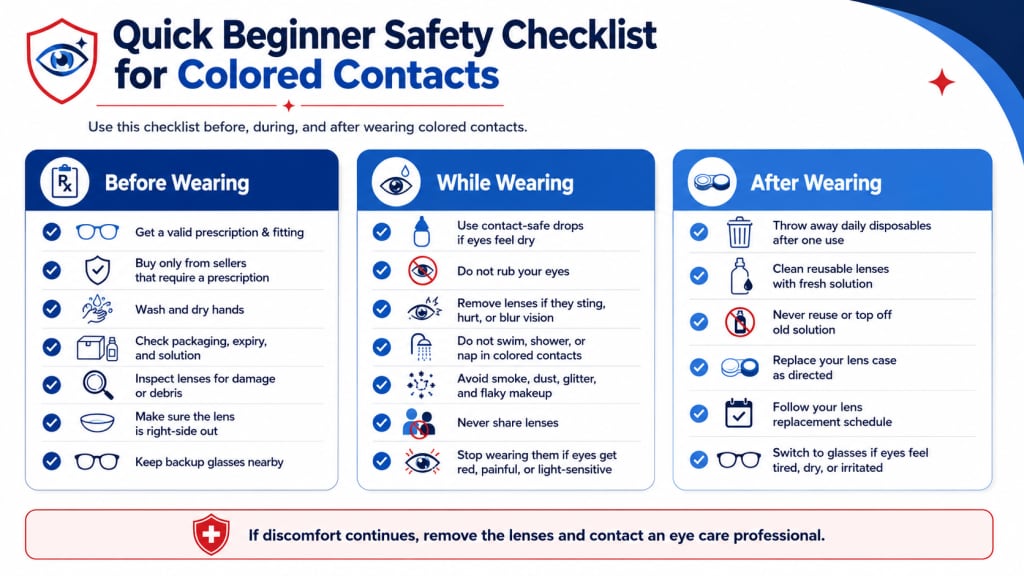
Start Wearing Colored Contacts the Right Way
Colored contacts can be a fun way to refresh your everyday look, try a bolder eye color, or complete a special-event style, but they still need the same care as any other contact lens. The safest routine starts with a valid prescription, clean hands, the right lens care products, and the habit of removing your lenses when your eyes feel red, painful, blurry, dry, or irritated. Once you know how to choose, insert, remove, clean, and store colored contacts properly, wearing your first pair feels much less intimidating.
Ready to compare colored contact lenses by color, prescription, and replacement schedule? Browse contact lenses online and choose options that match your eye doctor’s prescription and comfort needs.
FAQs About Wearing Colored Contacts for Beginners
Are colored contacts safe for beginners?
Yes, colored contacts can be safe for beginners when they are prescribed by an eye care professional, bought from a reputable seller, and worn according to instructions. The key is to treat them like medical devices, not simple beauty accessories. Clean handling, proper fit, fresh solution, and safe wear time all matter.
Do you need a prescription for colored contacts?
Yes. In the United States, all contact lenses, including decorative contacts, cosmetic contacts, and colored contacts with no vision correction, require a prescription. A prescription helps make sure the lenses fit your eyes properly and are safe for your specific needs.
Can I wear colored contacts if I do not need vision correction?
Yes, you can wear colored contacts even if you do not need vision correction, but you still need a contact lens prescription and fitting. These are often called plano colored contacts because they change appearance without correcting vision. Even without lens power, they still sit directly on your eyes and must fit correctly.
How do you put in colored contacts for the first time?
Start by washing and drying your hands, then inspect the lens for tears, debris, or dryness. Place the lens on your clean fingertip, make sure it looks like a smooth bowl, hold your eyelids open, and gently place the lens on your eye. Release your eyelids slowly, blink a few times, and check that the lens feels comfortable and centered.
How do you know if a colored contact is inside out?
A colored contact should look like a smooth bowl when it is right-side out. If the edges flare outward like a rim, it may be inside out. An inside-out lens may feel uncomfortable, move too much, or make your vision blurry.
Why does my colored contact feel uncomfortable?
A colored contact may feel uncomfortable if it is inside out, dry, dirty, damaged, poorly fitted, or not right for your eye. It can also feel uncomfortable if there is makeup, lint, or debris on the lens. Remove it, inspect it, rinse it with proper contact lens solution if it is reusable, and do not wear it again if it looks damaged or still feels wrong.
Can you sleep in colored contacts?
No, you should not sleep in colored contacts unless your eye doctor specifically prescribed them for overnight wear. Sleeping in contacts can reduce oxygen flow to the eye and increase the risk of irritation or infection. If you accidentally sleep in them, do not pull them out forcefully if they feel dry or stuck. Use contact-safe drops if needed, blink gently, and remove them carefully.
Can you swim or shower with colored contacts?
No. Remove colored contacts before swimming, showering, using a hot tub, or getting water in your eyes. Water can introduce harmful microorganisms to your lenses and increase the risk of serious eye infection.
Can you share colored contacts?
No. Never share colored contacts with anyone, even for a quick photo, costume, or event. Sharing lenses can spread germs and also puts your eyes at risk because the lenses were not fitted for you.
How long can you wear colored contacts?
Follow your eye doctor’s guidance and the replacement schedule for your specific lenses. Beginners should usually start with shorter wear times so they can test comfort before wearing lenses for longer periods. Remove your lenses if your eyes feel dry, red, painful, blurry, or irritated.
Can you wear makeup with colored contacts?
Yes, but put your contacts in before applying makeup and remove them before taking makeup off. This helps keep mascara, powder, oil, glitter, and cleanser away from the lens surface. Choose eye-safe makeup and avoid loose glitter or flaky products that can fall into your eyes.
What should you do if your eye gets red after wearing colored contacts?
Remove the lenses right away and switch to glasses. Redness can happen from dryness, poor fit, overwear, debris, or irritation, but it should not be ignored. Contact an eye care professional if redness, pain, discharge, light sensitivity, swelling, or blurry vision continues after removing the lenses.
Disclaimer: This content is for general informational purposes only and is not a substitute for professional advice, diagnosis, or treatment.
References
Decorative Contact Lenses for Halloween and More. U.S. Food and Drug Administration. https://www.fda.gov/medical-devices/contact-lenses/decorative-contact-lenses-halloween-and-more. Date Accessed: May 28, 2026.
Everyday Eye Care. U.S. Food and Drug Administration. https://www.fda.gov/medical-devices/contact-lenses/everyday-eye-care. Date Accessed: May 28, 2026.
Contact Lenses: Safe Use of Hydrogen Peroxide Solution. U.S. Food and Drug Administration. https://www.fda.gov/consumers/consumer-updates/contact-lenses-safe-use-hydrogen-peroxide-solution. Date Accessed: May 28, 2026.
Preventing Eye Infections When Wearing Contacts. Centers for Disease Control and Prevention. https://www.cdc.gov/contact-lenses/prevention/index.html. Date Published: May 27, 2025.
Healthy Habits: Keeping Water Away from Contact Lenses. Centers for Disease Control and Prevention. https://www.cdc.gov/contact-lenses/about/healthy-habits-keeping-water-away-from-contact-lenses.html. Date Accessed: May 28, 2026.
About Cleaning, Disinfecting, and Storing Contact Lenses. Centers for Disease Control and Prevention. https://www.cdc.gov/contact-lenses/about/about-cleaning-disinfecting-and-storing-contact-lenses.html. Date Accessed: May 28, 2026.
What Causes Contact Lens-related Eye Infections. Centers for Disease Control and Prevention. https://www.cdc.gov/contact-lenses/causes/index.html. Date Accessed: May 28, 2026.
Is your eye doctor violating the Contact Lens Rule? Colleen Tressler / Federal Trade Commission. https://consumer.ftc.gov/consumer-alerts/2023/02/your-eye-doctor-violating-contact-lens-rule. Date Accessed: May 28, 2026.
Step-by-step guide: how to put on your contact lenses like a pro. ACUVUE (Johnson & Johnson Vision). https://www.acuvue.com/en-us/eye-health/put-on-contacts/. Date Accessed: May 28, 2026.
How to remove your contact lenses with less struggle. ACUVUE (Johnson & Johnson Vision). https://www.acuvue.com/en-us/eye-health/take-off-contacts/. Date Accessed: May 28, 2026.