Your eyes feel dry, you reach into your bag for drops, and the only bottle you find is contact lens solution. It looks harmless enough because your contacts sit in it, so using it for quick relief can seem like a reasonable shortcut. That is where many contact lens wearers get caught.
Contact solution and eye drops may look similar on the shelf, but they serve different purposes. Contact solution is made to clean, rinse, disinfect, or store lenses, while eye drops are made to lubricate, soothe, or treat the surface of your eye.
The mistake matters because your eye is not the same as your contact lens. A lens can handle ingredients that remove buildup, disinfect surfaces, or preserve the solution in a bottle. Your eye needs products made for living tissue, tear film balance, and direct comfort.
Can Contact Lens Solution Be Used as Eye Drops?
The short answer is NO. You should not use contact lens solution as eye drops. It is not made to treat dry eyes, relieve irritation, or replace rewetting drops or artificial tears. Even if the bottle says “gentle,” “multipurpose,” or “for sensitive eyes,” it is still meant for lens care, not direct use as an eye drop.
Using contact lens solution in your eye may cause burning, redness, watering, dryness, or irritation. The risk depends on the type of solution, how much entered your eye, and whether you were wearing contacts at the time. A multipurpose solution may sting or irritate the eye, while a hydrogen peroxide solution can cause much more severe pain if it has not been neutralized.
The Food and Drug Administration says hydrogen peroxide solution must be neutralized before it comes into contact with your eyes. Putting hydrogen peroxide solution directly in the eyes or on contacts before insertion can cause stinging, burning, irritation, or eye damage.
So, if you are asking whether contact lens solution can be used as eye drops, the safe answer is no. Use products made for the eye, and keep contact solutions for your lenses.
What To Do Instead
If your eyes feel dry or irritated, reach for a product designed to address that symptom. The safest option depends on whether your contacts are in or out.
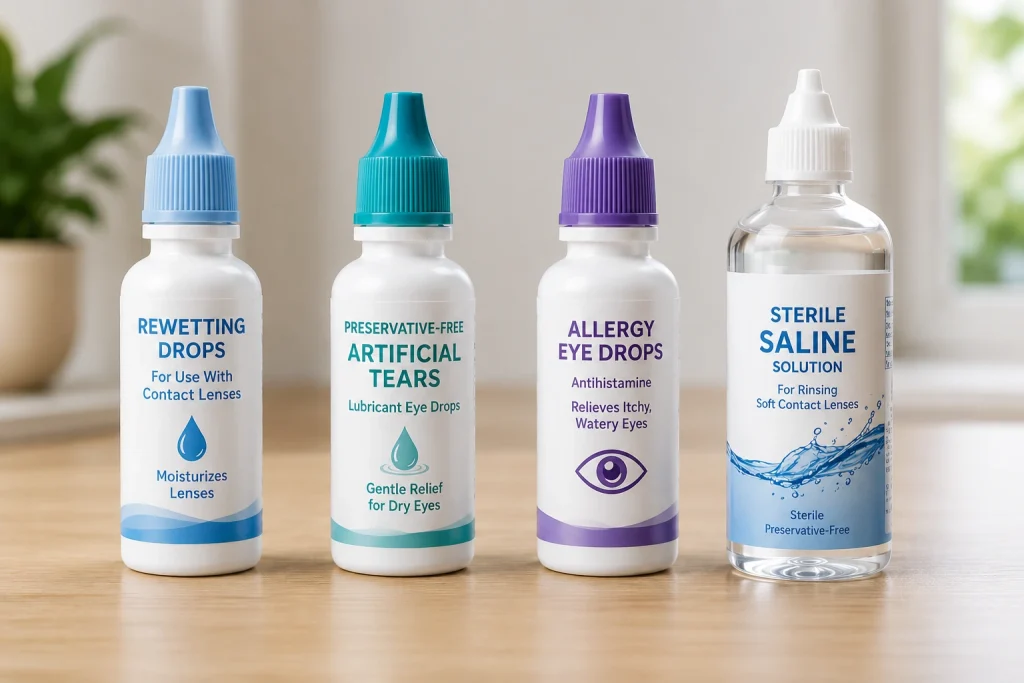
- Use rewetting drops if your contacts are in and your lenses feel dry. Look for wording like “for use with contact lenses” or “contact lens rewetting drops” on the label. These drops are made to add moisture while the lenses are on your eyes.
- Use preservative-free artificial tears if your eyes feel dry and you need gentle lubrication. Some artificial tears are safe with contacts, but not all of them are. If the label does not clearly state they are contact lens compatible, remove your lenses first and wait the time specified on the package before reinserting them.
- Use allergy eye drops only as directed if itching, watering, or seasonal irritation is the issue. Many allergy drops are not meant to be used while contacts are in, so read the label carefully or ask your eye doctor.
- Use sterile saline only when rinsing is appropriate. Saline may help rinse the eye in certain situations, but it is not the same as lubricating eye drops and does not treat dryness. It also should not be used to clean or disinfect lenses.
The Food and Drug Administration advises using contact lens products and solutions recommended by your eye care professional, following the product directions, and removing lenses right away if your eyes become red or irritated, or if your vision changes.
If your eyes feel itchy and dry at the same time, it can help to compare spring allergies vs contact lens dryness so you treat the right trigger.
Contact Lens Solution vs. Eye Drops: What Is the Difference?
Contact Lens Solution Works on the Lens
Contact lens solution is made for lens care. Depending on the type, it can clean, rinse, disinfect, remove protein deposits, loosen debris, or store reusable lenses overnight. Its job is to help keep the lens clean enough to wear again, not to soothe the surface of your eye.
That is why disinfecting contact lenses usually involves ingredients that work on buildup and germs on the lens surface. Multipurpose solutions, hydrogen peroxide systems, saline rinses, daily cleaners, and rigid gas permeable lens systems all have different uses. The Food and Drug Administration notes that contact lens solutions should be used as directed, and that improper lens care can increase the risk of eye infections and corneal ulcers.
A small amount of compatible solution left on a properly cleaned lens is different from squeezing solution straight into your eye. The first is part of normal lens handling. The second is using contact solution as eye drops, which is not what the product is made for.
If you want a simple refresher on what each product is actually for, start with this contact lens care guide for beginners.
Eye Drops Work on the Eye
Eye drops are made for the eye’s surface. Depending on the type, they may lubricate dry eyes, calm irritation, help with allergies, reduce inflammation, or treat a condition your eye doctor diagnosed.
Common types of eye drops include:
- Rewetting drops for contact lens comfort while lenses are in
- Artificial tears for dry or irritated eyes
- Allergy eye drops for itching and watering
- Prescription drops for infection, inflammation, glaucoma, or other eye conditions
If you wear contacts, the label matters. Some drops are safe to use while lenses are in. Others require you to remove your contacts first and wait before reinserting them. The Food and Drug Administration advises using the lens solutions and eye drops recommended by your eye care professional.
To keep your lens routine safe long-term, follow these cleaning contact lenses properly tips and mistakes (especially for reusable lenses).
Why the Ingredients Are Different
The easiest way to remember the difference is this: contact solution works on the lens, while eye drops work on the eye. That difference changes the ingredients, safety directions, and how each product should be used.
| Product | Main Purpose | Common Ingredients | Safe as Eye Drops? |
|---|---|---|---|
| Multipurpose solution | Cleans, rinses, disinfects, and stores soft contacts | Preservatives, disinfectants, surfactants, buffers | No |
| Hydrogen peroxide solution | Deep cleans and disinfects lenses after neutralization | Hydrogen peroxide before neutralization | No |
| Saline solution | Rinses lenses after proper cleaning or disinfection | Sterile saltwater, sometimes preservatives | Not as dry-eye drops |
| Rewetting drops | Moisturize lenses while you wear them | Contact-compatible lubricants | Yes, if labeled safe for contacts |
| Artificial tears | Lubricate dry eyes | Lubricants, sometimes preservatives | Yes, but check contact lens compatibility |
That includes branded products. If you’re asking whether you can use Biotrue contact solution as eye drops, the same rule applies. If the product is labeled as a contact solution, use it for your lenses, not as a drop for eye dryness.
Why You Should Not Use Contact Solution as Eye Drops
Contact solution and eye drops may look similar, but they serve different purposes in your contact lens routine.
It Is Not Made to Lubricate Your Eyes
A contact solution can wet a lens, but it is not designed to relieve dry eyes. Eye drops for dryness are made to spread across the eye surface, work with your tear film, and reduce scratchy or gritty discomfort. If your lenses feel dry while you are wearing them, use rewetting drops labeled safe for contacts instead.
It May Contain Preservatives That Irritate Your Eyes
Many contact solution products contain preservatives that help prevent the bottle and lens case from becoming contaminated. Those ingredients can be useful for lens care, but they are not meant to be applied directly to delicate eye tissue. Repeated use of contact solution as eye drops may cause redness, burning, watering, or dryness, especially if your eyes are sensitive.
It May Contain Surfactants or Cleaning Agents
Some contact solutions contain cleaning agents that help remove oils, proteins, cosmetics, and debris from the lens surface. These ingredients help clean contacts, but they are not made to sit directly on your cornea or tear film. If contact lens solution burns your eyes, remove your lenses, rinse with sterile saline or clean lukewarm water, and avoid using more contact solution to flush the eye.
Hydrogen Peroxide Solution Is Especially Risky
Hydrogen peroxide solution requires extra caution because it must be neutralized before it comes into contact with your eyes. Products like Clear Care solution are made to disinfect lenses, but unneutralized peroxide can cause intense burning, redness, watering, trouble opening the eye, and possible corneal injury. If hydrogen peroxide contact lens solution gets in your eye, remove the lens if you can do so safely, rinse your eye, and contact an eye care professional if pain, burning, light sensitivity, or blurry vision continues.
Contact solution belongs in your lens care routine, not directly on your eyes. For dryness or irritation, choose contact-safe rewetting drops, preservative-free artificial tears, or the eye drops recommended by your eye doctor.
This is one of those shortcuts that feels harmless at the moment. Here are more contact lens mistakes that seem harmless but can hurt your eyes.
What Happens If You Put Contact Solution in Your Eye?
Possible Mild Symptoms
If a small amount of non-peroxide contact solution gets into the eye by accident, symptoms may be mild and short-lived. Your eye may react because the solution is not made to lubricate or treat the eye surface.
You may notice:
- Stinging
- Burning
- Redness
- Watering
- Temporary blurry vision
- Dryness or irritation
- A gritty or coated feeling
- Mild discomfort when blinking
A quick sting does not automatically mean serious damage, but it does mean the product was not doing the job of an eye drop. Stop using it that way, remove your contacts if they are in, and switch to glasses while your eye calms down.
More Serious Symptoms
Some symptoms need faster attention, especially if the exposure involved peroxide, a large amount of solution, an expired product, or symptoms that do not improve after rinsing.
Call an eye care professional or seek urgent care if you notice:
- Intense pain
- Swelling
- Trouble opening the eye
- Strong light sensitivity
- Vision changes
- Severe redness
- Discharge
- A feeling that something is stuck in your eye
- Symptoms that do not improve after rinsing
- Burning after using the hydrogen peroxide solution
The Food and Drug Administration warns that incorrect contact lens care can raise the risk of eye infections and corneal ulcers, which can become serious quickly. It also tells wearers not to use expired solutions, not to reuse old solutions, and not to expose lenses to water.
Why Hydrogen Peroxide Symptoms Can Be Worse
Unneutralized peroxide is not the same as a multipurpose solution. Multipurpose solutions may irritate the eye when misused, but hydrogen peroxide systems are stronger before neutralization. They are made to disinfect lenses first, then become safe only after the required neutralizing step.
If you searched for Clear Care in the eye or hydrogen peroxide contact lens solution in the eye, treat the situation seriously. Remove your contact lens if possible, rinse your eye with clean, lukewarm water or sterile saline, and contact an eye care professional if the pain or burning persists.
The Food and Drug Administration explains that hydrogen peroxide solution must be neutralized, turning it into water and oxygen, before the lenses are safe to place on your eyes. Skipping that step, using the wrong case, or putting the solution directly in the eye can cause stinging, burning, irritation, and corneal damage.
If you’re worried about infection risks, it helps to know what serious issues can look like, including corneal ulcers causes prevention and recovery.
What To Do Now If Contact Solution Gets in Your Eye
Step 1: Stop Using It as Eye Drops
If you have already put contact solution in your eye, stop using it right away. Do not keep adding more solution to “wash it out,” and do not use it again to soothe dryness or irritation.
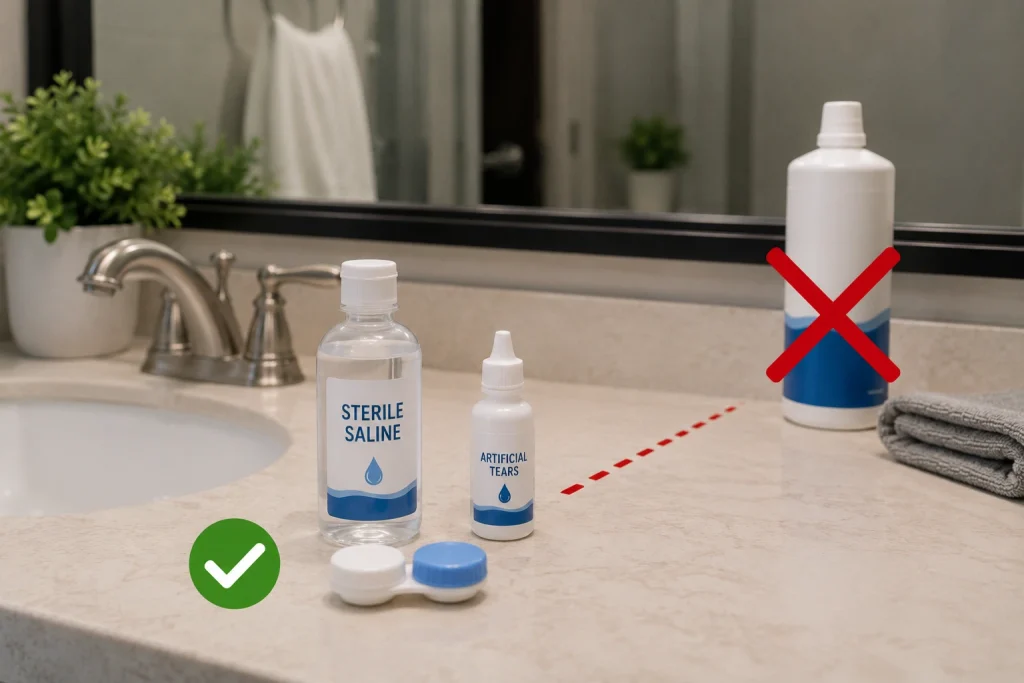
Your eye may water on its own as it tries to clear the irritant. Give it a moment, avoid rubbing, and move on to safer steps. If the bottle contains hydrogen peroxide, treat the situation more carefully, as unneutralized peroxide can cause more severe burning and possible eye damage. The Food and Drug Administration warns that hydrogen peroxide solution must be neutralized and should not be placed directly in the eyes.
Step 2: Remove Your Contact Lenses
Remove your contact lenses if you can do so safely. A lens can hold the solution against the eye surface, prolonging the burning or irritation.
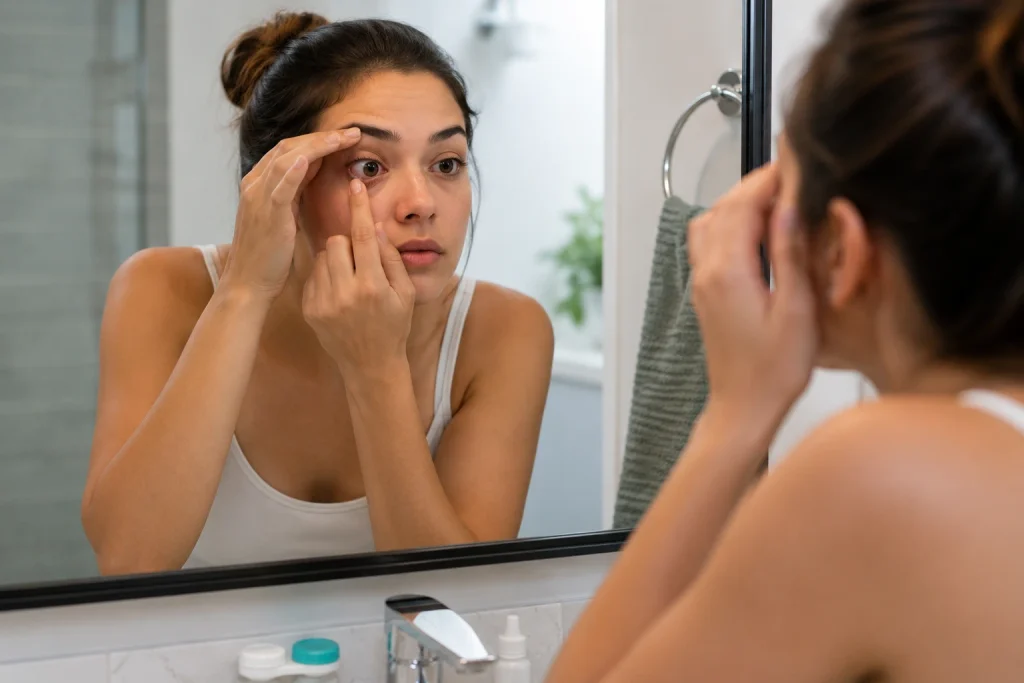
Wash and dry your hands first if you can. If the lens feels stuck, your eye is closing from pain, or removal causes sharp pain, do not keep forcing it. Get urgent help from an eye care professional or an urgent care provider.
After removal, do not put the same lens back in. If the lens touched the wrong product, was exposed to peroxide too early, or caused strong irritation, replace it or keep it out until your eye doctor tells you what to do.
Step 3: Rinse Your Eye Safely
If the solution got directly into your eye, rinse with sterile saline if you have it. If sterile saline is unavailable, clean, lukewarm water or artificial tears may help flush the eye. Do not rinse with more contact lens solution, and do not use tap water on your contact lenses afterward.
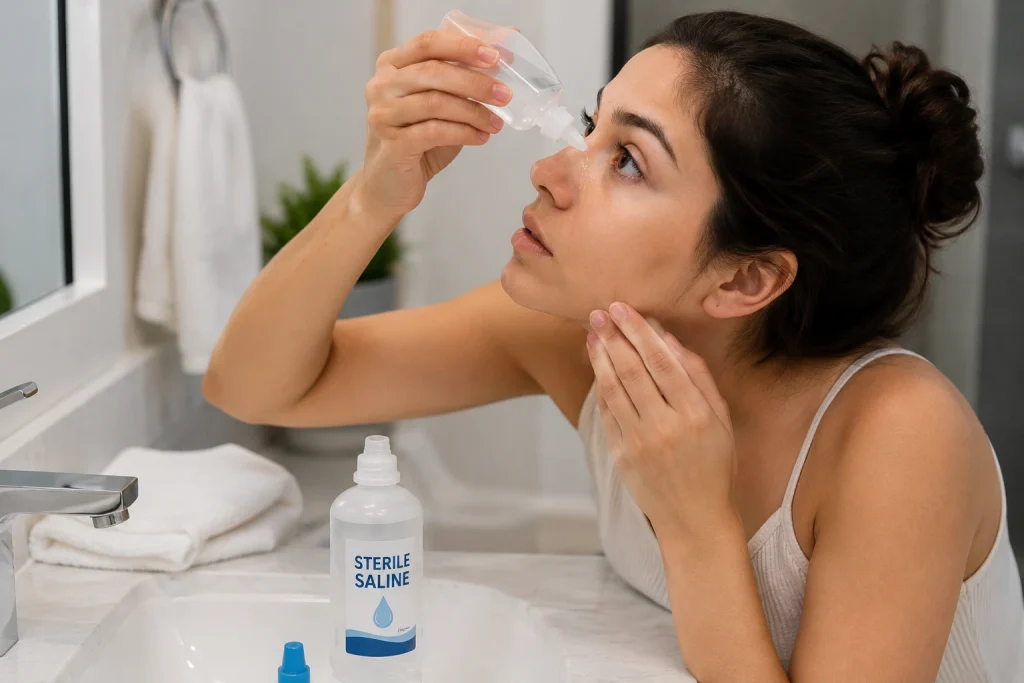
For peroxide exposure, rinse promptly and call your eye doctor, especially if burning continues. Healthline’s medically reviewed guidance on hydrogen peroxide in the eye recommends flushing with sterile saline, or water, or artificial tears if saline is not available, then contacting a doctor to have the eye checked.
Step 4: Switch to Glasses
Pause contact lens wear until your eye feels normal again. Glasses are the safer choice when your eye is irritated, red, watery, or sensitive to light.
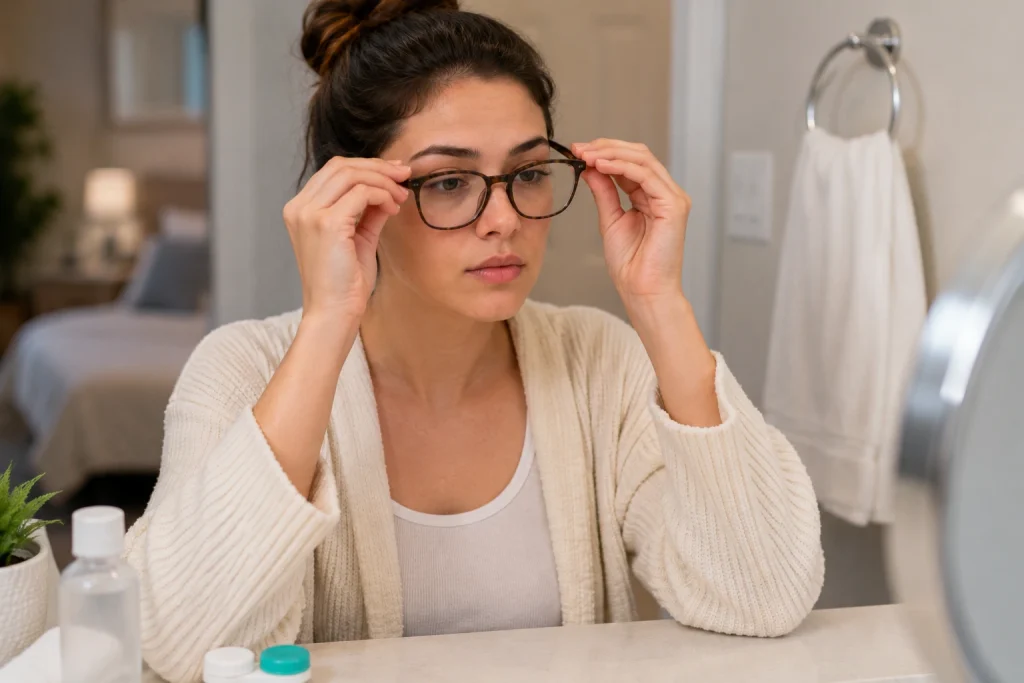
This is not the time to test another pair of lenses to see if the discomfort goes away. Your eye surface may need time to calm down. If you wear contacts again too soon, you may trap irritation under the lens or worsen dryness.
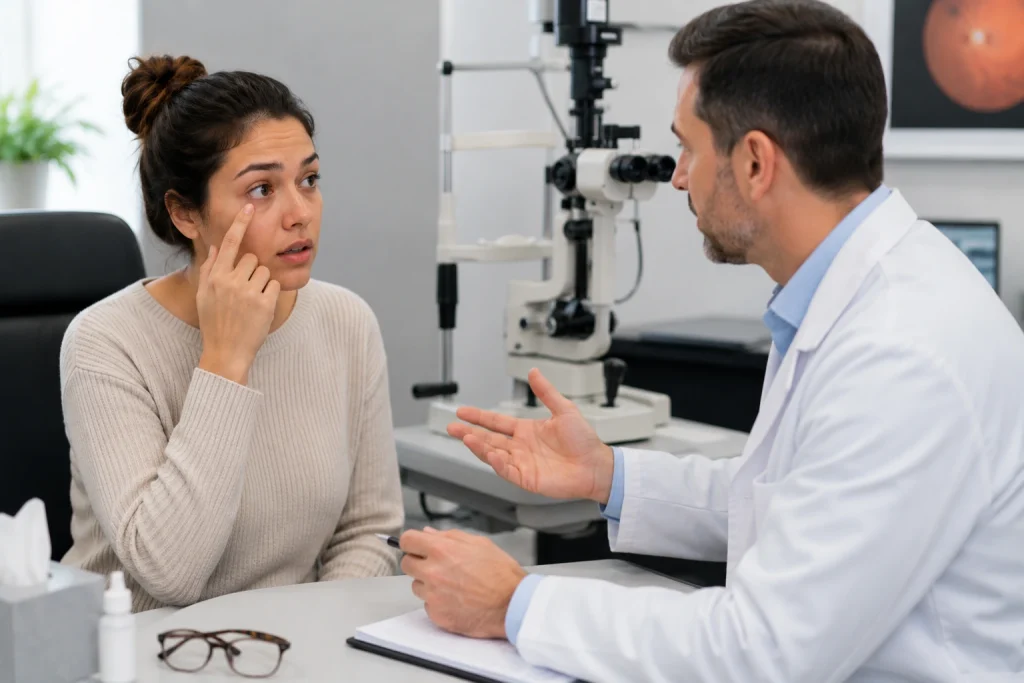
Step 5: Call an Eye Care Professional When Needed
Call an eye care professional if symptoms do not settle quickly or if the exposure involves Clear Care solution or another peroxide system. The Food and Drug Administration advises removing lenses and consulting an eye care professional if your eyes become red or irritated, or if your vision changes.
Get help right away if you notice:
- Eye pain
- Redness that gets worse
- Swelling
- Discharge
- Light sensitivity
- Blurry or changed vision
- Trouble opening the eye
- Burning that does not improve after rinsing
- Symptoms after hydrogen peroxide contact lens solution in eye exposure
If you are not sure what type of solution entered your eye, check the bottle. Many peroxide systems have a red cap or red tip as a warning. The Food and Drug Administration notes that the red tip and cap on many hydrogen peroxide bottles are there to help you recognize the product and avoid putting it directly in your eyes.
If you’re unsure whether symptoms are “wait and see” or urgent, this list of warning signs in contact lens use is a helpful quick check.
What To Use Instead of Contact Solution for Dry or Irritated Eyes
Contact Lens Rewetting Drops
If your contacts are in and your lenses feel dry, rewetting drops are usually the right place to start. Look for label wording such as “for use with contact lenses” or “contact lens rewetting drops.”
These drops are made to add moisture while your lenses are on your eyes. They can help when your lenses feel dry, sticky, or uncomfortable during the day. They are not the same as contact solution, and they are not used to disinfect contact lenses or to store them overnight.
Preservative-Free Artificial Tears
Artificial tears can help when your eyes feel dry, gritty, or tired. Preservative-free versions may be better if you use drops often or have sensitive eyes.
Check the label before using artificial tears with contact lenses. Some dry eye drops are safe with contact lenses, but others are too thick or not made for lens wear. If the label does not clearly state that the drops are contact lens-compatible, remove your lenses first and follow the package directions before reinserting them.
Allergy Eye Drops
Allergy eye drops may help if your main symptoms are itching, watering, puffiness, or seasonal irritation. These drops differ from basic lubricating drops because they are formulated for allergy-related symptoms.
Not all allergy drops can be used while contacts are in. Some products require you to remove your lenses and wait before re-wearing them. Follow the label, and ask your eye doctor if allergies keep making your contacts uncomfortable.
Prescription Eye Drops
Prescription drops should be used exactly as directed. These may be prescribed for infections, inflammation, glaucoma, severe dry eye, allergies, or other eye conditions.
Do not assume prescription drops are safe with contacts. The lens can absorb some medications, coat the lens, or irritate the eye when worn with contacts. Ask your eye doctor whether you should remove your lenses before each dose and how long to wait before wearing contacts again.
What Not To Use as Eye Drops
When your eyes feel dry or irritated, avoid shortcuts. These can make irritation worse or raise your risk of infection:
- Contact lens solution
- Hydrogen peroxide solution
- Tap water
- Saliva
- Expired eye drops
- Homemade saline
- Redness-relief drops while wearing contacts unless approved by your eye doctor
Tap water and saliva should never be used for contact lenses. The Food and Drug Administration warns not to expose contact lenses to tap, bottled, distilled, lake, or ocean water, and not to put lenses in your mouth to wet them because saliva is not sterile.
How To Choose Eye Drops If You Wear Contacts
Choosing eye drops as a contact lens wearer starts with one simple rule: use only drops that match your symptoms, your lens type, and the product label.
Look for “Safe for Contacts” on the Label
When you wear contacts, check the front label before putting any drops in your eye. Look for phrases like “safe for use with contact lenses,” “for contact lens wearers,” or “rewetting drops for contacts.” If the bottle does not clearly say it is safe with contacts, remove your lenses first and follow the product directions before wearing them again.
Choose Rewetting Drops for Lens Comfort
If your contacts feel dry while they are still in your eyes, rewetting drops are usually the better choice. These drops are made to add moisture to the lens surface and help your contacts move more comfortably when you blink. They can help with dryness from screen time, wind, air conditioning, or long wear hours, but they should not replace contact lens solution for cleaning or storing lenses.
Use Artificial Tears Carefully
Artificial tears can help with dry eyes, but not every formula is made for contact lens wear. Some are thin and contact-friendly, while others are thicker, gel-like, or oil-based and can coat your lenses or blur your vision. If the label does not say the drops are safe with contacts, remove your lenses first and wait the recommended time before putting them back in.
Avoid Redness-Relief Drops With Contacts
Redness-relief drops may make your eyes look clearer for a short time, but they do not fix the reason your eyes are red. Redness while wearing contacts can be caused by dryness, allergies, overwear, poor lens fit, solution sensitivity, or infection. Use these drops only if your eye doctor says they are safe for your eyes and contact lenses.
Ask Your Eye Doctor If Dryness Keeps Coming Back
Frequent dryness is not something you should keep managing with drops alone. If you need drops every day to tolerate your contacts, your tear film, lens material, lens fit, replacement schedule, or contact solution may need to be checked. Get help right away if dryness is accompanied by pain, discharge, swelling, light sensitivity, worsening redness, or vision changes.
The right drops can make contact lens wear more comfortable, but the label and your eye doctor’s advice should guide your choice. If your eyes keep feeling dry or irritated, switch to glasses and have your contact lens routine reviewed before the problem gets worse.
When To See an Eye Doctor
Get Help Right Away for These Symptoms
A little stinging after a small splash of contact solution in the eye may settle after you remove your lenses and rinse. But contact lens wear can affect the cornea, the clear front surface of your eye. If the cornea is irritated, scratched, infected, or exposed to the wrong product, symptoms can move from annoying to serious fast.
Remove your lenses and contact an eye care professional right away if you notice:
- Eye pain
- Burning that does not stop
- Redness that gets worse
- Swelling
- Discharge
- Light sensitivity
- Blurred vision
- Trouble opening the eye
- Hydrogen peroxide solution exposure
- Symptoms after sleeping in contacts
- Symptoms that continue after removing lenses
The Food and Drug Administration advises contact lens wearers to remove lenses immediately and consult an eye care professional if their eyes become red, irritated, or their vision changes. If this mix-up happens because you’re running low on supplies or your eyes keep feeling irritated, it may be time to review how often you should get an eye exam.
Quick Safety Checklist: Contact Solution vs. Eye Drops
Use this quick check when you are tired, traveling, rushing, or unsure which bottle to grab.
Use Contact Solution For
Use contact lens solution only for lens care, based on the product label and your eye doctor’s instructions.
- Cleaning lenses
- Rinsing lenses, if the product allows it
- Disinfecting contact lenses
- Storing reusable lenses
- Following your lens care system instructions
Not every solution does every job. A multipurpose solution may clean, rinse, disinfect, and store soft lenses, while a saline solution may only rinse and does not disinfect. The Food and Drug Administration says sterile saline should not be used in place of multipurpose solution and should be used only for rinsing, not for cleaning or disinfecting lenses.
Use Eye Drops For
Use eye drops for eye comfort or treatment, based on the label and your eye doctor’s advice.
- Dry eyes
- Irritation
- Allergy symptoms
- Redness, when appropriate
- Doctor-prescribed treatment
- Contact lens comfort, if labeled safe for contacts
If your contacts are in, choose rewetting drops or drops clearly labeled safe for use with contact lenses. If you are using artificial tears, check the label first because some formulas are too thick or not made for contact lens wear.
Never Use
These are the shortcuts that can create bigger problems:
- Contact solution as eye drops
- Eye drops as contact solution
- Tap water for lenses
- Saliva for lenses
- Expired or reused solution
- Hydrogen peroxide solution before neutralization
The Food and Drug Administration says not to expose contact lenses to any water, not to reuse leftover solution, and not to “top off” old solution in the lens case. It also warns that hydrogen peroxide solutions require special handling and must be neutralized before lenses are placed on your eyes.
Use the Right Product for the Right Eye Care Job
Contact lens solution and eye drops may sit next to each other in your bathroom or travel bag, but they should not trade places. Contact solution belongs in your lens care routine, while eye drops, rewetting drops, and artificial tears belong in your eye comfort or treatment routine. If you accidentally used the wrong product, remove your lenses, rinse safely, switch to glasses, and get help if pain, redness, burning, or vision changes continue.
Still wondering whether your lens routine is causing your dry or irritated eyes? Browse our contact lenses and compare options that may better fit your prescription, wearing schedule, and comfort needs.
FAQs About Contact Solution and Eye Drops
Can contact lens solution be used as eye drops?
No. Contact lens solution is made for lens care, not direct eye lubrication. It may clean, rinse, disinfect, or store lenses, but it is not made to soothe dry eyes the way contact-safe rewetting drops or artificial tears are.
What happens if you put contact solution in your eye?
You may feel stinging, burning, redness, dryness, watering, or irritation. If the product is a hydrogen peroxide solution and it has not been neutralized, the reaction can be much more painful and may cause chemical injury. Cleveland Clinic notes that contact solution can cause irritation, inflammation, redness, and persistent dryness when used as eye drops.
Is multipurpose contact solution safe in the eye?
A tiny amount left on a properly cleaned lens is different from putting multipurpose solution directly into your eye. It should not be used as an eye drop because it may contain preservatives, disinfectants, surfactants, or buffers made for lens care.
What should I do if I accidentally used contact solution as eye drops?
Stop using it, remove your contacts if you can do so safely, and rinse your eye with sterile saline or clean lukewarm water. Switch to glasses and contact an eye care professional if burning, redness, pain, blurry vision, or irritation continues.
Can hydrogen peroxide contact solution go in your eye?
No. Hydrogen peroxide contact solution must be neutralized before your lenses go on your eyes. If unneutralized peroxide gets in your eye, rinse your eye and seek medical advice, especially if pain, burning, redness, or light sensitivity continues.
Can saline solution be used as eye drops?
Sterile saline solution may help rinse the eye in some situations, but it is not the same as lubricating eye drops. It does not treat dry eye or provide the same moisture support as artificial tears or contact lens rewetting drops.
Can eye drops be used as contact solution?
No. Eye drops do not disinfect lenses and should not be used to clean, rinse, or store contacts. If you store lenses in eye drops, bacteria, proteins, and debris can remain on the lenses, increasing your risk of irritation or infection.
What can I use instead of eye drops?
For contact lens comfort while lenses are in, use rewetting drops labeled safe for contacts. For general dryness, preservative-free artificial tears may help, but check the label before using them with contacts. For allergies, infection, inflammation, or ongoing irritation, use doctor-recommended drops.
Can I use water as eye drops or contact solution?
Do not use water for contact lenses. Water should not be used to rinse, clean, or store lenses, as it can introduce harmful microorganisms and increase the risk of infection.
What eye drops are safe with contacts?
Use drops clearly labeled safe for use with contact lenses. Contact lens rewetting drops are usually the safest choice when your lenses are already in, and your eyes feel dry or uncomfortable.
References
Can You Use Contact Solution as Eye Drops? Cleveland Clinic. https://health.clevelandclinic.org/can-you-use-contact-solution-as-eyedrops. Date Accessed: May 21, 2026.
Artificial Tears: What They Are and When To Use Them. Cleveland Clinic. https://my.clevelandclinic.org/health/treatments/24804-artificial-tears. Date Accessed: May 21, 2026.
Dry eyes – Diagnosis & treatment. Mayo Clinic Staff / Mayo Clinic. https://www.mayoclinic.org/diseases-conditions/dry-eyes/diagnosis-treatment/drc-20371869. Date Accessed: May 21, 2026.
Chemical splash in the eye: First aid. Mayo Clinic Staff / Mayo Clinic. https://www.mayoclinic.org/first-aid/first-aid-eye-emergency/basics/art-20056647. Date Accessed: May 21, 2026.
Dry eye syndrome. MedlinePlus Medical Encyclopedia (National Library of Medicine). https://medlineplus.gov/ency/article/000426.htm. Date Accessed: May 21, 2026.
Artificial Tears: A Systematic Review. David A. Semp et al. (Clin Optom (Auckl) / PubMed). https://pubmed.ncbi.nlm.nih.gov/36647552/. Date Accessed: May 21, 2026.
What are the benefits and harms of lubricating eye drops for contact lens discomfort? Cochrane. https://www.cochrane.org/evidence/CD015751_what-are-benefits-and-harms-lubricating-eye-drops-contact-lens-discomfort. Date Accessed: May 21, 2026.
Antiviral effect of multipurpose contact lens disinfecting solutions against coronavirus. Muhammad Yasir et al. (Contact Lens and Anterior Eye / PubMed). https://pubmed.ncbi.nlm.nih.gov/34465537/. Date Accessed: May 21, 2026.
Interactions of Contact Lenses with Preservatives. Alex Hui, OD, PhD, FAAO / Contact Lens Spectrum. https://clspectrum.com/issues/2024/januaryfebruary/research-review/. JDate Accessed: May 21, 2026.
Antimicrobial Efficacy of Contact Lens Solutions Assessed by ISO Standards. Cindy McAnally et al. (Microorganisms / MDPI). https://www.mdpi.com/2076-2607/9/10/2173. Date Accessed: May 21, 2026.
Related Articles
-

Eye to Eye: Decoding the Differences Between Toric and Multifocal Lenses
-

US Truck Drivers’ Guide to the Best Contact Lenses for Night Driving
-

Myokymia or Eye Twitching: Symptoms, Causes, and Treatment
-
How Often Should You Get an Eye Exam? (World Optometry Day)
-

How Does It Feel Wearing Contact Lenses For The First Time